The release dates are US unless marked otherwise, though for books released in the UK and US in the same month but on different dates we use the earliest date without comment and they are first edition unless noted differently. The dates are on a best known basis so they are not guaranteed; same about the edition information. Since information sometimes is out of date even in the Amazon/Book Depository links we use for listings, books get delayed or sometimes even released earlier, we would truly appreciate if you would send us an email about any listing with incorrect information.
Sometimes a cover image is not available at the time of the post and also sometimes covers change unexpectedly so while we generally use the Amazon one when available and cross check with Google Images, the ultimate bookstore cover may be different.
********************************************************
“The Wise Man's Fear” by Patrick Rothfuss. Release Date: March 1, 2011.
“The Crippled God” by Steven Erikson. Release Date: March 1, 2011 (US Debut).
“Other Kingdoms” by Richard Matheson. Release Date: March 1, 2011.
"Excavation" by James Rollins Release Date: March 1, 2011.
"Under Wraps" by Hannah Jayne Schwartz Release Date: March 1, 2011.
“Son of Heaven” by David Wingrove. UK Release Date: March 1, 2011.
********************************************************

“The Secret Journeys of Jack London: The Wild” by Christopher Golden & Tim Lebbon. March 1, 2011.
“City of Hope & Despair” by Ian Whates. UK Release Date: March 3, 2011.
"Vegas Knights” by Matt Forbeck. UK Release Date: March 3, 2011.
"The Informationist" by Taylor Stevens Release Date: March 1, 2011.
“Lady-Protector” by L. E. Modesitt Jr. Release Date: March 15, 2011.
“Up Against It” by M.J. Locke. Release Date: March 15, 2011.
********************************************************

“Crucified Dreams“ by Joe R. Lansdale. Release Date: March 15, 2011.
“Devil Red” by Joe R. Lansdale. Release Date: March 15, 2011.
“The Gravity Pilot” by M.M. Buckner. Release Date: March 15, 2011.
“Steel” by Carrie Vaughn. Release Date: March 15, 2011.
“The Silent Land” by Graham Joyce. Release Date: March 22, 2011.
"Spiral" by Paul McEuen Release Date: March 22, 2011.
********************************************************

"The Nameless Dead" by Paul Johnston Release Date: March 22, 2011.
“Hidden Cities” by Daniel Fox. Release Date: March 22, 2011.
“The Curious Case of the Clockwork Man” by Mark Hodder. Release Date: March 22, 2011.
“The Enigmatic Pilot: A Tall Tale” by Kris Saknussemm. Release Date: March 22, 2011.
“The Enterprise of Death” by Jesse Bullington. Release Date: March 24, 2011.
“The Land of the Painted Caves” by Jean M. Auel. Release Date: March 29, 2011.
********************************************************

“Tiassa” by Steven Brust. Release Date: March 29, 2011.
“Deathless” by Catherynne M. Valente. Release Date: March 29, 2011.
“Dark Jenny” by Alex Bledsoe. Release Date: March 29, 2011.
“The Kings of Eternity” by Eric Brown. Release Date: March 29, 2011.
“Equations of Life” by Simon Morden. Release Date: March 29, 2011.
“Waking Nightmares” by Christopher Golden. Release Date: March 29, 2011.
********************************************************

"Napier's Bones" by Derryl Murphy Release Date: March 29, 2011.
"Guardians of the Desert" by Leona Wisoker Release Date: March 29, 2011.
“The King of Plagues” by Jonathan Maberry. Release Date: March 29, 2011.
“Loss of Separation” by Conrad Williams. Release Date: March 29, 2011.
“I Don't Want to Kill You” by Dan Wells. Release Date: March 29, 2011.
“The White Luck Warrior” by R. Scott Bakker. Release Date: March 31, 2011.
 12:01 AM |
  Posted by
Liviu |
Posted by
Liviu |


Order “The Wise Man’s Fear” HERE (US) + HERE (UK)
Read An Excerpt HERE
Read Fantasy Book Critic’s Review of “The Name of the Wind”
AUTHOR INFORMATION: Patrick Rothfuss is a graduate of the University of Wisconsin–Stevens Point with a B.A. in English, while earning his Masters at Washington State University. His debut novel, The Name of the Wind, is a New York Times bestseller and 2007 Quill Award winner. He is also the author of “The Adventures of the Princess and Mr. Whiffle” and is the brainchild behind the Worldbuilders charity through Heifer International.
PLOT SUMMARY: My name is Kvothe. I have stolen princesses back from sleeping barrow kings. I burned down the town of Trebon. I have spent the night with Felurian and left with both my sanity and my life. I was expelled from the University at a younger age than most people are allowed in. I tread paths by moonlight that others fear to speak of during day. I have talked to Gods, loved women, and written songs that make the minstrels weep. You may have heard of me...
So begins the tale of a hero told from his own point of view—a story unequaled in fantasy literature. Now in The Wise Man’s Fear, Day Two of The Kingkiller Chronicle, an escalating rivalry with a powerful member of the nobility forces Kvothe to leave the University and seek his fortune abroad. Adrift, penniless, and alone, he travels to the kingdom of Vintas, where he quickly becomes entangled in the politics of courtly society. While attempting to curry favor with a powerful noble, Kvothe uncovers an assassination attempt, comes into conflict with a rival arcanist, and leads a group of mercenaries into the wild in an attempt to solve the mystery of who—or what—is waylaying travelers on the King's Road.
All the while, Kvothe searches for answers, attempting to uncover the truth about the mysterious Amyr, the Chandrian, and the death of his parents. Along the way, Kvothe is put on trial by the legendary Adem mercenaries, is forced to reclaim the honor of the Edema Ruh, and travels into the Fae realm. There he meets Felurian, the faerie woman no man can resist, and who no man has ever survived . . . until Kvothe.
In The Wise Man’s Fear, Kvothe takes his first steps on the path of the hero and learns how difficult life can be when a man becomes a legend in his own time.
CLASSIFICATION: There are different types of epic fantasy. There is the kind written by George R. R. Martin, Robert Jordan and Steven Erikson which features huge casts of characters, multiple storylines and subplots, epic battles, and world-altering events. Then there is the kind that can be found in the Soldier Son trilogy by Robin Hobb, Jacqueline Carey’s Kushiel series and The Imager Portfolio by L. E. Modesitt, Jr. This kind of epic fantasy is character-driven, intimate, introspective. The Kingkiller Chronicle by Patrick Rothfuss is of the latter variety with a little Harry Potter charm thrown into the mix. Regarding The Wise Man’s Fear specifically, there is a surprisingly gratuitous amount of sex in the book—tastefully done though I might add—the occasional curse word, and a few moments of dark violence, but for the most part the novel maintains a PG-13 rating.
FORMAT/INFO: The Wise Man’s Fear is 1008 pages long divided over a Prologue, 147 titled chapters, and an Epilogue. Like The Name of the Wind, The Wise Man’s Fear is a framed story with the framing parts set during the novel’s present day and narrated in the third-person. The story that is framed, which comprises the majority of the novel, is narrated in the first-person via Kvothe. The Wise Man’s Fear is the second volume—or Day Two—in The Kingkiller Chronicle after The Name of the Wind. While The Wise Man’s Fear is a middle volume in a trilogy, the book is structured so it has its own beginning, middle and end. The Kingkiller Chronicle is set to conclude with the tentatively titled, The Doors of Stone.
March 1, 2011 marks the North American Hardcover publication of The Wise Man’s Fear via DAW. The UK version (see below) will be published on the same day via Gollancz.
 ANALYSIS: To say that The Wise Man’s Fear by Patrick Rothfuss is one of the most anticipated novels of the year is a bit of an understatement. Not only is The Wise Man’s Fear the sequel to The Name of the Wind, arguably the most hyped and successful fantasy debut ever, but the unexpectedly long wait time between books has increased expectations even further. As readers may or may not remember, when The Name of the Wind was released in 2007, we were led to believe that the already written sequel would be published the following year. Instead, a one-year wait turned into four years. The reasons for the delay have been well-documented, but it basically came down to what was more important: rushing out a product as soon as possible or taking the necessary time to produce the best product possible? Personally, I believe quality is always more important, and after finishing The Wise Man’s Fear, I can confidently say that the decision to delay the book’s release was the correct one.
At the end of the day, despite all of its praise and recognition, The Name of the Wind was far from perfect. The book after all, was still a debut effort. Still rough around the edges with uneven pacing, one-dimensional supporting characters, and shallow world-building some of the novel’s more notable flaws. So when the two books are compared against each other, it’s easy to see how much Patrick Rothfuss has grown as a writer and how much better The Wise Man’s Fear is than The Name of the Wind. The writing for instance, is much more polished. The prose is more refined, the pacing is tighter with fewer lulls, and the overall flow of the narrative is smoother, which is especially impressive considering how much bigger the novel is than its predecessor.
Supporting characters remain largely one-dimensional, but this time around Patrick Rothfuss does a better job of injecting his characters, both old and new—Denna, Wilem, Sim, Auri, Master Elodin, Puppet, Maer Alveron, Bredon, Tempi, Felurian, Vashet—with color and personality. This is aided by much improved dialogue, which helps to mask the characters’ lack of depth with entertaining conversation. In fact, dialogue is one of the novel’s greatest strengths, with Kvothe & Denna’s playful banter and Kvothe’s interactions with Auri, Puppet and the Adem some of my favorite moments in The Wise Man’s Fear. On the flipside, the lack of villains in the book, or more specifically a tangible antagonist, is a bit disappointing.
As far as the shallow world-building, little has changed. The Chandrian and the Amyr for example, remain a mystery, although there is a reasonable explanation for their lack of information. The same can’t be said for why the rest of ‘The Four Corners of Civilization’ is largely ignored, but at least Patrick Rothfuss branches out in The Wise Man’s Fear to give readers a taste of the world’s different cultures and races including the Fae; the Kingdom of Vintas with their superstitions, prejudices, and courtly customs & politics; and the Adem with their unique method of communication which includes hand signals, their way of life which follows the Lethani, and their Ketan fighting style. If you also factor in the author’s well-developed magic system—sympathy, sygaldry, naming—with all of its various rules and restrictions, then one can see how Patrick Rothfuss at least possesses the capacity for more detailed world-building.
Perhaps the greatest improvement made between The Name of the Wind and The Wise Man’s Fear is with the story. Looking back, not a lot really happens in The Name of the Wind, at least nothing major, while the novel’s climactic moments involving a herbivorous dragon, Kvothe’s rival student Ambrose and a possessed mercenary left a lot to be desired, especially considering the lengthy page count and the hype that came with the book. To be fair, the story in The Wise Man’s Fear suffers from some of the same issues as its predecessor does like major plotlines failing to progress and the author spending an extravagant amount of time on Kvothe’s day-to-day minutiae—his studies at the University, his money problems, Ambrose, courting Denna, his love life, et cetera—but as a whole, The Wise Man’s Fear is much more rewarding than The Name of the Wind. Part of it is being able to experience the more dramatic events responsible for shaping the various legends tied to Kvothe with specific highlights including the spectacular manner in which Kvothe defeated a group of bandits, his adventures in the Fae realm with the mythological Felurian, training with the Adem, and rescuing a pair of innocent girls on the road to Levinshir, but it’s also because the story is a lot more entertaining. Then there’s the ending which Patrick Rothfuss handles beautifully, slowly winding down the story to a satisfying stopping point, while tantalizing clues and unfinished business serve as reminders for the third and final volume in The Kingkiller Chronicle.
Now if there is one part of The Name of the Wind that needed little fixing, it was Kvothe’s first-person narrative. Charming, heartfelt, and highly accessible, Kvothe’s narrative was easily a major strength of the first novel, even if the protagonist came off arrogant at times and accomplished things no one his age should be able to accomplish. In The Wise Man’s Fear, Kvothe is still arrogant at times and still accomplishes things that defy his age, but at the same time, the book does a better job of showing off Kvothe’s fallible side including his vanity and his dark temper and his powerful thirst for knowledge. What I personally love about the narrative is the wide range of topics Kvothe covers in intimate detail over the course of his story. In The Wise Man’s Fear, these topics include Kvothe’s music, performing sympathy and sygaldry, working in the Fishery, navigating the Archives, learning how to scout, learning the Ademic language, studying the Ketan, courting Denna and sharing stories like the one about the boy with the gold screw in his belly button, the Faeriniel crossroads, the tale about Aethe and the beginning of the Adem, Felurian, and my personal favorite, the boy who loved the moon. Throughout all of this, Kvothe’s narrative is complemented with witty humor, interesting observations, and thoughtful insights:
“We love what we love. Reason does not enter into it. In many ways, unwise love is the truest love. Anyone can love a thing because. That’s as easy as putting a penny in your pocket. But to love something despite. To know the flaws and love them too. That is rare and pure and perfect.”
“Secrets of the heart are different. They are private and painful, and we want nothing more than to hide them from the world. They do not swell and press against the mouth. They live in the heart, and the longer they are kept, the heavier they become.”
“It’s the questions we can’t answer that teach us the most. They teach us how to think. If you give a man an answer, all he gains is a little fact. But give him a question and he’ll look for his own answers.”
While Kvothe’s narrative may have been a strength in The Name of the Wind, the same can’t be said for the framing parts—the Prologue, Epilogue and various Interludes—which in comparison were a bit dull and brought little to the table. Not much has changed for them in The Wise Man’s Fear. The framing parts are still somewhat tedious, while providing few answers about why Kvothe became an innkeeper, his relationship with Bast, and the current state of their world. That said, the mystery regarding Kvothe’s chest is intriguing, while the framing parts do work well as a contrast to how far Kvothe has fallen from the hero he once was and how much stories can differ from the truth.
CONCLUSION: The release of The Wise Man’s Fear may have taken longer than expected, but it was definitely worth the wait. Compared to The Name of the Wind, The Wise Man’s Fear is everything that made the first novel such a huge success except bigger, better and more rewarding. Granted, many of the same flaws that ailed The Name of the Wind can still be found in The Wise Man’s Fear, but considering the vast improvements made to the sequel, these issues are only minor annoyances. To put it simply, anyone who enjoyed The Name of the Wind will be blown away by The Wise Man’s Fear. The book is that much better. Even more, there is no doubt in my mind that The Wise Man’s Fear will end up being one of the best fantasy novels of the year. As far as the third and final volume in The Kingkiller Chronicle, Patrick Rothfuss can take as much time as he needs to finish the book. If The Wise Man’s Fear is any indication, it will be worth waiting for...
Three Short Stories from KJ Parker: "Amor Vincia Omnit", "A Small Price to Pay for a Birdsong" and "A Room with a View" (Reviewed by Liviu Suciu)

Read FBC Review of The Hammer
Read FBC Review of Blue and Gold
Read FBC Review of The Folding Knife
Read FBC Review of Purple and Black
Read FBC Review of A Rich Full Week (ss from anthology)
Read FBC Review of The Scavenger Trilogy
Subterranean Press keeps publishing wonderful stuff from KJ Parker, so after the two superb novellas Blue and Gold and Purple and Black, there are two short stories published in their magazine, one in the Summer of 2010 edition and one in the Winter 2011 one, as well as another story in their upcoming anthology Tales of Dark Fantasy 2 which will be published later in the Spring and has already a review from us done and scheduled tbp in April.
Here I will discuss these three stories and while the anthology one will be available only later, the other two are available free online so you can read them now!
************************************************
Amor Vincia Omnit (read it HERE) is a story set in the same milieu as A Rich Full Week with strong similarities with the world of The Fencer trilogy, where magic is both science - as the magicians see it - and religion as the regular people see it. There are "brothers", "adepts", the Studium, the curriculum and then on graduation the degrees of proficiency and adept ranks and the classically named spells that add so much to the depth: Choris Anthrop, Unam Sanctum....
Amor Vincia Omnit follows another Studium scholar sent to deal with a problem as in a Rich Full Week, though in this case, the issue is possibly of a truly exceptional nature: an untrained magician of great raw talent possibly solved "Lorica", a far reaching conjecture in magic hoped to be unsolvable by the powers to be and became invincible for all practical purposes, though of course he does not realize it and behaves like a child with a match.
Our hero Framea, a bright rising star of the Studium is sent to investigate and solve the problem at all costs, and in the author's expected style, at all costs means precisely that and we are treated to a suspensful but quite dark story that is as good an introduction to KJ Parker's work as anything.
************************************************
A Small Price to Pay for a Birdsong (read it HERE) is set in a world similar to the ones of Blue and Gold, Purple and Black, The Folding Knife, The Company and The Hammer, which are what our world would have looked like were it to continue unbroken from the classical Greek-Roman world without a messianic religion and the idea of progress it brought.
So no magic, but a deep sense of history and priceless moments in which the narrator, a talented musician who scrapped his way up from the lower classes to a (non-tenured yet) professorship at the Academy, muses on the irony of fate when dealing with an unstable musical genius who tries to wiggle his way out of hanging for some stupid bar brawl killing...
Twists and turns including one at the end that I really did not see though it was hinted subtly in retrospect and a great story about art, society and the relationship between the two. Characters rather than action shine here and I strongly recomend this one too.
************************************************
A Room with a View is also set in the milieu of the Studium as the first story above and it is shorter and for the most part funnier though being a KJ Parker story it turns darker at the end. I really laughed out loud page after page at the musings of our hero, an underachieving "wizard" seen as of of great potential as a child, but who barely qualified as adept and on failing in job interview after job interview has become a "list freelance adept" called upon for the most unpleasant jobs the local masters need extra people with magic for.
In this case looking into the minds of thousands of imported dogs in a border town to make sure they do not bring "demons" in the country and to top it all, having to do a mentoring job which our narrator utterly hates; more than the dogs actually...
The story has the most detail about the magical system of the author with the "rooms" and what they are and how you move there and there are quotes after quotes that represent KJ Parker at the author's best. The ending is twisty and darker as mentioned though I felt this story needed an extra page or two and it would have been perfect; still an excellent one!
"Fundamentally, I believe, comedy and tragedy are the same thing, right up to the end. At the end, in comedy they get out of the mess they're in and live happily ever after. In tragedy, they all die. But there's a tipping point, a moment when it's so evenly balanced it could go either way"
Overall these three stories published by Subterranean confirm why KJ Parker is at the top of the genre today in terms of creativity, originality and subtlety!

Official Author Blog
Order the book HERE
AUTHOR INFORMATION: Richard Farnsworth is a scientist and soldier who decided to give in to his passion for the written word. He received his doctorate from Baylor College of medicine in cell and molecular biology. He has also served his country in the Iraq war as an Apache AH-64 gunship pilot. He lives with his family in Norfolk, Virginia. He also has various previous short story publications. This is his debut.
BOOK BLURB: Greg used to be an angel, but that was an eternity ago… Back when he was Araqiel, part of the celestial chorus… Back before he gave in to his temptations…. Before his fall!
FORMAT/INFO: The e-ARC of “Succumbing to Gravity” stands at 216 pages divided over forty-five numbered, continuous chapters. The chapter narration is primarily in first person by Greg and secondarily in third person via two characters namely Maria Furcal and Detective Frank Graves.
“Succumbing to Gravity” is a solo dark urban fantasy thriller with philosophical overtones. July 14, 2010 marked the Trade paperback publication of the book by Reliquary Press.
OVERVIEW/ANALYSIS: I received a query about this book and these specific words “Heroin addicted angel” which were used in the plot description, got me interested. The story is set in both first and third person POV-format however the flow is pretty much evened out. The story begins with Greg who’s reminiscing about his days as an angel before his fall. His name was Araqiel then however he and a score of angels fell and since have been reminiscing about their glory days in various ways. Greg finds solace in heroin which gives him a peace of sorts and allows him to transcend his physical form and reminisce what it felt like to fly free.
Currently he’s shacked up with a runaway names Sarah who helps him stay sane (as much as that is possible) and also helps get odd jobs as a fortune teller. On a routine job like that he comes across a Dominican woman called Maria Furcal, who seems to be having nightmares about a man who’s hunting her however she doesn’t recognize him except for the fact that his intentions seem particularly threatening. Greg notices a peculiarity about her but does not care to decipher it, He however does warn her to place salt around her bed when she sleeps to avoid these nightmares. Unsatisfied with Greg’s assessment Maria does pay his charges and leaves. Sarah however notices that Greg might be withholding some information and when he reveals that she is in more mortal danger than he told her. Sarah immediately leaves Greg and goes in search of Maria.
Greg later on regrets his decision and decided to go after Sarah & Maria. His actions however do not bear fruit the way he wants them to. A deplorable event occurs which causes him to meet with detectives Frank Graves & Dominique Etcher. Things go from worse to perilous for Greg as he experiences Frank's bad cop side due to his actions and non-compliant attitude. Later on when Maria arrives to identify Greg, trouble arrives with reinforcements and then from here on the tale kicks up as Greg must do his best to protect Maria who’s soul is coveted by his brethren for reasons undisclosed & also at the same time he has to watch his back from Frank Graves who thinks Greg’s existence as an anathema to humanity. The tale then zooms along to its emphatic climax as Greg has to make a choice and therefore make a stand with or against his fallen herald. This story was a very different read because the subject matter while being explored in a variety of ways previously by different authors; is presented in a succinct, emotional way to hook the reader and get them involved.
The prose is competent and often showcases the characters brilliantly in all their flaws. The characters are the main draw in this story as Greg/Araqiel is the central thread which binds this tale we get to see him in all of his previous glory and current squalor. His uneasiness at the current situation is portrayed eloquently throughout the book and showcases that redemption can begin at any step for every one no matter how great the previous fall. The other two characters of Maria and Frank serve as a counterfoil to Greg as we often see him through their eyes as well and can see the confusion and disgust inspired by his actions. Maria’s character however feels a bit under-developed as she often acts as the damsel in distress and rarely shows any initiative especially when she’s supposed to the tale’s epicenter. Frank on the other hand is showcased as a cynical cop however we are given some viewpoints into his actions which are revealing and make his actions believable.
The drawback to this book was that while the author has given us a very emotional story, the pacing is bit languid. This does hamper the read from time to time. The apparent central issue of the tale when revealed does not seem so gargantuan & in the end, there’s a reveal about one of the characters which seemed very off as the reasoning just didn’t make sense to me (this was a personal observation and might not be the case for other readers). There were also a few editing errors which can be concerning for some readers however do not ultimately detract anything from the reading experience.
CONCLUSION: In the end while this book was a good read, it didn’t really measure up to its evocative blurb. Therefore while I think Richard Farnsworth is very much talented and am interested to see what he writes in the future; for me Succumbing to Gravity remains a good book which could have been better.
"What Time Forgets: The Daughters of Ard Creggan" by K.E. Redmond (Reviewed by Liviu Suciu)

Order What Time Forgets HERE (tpb) or HERE (Kindle)
INTRODUCTION: "What Time Forgets" is a recently published independent book about which we have received a review inquiry a week or two ago and as with all such that have an interesting blurb for me - criteria are mentioned in my post about notable 2010 Independent Books - I took a look at the available sample.
Since I quite liked what I read there despite not having too much of a clue where the book plans to go, I asked for a review copy and it jumped close to the top of my reading queue. The blurb below is fairly generic and actually the novel goes in some surprising directions, so I will discuss the setup in more detail later.
I would also add that What Time Forgets belongs to the relatively recent breed of books that freely mix genres and genre conventions and do not fit in a clear "subgenre" while still being core *secondary world sff adventures*: there are prophecies but not an ancient evil on a world domination/destruction quest that just got reawakened, mysterious artifacts of power, but not in quite the "magic talisman/sword" way we read in so many books and I could continue with sf-nal analogies too....
"Seers and cutthroat politicians, technocrats and a warrior class, jockey for power in a world where memories imperil the future. A soldier and a determined young woman, adversaries with their own secrets, ally to find the key that will avert a terrible reckoning on their world. A prophecy takes them from a mercenary’s stronghold to an oracle’s decaying temple, on to a monastery’s long-buried secrets and, finally, to a violent confrontation in a long-ruined fortress at sea’s edge. A final justice may well sacrifice everything they know"
OVERVIEW/ANALYSIS: "What Time Forgets" starts with a bang when a ship is boarded by enemies after being attacked with cannon fire and a dying man slips a pendant into the hands of a younger man who then slips away through a secret hatch. Then we are introduced to the city of Ard Creggan where the main storyline starts and we witness a discussion about pendants involving Zoe Deich, younger scion and heir of the city's first family, whose great-aunt Livia is the nominal head of Concordia, the assembly of the leading Ten Families that control the oligarchic city.
However we soon find out information that starts to undermine the more-or-less traditional setup with a city dominated by noble families - the "Publicans" - that control mineral wealth and mostly pre-industrial technology - though with guns and some metal industry - and who is in conflict with an agrarian, more numerous and aggressively egalitarian but poorer society - the "Citizens".
There is the mysterious Counselor that came out of nowhere centuries ago and unified the noble families and taught them how to make iron and guns and hence dominate the surrounding areas, there are long-lived seers - so the powers and longevity of the Counselor are not singular - that can see multiple future paths but are scrupulously neutral, there is Noor a secretive mind reading strange being that was brought by Zoe's diplomat father Jomini in the girl's infancy and has been her "governess" since, though she keeps a low profile so to speak, and there is the upstart miner's son, Sinon Yar who raised himself by hook and by crook to a position of power and wants to break the Publicans and lead Ard Creggan by himself.
We later meet Tiernan, the young man from the opening scene who turns out to be a "soletei" - a member of the Citizens elite military special forces - but with strong ties with Ard Creggan that were forged in the intermittent periods of truce between the two entities. The novel also expands its action way beyond Ard Creggan and we visit quite a few places, meet lots of new characters and see action, intrigue, suspense and more...
So quite an intriguing setup and while twisting and turning and going in unexpected directions, things come together as the novel goes on and What Time Forgets turns out to be a standalone with a clear theme and a definite ending though promising more; the author let me know there will be a next volume.
Looking at what made What Time Forgets a hit with me, I would have to say that the world building and the novel's main storyline with its twists and turns that kept me guessing till the end were the main reasons, while the narrative flowed very well and kept me turning page after page until the end.
The characters are pretty interesting too since while having partly the usual traits, they also have their own quirks and so become distinctive as the book goes on - most notably Zoe and Tiernan but several others I do not want to spoil too, while Sinon Yar makes a somewhat cardboard but still "love to hate" villain.
If there is a niggle outside of minor editing issues, it is the fact that What Time Forgets occasionally gets on the border of "too clever" for its own good with some anachronistic word usage like say (lumpen) proletariat and others, but overall that did not detract too much from the enjoyment of the book and the author's generally ironic modern tone made it sound natural enough, only making me "huh?" after the fact rather than throwing me out of the narrative flow all together.
Overall What Time Forgets (A+) is a highly recommended sff adventure that has both fantasy and sfnal overtones, a book with inventive world building, page turning narrative flow and a lot of twists and turns and come together in a complete package but with a hook for more...
Orbit Acquires Michael Sullivan's Ryria Revelations in a Significant Deal (by Liviu Suciu)

"Orbit is pleased to announce that it has acquired the six-book Riyria Revelations series by author Michael J. Sullivan, in a six-figure deal with agent Teri Tobias of the Teri Tobias Agency LLC. Orbit will be publishing the six titles as three two-book omnibuses in consecutive months in Fall/Winter 2011-2012. The first volume, Theft of Swords, will be published in November 2011; the second volume, Rise of Empire, in December 2011, and the final volume, Heir of Novron, in January 2012.
Senior Editor Devi Pillai says: “This is the kind of fabulous new adventure fantasy that readers of Terry Brooks and Brent Weeks can fall in love with. Michael really delivers a great story that keeps to the idea of great epic fantasy while taking on fantasy clichés and having fun with the idea of two thieves caught in the wrong place, at the wrong time. I read the first book – and I was hooked.”
Michael J. Sullivan says: “"I couldn't be happier to have The Riyria Revelations released by Orbit. Of all the fantasy imprints, they have shown an unsurpassed eye for quality and I'm both excited and humbled to be included in a select group of authors as talented as Brent Weeks, Gail Carriger, and so many others."
The first book in the saga, The Crown Conspiracy, was self-published through Ridan Publishing, a company started by Sullivan’s wife. He’s been a Kindle bestseller in historical fantasy ever since.
Born in Detroit, Michigan, Michael J. Sullivan has lived in Vermont, North Carolina, and Virginia. He worked as a commercial artist and illustrator, founding his own advertising agency in 1996, which he closed in 2005 to pursue writing full-time. He currently resides in Fairfax, Virginia with his wife and three children."
Congratulations to Mr. Sullivan!Here are the FBC reviews of all five volumes so far:
Read FBC Review of The Crown Conspiracy
Read FBC Review of Avempartha
Read FBC Review of Nypron Rising
Read FBC Review of The Emerald Storm
Read FBC Review of Wintertide
Edit 2/23: As noted in comments Mr. Sullivan has a blog post about the announcement, discussing the issue of the 6th volume and in the comments there it is noted that while indeed the last book will be published in early 2012 rather than the expected Spring 2011, Orbit is looking into issuing it as a single volume too in addition to being part of omnibus 3 together with Wintertide, so people who have the first five volumes complete the set. I do not know how the issue will be addressed logistically since short print runs are quite expensive and POD is still in infancy, so it may be done only electronically, but it's good to know that people are listening to readers' concerns!
I also would like to note that while sure, I would have loved to have Percepliquis this spring, the delay is of the order of 8-9 months which is nothing in the traditional publishing slowly moving business model, however much it seems for us used to the fast moving internet world and I am very happy that the series has a chance to get the wide audience it deserves.
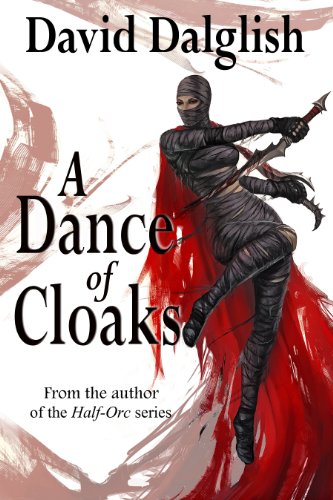
BOOK BLURB: Thren Felhorn is the greatest assassin of his time. Marshalling the thieves' guilds under his control, he declares war against the Trifect, an allegiance of wealthy and powerful nobles.
Aaron Felhorn has been groomed since his childhood to be Thren's heir. Sent to kill the daughter of a priest, Aaron instead risks his own life to protect her from the wrath of his guild. In doing so, he glimpses a world beyond poison, daggers, and the iron control of his father.
Guilds twist and turn, trading allegiances for survival. The Trifect weakens, its reputation broken, its money dwindling... The players take sides as the war nears its end, and Thren puts in motion a plan to execute hundreds. Only Aaron can stop the massacre and protect those he loves...
Assassin or protector; every choice has its consequences!
CLASSIFICATION: Featuring a world wherein there are multiple factions at work, this book is a dark, character-driven, gritty fantasy novel in the vein of George R.R. Martin, Brent Weeks and Peter V. Brett.
FORMAT/INFO: A Dance of Cloaks is 217 pages divided over twenty nine numbered chapters with a prologue & epilogue. Narration is in the third person via several different point-of-views, both major characters and supporting ones as well, including the main protagonist Aaron Felhom, Thren Felhom, Alyssa Gemcroft, Kayla, Veliana, Maynard Gemcroft, and many other minor players. A Dance of Cloaks was supposed to be a stand alone novel however the author soon realized that the entire story could not be told in a single volume and hence is the first book in the Shadowdance trilogy.
This book is set in Dezrel, the same world as that of the Half-Orc Series and enough background information is provided for readers. The plot of the book is set before the events of the Half-Orc series. The book ends on a clean note but clearly indicates there is more to follow!
August 19, 2010 marked the North American publication of A Dance of Cloaks via paperback and ebook format. Cover art is provided by Peter Ortiz.
ANALYSIS: I read this book last year however due to certain personal reasons could not get the review published. While I was reading it, I was certainly struck by its fast pace, constant plot switches and mainly the unpredictability it brought to the table. A bit of history before one reads this book, the tale is set in the world of Dezrel, the same one of the Half-Orc series however any new reader can jump into this book and have no problem with it [I did the same]. It focuses on the character of Aaron Felhom who is in line to be the heir to Thren Felhom, the leader of the Spider Guild and a thoroughly deadly individual.
This book originally a standalone was supposed to show how Aaron became the person whom some readers have already met in Book 2 of the Half Orc series. Secondly the author was heavily impressed by George R.R. Martin’s "A Game of Thrones" and therefore was inspired to create a world wherein nothing is ultimately safe and the reader will be forced to turn the page to find out what happens next. It is safe to surmise that David has indeed accomplished what he set out to do.
Firstly there are four primary story threads ongoing in this tale, the first one focuses on Thren and his relentless march to wipeout the Tri-fect and secure a kingdom for himself, the second one focuses on Aaron, Thren’s heir and who is rather forced to learn how to become an effective ruler, the third thread focuses on Maynard Gemcroft, who is worried about his daughter Alyssa and about the precarious nature of his house and lastly Alyssa who is willful and faces danger through her choices. There are a few more characters and I feel to spell it all out would ruin the charm of this book. For most characters, nothing goes out as planned and the atmosphere prevalent is one wherein the reader will be forced to think about each character’s motives and plans.
The author does a fine job of constantly switching the tale focus and keeping the reader hooked with various twists and new POV characters. I was very surprised by this book as I simply went in without any assumptions, and yet I was completely blown away by the writing and overall plot. The prose is very good and draws the reader in and then keeps them hooked. The world setting is not explored much beyond the city of Veldaren but then you hardly notice as the action and intrigue never lets up. The world is much deeper than imagined and we do get glimpses and conversations of other things rummaging on the background but readers who have read the Half-Orc series might be able to glean more from them.
Negative points if any were almost negligible, not that this book is a masterpiece and will be counted as the next “A Game of Thrones”. What it is though; a fine book from an upcoming writer who read the aforementioned book and crafted a worthy tale set in his world. There are a few tropes which have been utilized here but again they have been presented in such a way that you do not cringe. Some readers might be a bit thrown off by the number of POV introduced especially during and just before the climax, also a couple of characters make an appearance after being introduced in the earlier half, but then again its not difficult to read and find out what they are up to. Another thing the author is guilty of; is that of finding the tale is longer than he imagined it to be, but considering his inspiration, this can be easily forgiven.
CONCLUSION: A Dance of Cloaks is a gritty book with intriguing characters and has a plot which will keep you hooked till the end. David Dalglish will definitely be gaining new fans with the release of this book and if he can continue his form with the next two releases in the Shadowdance trilogy, I can foresee him ascending new heights and being counted as one of fantasy’s rising stars.


