
INTRODUCTION: "Most of the time the
Moontide Bridge lies deep below the sea, but every 12 years the tides
sink and the bridge is revealed, its gates open for trade.
The Magi are hell-bent on ruling this new world, and for the last two Moontides they have led armies across the bridge on 'crusades' of conquest.
Now the third Moontide is almost here and, this time, the people of the East are ready for a fight ... but it is three seemingly ordinary people that will decide the fate of the world"
The Magi are hell-bent on ruling this new world, and for the last two Moontides they have led armies across the bridge on 'crusades' of conquest.
Now the third Moontide is almost here and, this time, the people of the East are ready for a fight ... but it is three seemingly ordinary people that will decide the fate of the world"
Intriguing blurb, great sample so a novel that became a must read on publication, Mage's Blood is David Hair's first foray into adult fantasy.
ANALYSIS: (Liviu) The setup of the series is as follows: the world of Urte where the irregular orbit of the Moon creates huge tidal differences on a 12 year cycle while making sea navigation all but impossible outside locally coastal; for many centuries, the two main continents in which the action takes place, Yuros and Antiopia/Ahmedhassa have been in complete ignorance one from another despite being separated only by 300 miles of water while developing a Western like civilization in Yuros and Islamic (Ahm) and Indian (Lakh) - like cultures in Ahmedhassa.
However some 500 years before the start of the novel in 927, magic - gnosis - comes to the West when the 1000 followers of a hippie-like prophet, Corineus, are touched by supernatural power in a terrible and unforgettable night. Some few hundred die, including Corineus, some few hundred are unchanged, but some few hundred become extremely powerful magicians called Ascendants whose gnosis gets transmitted linearly by blood - child of mage and non-mage gets 1/2 power and so it goes up to 1/16 mage blood which is lowest where gnosis manifests - with the caveat that mage with mage couples have very few children overall so "pure bloods" remain relatively rare, while mixed bloods abound.
The original Ascendants split into factions - a militant one that forms a mighty empire in Yuros that rules to the present day and a peaceful one led by Antonin Meiros that retreats to the ends of Yuros in Pontus and sets up Ordo Costruo dedicated to improving the lives of people by magic; among other things, gnosis allows magical flying machines to work, so Anthiopia is discovered by air some 300 years ago and limited trade and visitations occur.
Meiros - still living in 927, as Ascendants are very long lived - and his followers want to do good, so some 100 years ago he built a tremendous bridge appropriately called Leviathan Bridge, 300 miles long, connecting Pontus with the nation of Dhassa whose capital Hebusalim is the Holy City of the Ahm religion. The bridge opens for two years, every 12 years due to the tides - we learn more details later from Meiros himself. Trade and some colonization ensue and everyone prospers for about 100 years, but the leading imperial families are not happy as in the words of the evil-supremo of the series to date, Sainted Mater-Empress Lucia:
"‘But Meiros, an Ascendant too craven to join the liberation of Yuros from the Rimoni yoke, left the fellowship of the Three Hundred and built that cursed Bridge, and from that Bridge do all of our woes come! I wonder, does Antonin Meiros even know what he has done?’
He seemed perfectly aware of it last time I saw him, reflected Gyle. He wondered whether Lucia Fasterius truly believed the bigoted dogma she spoke. She seemed intelligent, learned – kindly, even. But in her eyes something fanatic lurked, like a venomous snake.
Lucia came to a halt behind her chair and gripped the wooden back tightly. ‘For a century we have seen the Bridge open every twelve years, when the tides drop to levels that permit traverse. We have seen the merchants pour across then return with all manner of addictive Eastern goods – opium and hashish, coffee and tea, even the silks and other luxuries that entrance our people. They can virtually name their prices on return. The bankers extend credit to merchants whilst squeezing the nobility, the magi-protectors who made Rondelmar what it is.
Who are the richest men in Rondelmar? The merchants and bankers! Fat obsequious slime like Jean Benoit and his merchant cabal. And what have they bought with their ill-gotten gains? Our homes – our belongings – our art, and worse: they have purchased our sons and daughters, our Blood!’ Lucia was shouting now, spittle flecking her lips. ‘Those scum are buying our children and taking them to wife or husband, so that their misbegotten offspring will have everything, both gold and gnosis, and as a result, we are seeing a new breed, the mage-merchant, nasty, grasping half-breeds."
So in an act of treachery, the Imperial legions attack over the bridge in 904 and take Hebusalim in an orgy of blood and destruction while Meiros chooses non-interference rather than breaking his famed bridge, massacring the legions and opening war with the Empire, so he ensures hatred from both sides...
The Antiopian armies retake Hebusalim once the bridge submerges under the tide as air support from Yuros is not enough, so another round of massacres ensue, while in the second Crusade of 916, the Empire strikes back with ever more force and holds Hebusalim since. In the meantime, the hardships due to the 1st Crusade led to a revolt in a southern province of the Empire, Noros, which while defeated is still shrouded in some mystery today and now in 927, one year before the next opening of the bridge, the Empire prepares the "Crusade to end all crusades", while the Antiopians have declared holy shihad to defeat the invaders...
The main characters of the novel are: Elena Anborn, Norosian half-blood mage and former feared guerrilla fighter in the revolt under the (in)famous Gurvon Gyle who appears in the quote above as an intimate of the ruling Empress Mater as he was pardoned years after the revolt on condition to do the Empire's dirty work from then on.
Ostensibly working as bodyguard for the Nesti ruling family of Javon which is an Antiopian kingdom partly settled from Yuros during the peaceful era and is unique in the normal - though tense of course - cohabitation of the two races, Elena is actually under Gyle's orders and unfortunately for everyone living there, Javon is very important strategically for both sides, the Yuros Empire, and the Ahm Sultan and Lakh Emperor, respectively.
Alaron Mercer, Norosian quarter blood mage and nephew of Elena who is preparing to graduate the college of magic and get his accreditation. His story is in large part the typical coming-of-age one from fantasy, but in a nice twist, Alaron is still a quarter blood mage so not quite the usually powerful "boy of destiny", but he compensates with his agile mind and intense curiosity...
Ramita Ankesharan from a Lakh family in an obscure city but whose father, Ispal, gets an offer he cannot refuse, so Amita's expected life is turned upside down and she will travel far away to a destiny we only start to glimpse for now...
Kazim Makani, Ramita's fiancee, son of an Amteh warrior who became blood-brother with Ispal in Hebusalim during the terrible 904 - as in our history, Lakh is ruled by an Amteh emperor with the majority locals coexisting uneasily with the Amteh invaders and converts. When Ramita is taken away, Kazim goes berserk and later joins the shihad but of course things are not quite as they seem. The time of trials for all is approaching!
Mage's Blood has great action and memorable characters; the portrayal of the cultures and their clash is extremely well done with nuanced characters, good and bad guys and girls on both side.
On the negative side I had two structural issues: the world itself or at least the known continents to date are just a shrunken version of Europe and Asia and that makes it feel a little like a small sandbox rather than a real world.
Then the cultures described have been in isolation one from another for untold centuries before the gnosis and the airships when the appearance of magic in the world allowed the West to get to the East so to speak - that would be a third flaw in a way, why not do it the other way, with the East getting the magic and getting to the West first - and I just cannot believe the unitary nature of the cultures as despite surface differences there is a fundamental similarity between the Western, Islamic and Indian cultures in our world and in the world of the novel.
This of course is not surprising in our world considering how they interacted and influenced each other forever so to speak (compare to the pre-Columbian Maya, Inca, Mexica or even the North American Native cultures and see what I mean), but it stretches somewhat the suspension of disbelief in the novel.
With a very good ending with a TBC sign but no real cliffhangers, while having revelations and big promises for the next volume, Mage's Blood is a gripping read with lots of twists and intriguing characters so I am in for the duration.
(Mihir) I hadn’t heard of David Hair before I found out about this one. Since it was a release from Jo Fletcher books, I was interested in it purely based on the blurb details as well as the recent excellent and diverse releases Jo Fletcher books had so far. This book had a blurb that promised a war that occurs every twelve years due to a specific tidal event and featured a world that bears a close resemblance to certain areas and historical aspects of our own.
The story focuses on various nations on the
continents of Yuros and Antiopia/Ahmedhassa. Yuros is the western landmass
hosting various nations that have a magical aspect to their theology and chief
among the nations are the Rondians who form the empire to rule over the entire
continent. Antiopia or Ahemedhassa is the eastern continent that’s connected to
its western half by means of a geographical bridge that was constructed by a
mage.
The eastern continent has many nations which bear a striking similarity to certain middle Eastern cultures as well a region that is culturally, theologically and geographically very very similar to the Indian subcontinent. The story focuses on various characters strewn across these dual continents and many nations. Ranging from long lived mages/witches to young girls to aspiring mages and many more, the POV characters come from varied cultures and backgrounds to give the reader a panoramic view into the world developed by the author.
Justin from Staffer’s Musing’s blog had compared it to the Prince of Nothing trilogy but one that was more accessible to readers. This is a very astute observation; I would modify it to a certain extent and say that the author has tried to present a clash of civilizations, this time occurring literally between east and the west while also shining a close light on some of the cultures existing in the Indian subcontinent as well as the Middle East. This series sets up a conflict that has been years in the making and will occur at a great cost to both sides but before it can begin, the political machinations have already been initiated.
Beginning with the ascension rites across various regions to the beatification of an empress, there is a lot that happens in the first 150-200 pages. The reader might be definitely be bamboozled by the various POV characters, side character cast as well the different plot threads being introduced. There are a few maps present in the start and they will be extremely handy in tracking the various locales mentioned and details occurring in them.
The eastern continent has many nations which bear a striking similarity to certain middle Eastern cultures as well a region that is culturally, theologically and geographically very very similar to the Indian subcontinent. The story focuses on various characters strewn across these dual continents and many nations. Ranging from long lived mages/witches to young girls to aspiring mages and many more, the POV characters come from varied cultures and backgrounds to give the reader a panoramic view into the world developed by the author.
Justin from Staffer’s Musing’s blog had compared it to the Prince of Nothing trilogy but one that was more accessible to readers. This is a very astute observation; I would modify it to a certain extent and say that the author has tried to present a clash of civilizations, this time occurring literally between east and the west while also shining a close light on some of the cultures existing in the Indian subcontinent as well as the Middle East. This series sets up a conflict that has been years in the making and will occur at a great cost to both sides but before it can begin, the political machinations have already been initiated.
Beginning with the ascension rites across various regions to the beatification of an empress, there is a lot that happens in the first 150-200 pages. The reader might be definitely be bamboozled by the various POV characters, side character cast as well the different plot threads being introduced. There are a few maps present in the start and they will be extremely handy in tracking the various locales mentioned and details occurring in them.
I frequently referred to them as the action went from place to place and they were very helpful. The character cast is a vast one and it can be confusing sometimes plus there are no character appendices provided so it was very cumbersome to keep track of who’s who and related to whom and located where.
The story is set on a timescale leading up to the complete recession of the moon tide that leads the story on a very twisted landscape and slowly the readers realize as to what all is truly happening. The end two hundred pages are choc-a-bloc with action, political intrigue, character treachery and much more happening on a grand stage.
The author has showcased a world that’s violent, dark and as possibly as ambiguous as ours. There are no truly clear-cut characters as most of them have shades of good or bad but the good ones do end up doing things that aren’t entirely befitting their natures and the evil ones do things that cannot be construed as completely evil. Of course there are a couple of ones that are just plain old evil/megalomaniacal and they provide impetus to the political & magical twists to the main plot.
This book has the best parts of the epic fantasy genre and adding to that also has a conflict that promises to be epic but is also grounded in moral ambiguity that is prevalent so much in the current geo-political scenarios of our world. There’s also the multivariate character cast that will keep the readers occupied with their antics and actions that enthrall and keep the readers hooked on to their chapters.
The author has managed to bring about a mirror to the complex and fascinating historical conflicts that occurred during the middle ages and gives it a drastic mystical kick to stir up a hornet’s nest. This is the first volume in a tremendously exciting series and one, which I’ll be following with great interest in the next few years.
 12:51 AM |
  Posted by
Liviu |
Posted by
Liviu |


AUTHOR INFORMATION: Krishna Udayasankar was born and brought up in India. As a child she has lived in many cities all across India as well as in different continents such as Africa and Australia. She is a lawyer who holds a PhD in Strategic Management from the Nanyang Technological University in Singapore, as well as a graduate qualification in International Business and an Honors degree in Law from the National Law School of India University in Bangalore. She currently works as a Lecturer at Nanyang Business School, and is also co-author on an International Business textbook. She lives in Singapore with her family and this is her fantasy debut.
OFFICIAL BLURB: Aryavarta – the ancient realm of the noble. For generations, the Firstborn dynasty of scholar-sages, descendants of Vasishta Varuni and protectors of the Divine Order on earth, has dominated here. For just as long, the Angirasa family of Firewrights, weapon-makers to the kings and master inventors, has defied them. In the aftermath of the centuries-long conflict between the two orders, the once-united empire of Aryavarta lies splintered; a shadow of its former glorious self.
Now, the last Secret Keeper of the Firewrights is dead, killed by a violent hand, and the battle for supreme power in the empire is about to begin. As mighty powers hurtle towards a bloody conflict, Govinda Shauri, cowherd-turned-prince and now Commander of the armies of Dwaraka, must use all his cunning to counter deception and treachery if he is to protect his people and those whom he loves.
But who holds the key to the fantastic and startling knowledge of the Firewrights, which in the wrong hands will bring doom upon the empire? And does Govinda have it in him to confront the dark secrets of his past and discover the true meaning of being Arya, of being noble?
FORMAT/INFO: Govinda is 458 pages long divided over two sections that are further divided into seventy numbered chapters. Narration is in third-person by the following characters: Govinda Shauri, Panchali Draupadi, Partha Savyasachin, Syyodhan Kauravya, Krishna Dwaipayana, Dharma Yudhisthir, Bhishma Devavrata, Asvattama Bhradvaja, Sanjaya Gavalgani, Rukmavati, Bhim Vikrodara and a few other minor POV characters.
There’s an author note, a map of Aryavarta, a note on research methodology and an acknowledgements page. Govinda is the first book in The Aryavarta Chronicles. The second book is titled Firewright and will be out next year. August 10 2012 marked the Trade Paperback publication of Govinda via Hachette India.
ANALYSIS: I have been a fan of history and mythology as long as I can remember, plus being born in India led to me being exposed to a whole host of stories based on history and mythology. For most SFF readers in the subcontinent, their fascination begins when their grandmothers tell them about the Ramayana or the Mahabharata or both. These two epics are the cultural and mythological foundation in India as they deal with magic, heroes, destiny and lots of other things. For me, the Mahabharata always held a special fascination as it had a vast character cast and shades of grey to almost all of them.
My first exposure to this mega story came via the Amar Chitra Katha comic books, then as I read the C. Rajagopalchari version and finally culminating into the canon version by Kisari Mohan Ganguli. Through out these versions, the complexity never dimmed but kept on growing and made the story even more enticing. I also was able to read further volumes that explored the story via various characters or different aspects of the tale itself like Yuganta by Iravati Karve, Mrityunjay by Shivaji Sawant, Yajnaseni by Pratibha Ray, Yugandhar by Shivaji Sawant, The Mahabharata: A Modern Rendering by Ramesh Menon, Parva by S. L. Bhyrappa etc. My fascination with this story has grown exponentially and I’m ever on the lookout for new books that feature/focus on this magnificent story. So when I came across this new debut, I was intrigued simply by its blurb and wanted to see where it would stand among the aforementioned gems that I have previously read.
The story begins in the past and introduces a land that is slowly decaying from within. We are told about the machinations of the order of Firewrights that has lead to the ruination of the Matsya kingdom. There has been a decades long conflict going on between the Firewrights and the order of the Firstborn, a priestly order that has been leading various nations in matters of theology, politics and social structure. These two orders have been at loggerheads for reasons divulged in the book but that has also lead to various kingdoms arrayed differently in either support or against the Firewrights. However in the recent past things have take a drastically bad turn for the Firewrights and many of their members are dead. The book’s story begins with the murder of Ghora Angirasa (the head of the Firewrights) that upsets many a calculated plan and leads to beginning of the story with Govinda Shauri. Govinda is one of the crown princes of the Vrishini clan and of the Yadu kingdom while also being considered by many to be an enigma. He has led his people from their origins in Mathura to a new city called Dwarka on the Western boundary of Aryavarta. His enmity with Jarasandha, the Magadhan emperor has also complicated the political landscape and he needs to find newer allies to strengthen his own position as well.
Panchali is the princess of the Panchala kingdom who are a force to reckon with and her marriage will further complicate relations between neighboring kingdoms. The Kuru kingdom have their own problems as two groups of princes are looking to mark their own destiny. The Kuru princes are lead by Syyodhan who is a fair person. The Pandava princes are lead by Dharma who considers himself to be a sagacious leader. There are many more characters that play further important roles and should be discovered by the readers. This book takes the bones of the Mahabharata saga and then weaves it away from its magical, divine entity roots and makes it out to be a socio-political saga that makes this debut book very interesting and even so for those (like myself) who have a good idea about what to expect. Its a retelling of the Mahabharata but stripping it away from all its Gods, Magic and poetry. This is a story purely focused on the socio-political structure of the land and the characters that are presented as human beings with agendas of their own.
This was the first terrific thing about the novel that it does away completely with the divinity of the characters and makes out to be real human beings, who are as confused, conflicted and complex as the rest of us. This allows for newer turns in the story and also for the author to explore character relationships in a manner not seen by the readers before. The characters that get a POV in this book are most of the famous ones however the author presents a newer side of their relationships. I loved the author’s interpretation on the character’s motives and thoughts, she presents characters that involve the readers within their world and also allow the author to add a few shades to each and every one of them. There’s also some modern notions that are attributed to this story but I think it was necessary in regards to making the story that much more accessible and for presenting it as a complex socio-political saga.
The author’s prose was also another positive as from the first pages wherein she describes a world that is foreign and a bit different than what most readers have come to expect in the epic fantasy genre. She however does it smoothly whilst being careful so as to not seem to be info-dumping. The world settings as well as the political structure are very effectively described for the readers to understand the why and what about the land. Since this story is focused on the socio-political structure of Aryavarta, this description was a very important component of the story and makes the ongoing conflict a bit easier to understand.
The characterization is also another plus point as the author presents a complex story with a multi-POV structure and with many characters vastly different from those presented in the original texts. This aspect of the story was a smart move on the author’s part as it not only created intrigue but also had me guessing at to what would happen next. The story takes quite some twists as the character relationships are again markedly different than those presented in the canon version of the story. This twist to the story was again a calculated one that makes the reader to be engrossed by the happenings within the story.
I couldn’t find any major faults with this debut and the way the story ends, it will be apparent to the readers what will be coming next (The great war that is the focus of the Mahabharata) but again with all the surprises loaded in this book. I’m not sure what to expect and how the eventual story will turn out. There's also a curious naming pattern to all the characters and one that I hope the author will clarify in her forthcoming FBC interview. I think this book will be a good surprise to most readers however for those looking for an interpretation closer to the canonical story might not find it here and might be disappointed. I thought this to be the strongpoint for the book but it all depends on the perspective of each reader. There's also the massive character cast and with a character appendix not provided, it might not be easy for readers to remember them all without a moment's hesitation.
CONCLUSION: This book completely blew me away. I consider myself to be well acquainted with the Mahabharata as I have read the original work as well as the other books about it (such as Mrityunjay, Parva, Yajnaseni, and those by C.R. Rajagopalachari, C. Divakaruni, etc). Yet I was completely enthralled by the story, as I was constantly kept a bit askew by the story's turns and twists. This is a complex retelling of a terrific story and is very much recommended for all readers who want something different from the usual pseudo-European fantasy fare. On a sidenote this book also fits perfectly with "Non-European Fantasy by Women" list as well. The Mahabharata is said to be an Ocean of stories, which is ever expanding, Krishna Udayasankar has just added a huge dollop to it that enriches the complexity of the story even more.
OFFICIAL BLURB: Aryavarta – the ancient realm of the noble. For generations, the Firstborn dynasty of scholar-sages, descendants of Vasishta Varuni and protectors of the Divine Order on earth, has dominated here. For just as long, the Angirasa family of Firewrights, weapon-makers to the kings and master inventors, has defied them. In the aftermath of the centuries-long conflict between the two orders, the once-united empire of Aryavarta lies splintered; a shadow of its former glorious self.
Now, the last Secret Keeper of the Firewrights is dead, killed by a violent hand, and the battle for supreme power in the empire is about to begin. As mighty powers hurtle towards a bloody conflict, Govinda Shauri, cowherd-turned-prince and now Commander of the armies of Dwaraka, must use all his cunning to counter deception and treachery if he is to protect his people and those whom he loves.
But who holds the key to the fantastic and startling knowledge of the Firewrights, which in the wrong hands will bring doom upon the empire? And does Govinda have it in him to confront the dark secrets of his past and discover the true meaning of being Arya, of being noble?
FORMAT/INFO: Govinda is 458 pages long divided over two sections that are further divided into seventy numbered chapters. Narration is in third-person by the following characters: Govinda Shauri, Panchali Draupadi, Partha Savyasachin, Syyodhan Kauravya, Krishna Dwaipayana, Dharma Yudhisthir, Bhishma Devavrata, Asvattama Bhradvaja, Sanjaya Gavalgani, Rukmavati, Bhim Vikrodara and a few other minor POV characters.
There’s an author note, a map of Aryavarta, a note on research methodology and an acknowledgements page. Govinda is the first book in The Aryavarta Chronicles. The second book is titled Firewright and will be out next year. August 10 2012 marked the Trade Paperback publication of Govinda via Hachette India.
ANALYSIS: I have been a fan of history and mythology as long as I can remember, plus being born in India led to me being exposed to a whole host of stories based on history and mythology. For most SFF readers in the subcontinent, their fascination begins when their grandmothers tell them about the Ramayana or the Mahabharata or both. These two epics are the cultural and mythological foundation in India as they deal with magic, heroes, destiny and lots of other things. For me, the Mahabharata always held a special fascination as it had a vast character cast and shades of grey to almost all of them.
My first exposure to this mega story came via the Amar Chitra Katha comic books, then as I read the C. Rajagopalchari version and finally culminating into the canon version by Kisari Mohan Ganguli. Through out these versions, the complexity never dimmed but kept on growing and made the story even more enticing. I also was able to read further volumes that explored the story via various characters or different aspects of the tale itself like Yuganta by Iravati Karve, Mrityunjay by Shivaji Sawant, Yajnaseni by Pratibha Ray, Yugandhar by Shivaji Sawant, The Mahabharata: A Modern Rendering by Ramesh Menon, Parva by S. L. Bhyrappa etc. My fascination with this story has grown exponentially and I’m ever on the lookout for new books that feature/focus on this magnificent story. So when I came across this new debut, I was intrigued simply by its blurb and wanted to see where it would stand among the aforementioned gems that I have previously read.
The story begins in the past and introduces a land that is slowly decaying from within. We are told about the machinations of the order of Firewrights that has lead to the ruination of the Matsya kingdom. There has been a decades long conflict going on between the Firewrights and the order of the Firstborn, a priestly order that has been leading various nations in matters of theology, politics and social structure. These two orders have been at loggerheads for reasons divulged in the book but that has also lead to various kingdoms arrayed differently in either support or against the Firewrights. However in the recent past things have take a drastically bad turn for the Firewrights and many of their members are dead. The book’s story begins with the murder of Ghora Angirasa (the head of the Firewrights) that upsets many a calculated plan and leads to beginning of the story with Govinda Shauri. Govinda is one of the crown princes of the Vrishini clan and of the Yadu kingdom while also being considered by many to be an enigma. He has led his people from their origins in Mathura to a new city called Dwarka on the Western boundary of Aryavarta. His enmity with Jarasandha, the Magadhan emperor has also complicated the political landscape and he needs to find newer allies to strengthen his own position as well.
Panchali is the princess of the Panchala kingdom who are a force to reckon with and her marriage will further complicate relations between neighboring kingdoms. The Kuru kingdom have their own problems as two groups of princes are looking to mark their own destiny. The Kuru princes are lead by Syyodhan who is a fair person. The Pandava princes are lead by Dharma who considers himself to be a sagacious leader. There are many more characters that play further important roles and should be discovered by the readers. This book takes the bones of the Mahabharata saga and then weaves it away from its magical, divine entity roots and makes it out to be a socio-political saga that makes this debut book very interesting and even so for those (like myself) who have a good idea about what to expect. Its a retelling of the Mahabharata but stripping it away from all its Gods, Magic and poetry. This is a story purely focused on the socio-political structure of the land and the characters that are presented as human beings with agendas of their own.
This was the first terrific thing about the novel that it does away completely with the divinity of the characters and makes out to be real human beings, who are as confused, conflicted and complex as the rest of us. This allows for newer turns in the story and also for the author to explore character relationships in a manner not seen by the readers before. The characters that get a POV in this book are most of the famous ones however the author presents a newer side of their relationships. I loved the author’s interpretation on the character’s motives and thoughts, she presents characters that involve the readers within their world and also allow the author to add a few shades to each and every one of them. There’s also some modern notions that are attributed to this story but I think it was necessary in regards to making the story that much more accessible and for presenting it as a complex socio-political saga.
The author’s prose was also another positive as from the first pages wherein she describes a world that is foreign and a bit different than what most readers have come to expect in the epic fantasy genre. She however does it smoothly whilst being careful so as to not seem to be info-dumping. The world settings as well as the political structure are very effectively described for the readers to understand the why and what about the land. Since this story is focused on the socio-political structure of Aryavarta, this description was a very important component of the story and makes the ongoing conflict a bit easier to understand.
The characterization is also another plus point as the author presents a complex story with a multi-POV structure and with many characters vastly different from those presented in the original texts. This aspect of the story was a smart move on the author’s part as it not only created intrigue but also had me guessing at to what would happen next. The story takes quite some twists as the character relationships are again markedly different than those presented in the canon version of the story. This twist to the story was again a calculated one that makes the reader to be engrossed by the happenings within the story.
I couldn’t find any major faults with this debut and the way the story ends, it will be apparent to the readers what will be coming next (The great war that is the focus of the Mahabharata) but again with all the surprises loaded in this book. I’m not sure what to expect and how the eventual story will turn out. There's also a curious naming pattern to all the characters and one that I hope the author will clarify in her forthcoming FBC interview. I think this book will be a good surprise to most readers however for those looking for an interpretation closer to the canonical story might not find it here and might be disappointed. I thought this to be the strongpoint for the book but it all depends on the perspective of each reader. There's also the massive character cast and with a character appendix not provided, it might not be easy for readers to remember them all without a moment's hesitation.
CONCLUSION: This book completely blew me away. I consider myself to be well acquainted with the Mahabharata as I have read the original work as well as the other books about it (such as Mrityunjay, Parva, Yajnaseni, and those by C.R. Rajagopalachari, C. Divakaruni, etc). Yet I was completely enthralled by the story, as I was constantly kept a bit askew by the story's turns and twists. This is a complex retelling of a terrific story and is very much recommended for all readers who want something different from the usual pseudo-European fantasy fare. On a sidenote this book also fits perfectly with "Non-European Fantasy by Women" list as well. The Mahabharata is said to be an Ocean of stories, which is ever expanding, Krishna Udayasankar has just added a huge dollop to it that enriches the complexity of the story even more.
Tuesday, October 2, 2012
"Poseidon's Spear" and "The Long War" Series to Date by Christian Cameron (Reviewed by Liviu Suciu)

INTRODUCTION: Starting with Tyrant, Christian
Cameron has become the preeminent writer of our time for historical
fiction set in Classical Greece and he has been getting only better in
both style and structure - the research was always there as was the
atmosphere and the larger than life characters but the first two books had
the occasional narrative wall and structural problems like the prophecy
that essentially forced Tyrant: Storm of Arrows into a bit narrower narrative space
than it should have been.
When the Long War series was announced in 2010 with its first person narrative from Arimnestos - historical and legendary personage of the Persian wars - each volume became one to get and read on publication, while also each subsequent installment only increased the depth of the series and my appreciation 0f it.
When the Long War series was announced in 2010 with its first person narrative from Arimnestos - historical and legendary personage of the Persian wars - each volume became one to get and read on publication, while also each subsequent installment only increased the depth of the series and my appreciation 0f it.
As I have not reviewed here the first two books, I decided to present all three reviews of Killer of Men, Marathon and Poseidon's Spear as done on Goodreads at the time of their reading in the first two cases with a few extra comments from today.
OVERVIEW/ANALYSIS: Killer of Men (Long War I)

Arimnestos is a farm boy when war breaks out between the citizens of his native Plataea and their overbearing neighbours, Thebes. Standing in the battle line for the first time, alongside his father and brother, he shares in a famous and unlikely victory. But after being knocked unconscious in the melee, he awakes not a hero, but a slave. Betrayed by his jealous and cowardly cousin, the freedom he fought for has now vanished, and he becomes the property of a rich citizen. So begins an epic journey from slavery that takes the young Arimnestos through a world poised on the brink of an epic confrontation, as the emerging civilization of the Greeks starts to flex its muscles against the established empire of the Persians. As he tries to make his fortune and revenge himself on the man who disinherited him, Arimnestos discovers that he has a talent that pays well in this new, violent world - for like his hero, Achilles, he is 'a killer of men'.

Arimnestos is a farm boy when war breaks out between the citizens of his native Plataea and their overbearing neighbours, Thebes. Standing in the battle line for the first time, alongside his father and brother, he shares in a famous and unlikely victory. But after being knocked unconscious in the melee, he awakes not a hero, but a slave. Betrayed by his jealous and cowardly cousin, the freedom he fought for has now vanished, and he becomes the property of a rich citizen. So begins an epic journey from slavery that takes the young Arimnestos through a world poised on the brink of an epic confrontation, as the emerging civilization of the Greeks starts to flex its muscles against the established empire of the Persians. As he tries to make his fortune and revenge himself on the man who disinherited him, Arimnestos discovers that he has a talent that pays well in this new, violent world - for like his hero, Achilles, he is 'a killer of men'.
Killer of Men is a first person narration from Arimnestos of Plataea as told to his young daughter and her companions, in the hero's old age when he seems to be a noble of some sort in Thrace.
The book covers his childhood as a member of a leading family of Platea - his father is a renowned smith, important citizen and a sort of client of Miltiades, famous Athenian aristocrat and Black Sea warlord and pirate, while his mother is of the Greek aristocracy herself but a bit unhappy as wife of a commoner - his training under an old soldier and killer of men himself and later his beginning soldiering in a week of three battles when the Athenians and the Plateans face three enemy armies and defeat all.
However, young Arimnestos is wounded, betrayed and sold into slavery to Ephesus where by chance he is taken by rich merchant and poet Hyponnax as companion to his son Archilagos. Here he grows to manhood in a sort of "luxury slavery" studying under Heraclitus and deepening his military skills as bodyguard to Archilagos and sort of tolerated companion to some local Persian officers.
But Hyponnax's daughter, Briseis, is very beautiful and very ambitious, a "second coming of Helen" of sort and naturally Arimnestos forgets he is a slave in dealing with her, the lady of the house seems to favor the local Persian satrap as much as her husband, while the conflict with Persia is looming on the horizon...
Superb world building and a very convincing narrator's voice makes Killer of Men as good as anything I've read by the author. For some reason though the book stops just short of blowing me away as other historical fiction did and I cannot figure why - maybe the author' style is a bit dry, maybe there is a bit too much soap in the relationships in Hyponnax's household which may reverberate to the future, but I think the novel is missing something to make it a top-top one of mine (note 2012 - actually on further rereads, in 2011 before reading Marathon and recently before reading Poseidon's Spear, Killer of Men jumped to my top 25 list of 2010)
Overall I am in for the duration of the series of course and I highly recommend it.
Marathon: Freedom or Death (Long War II)
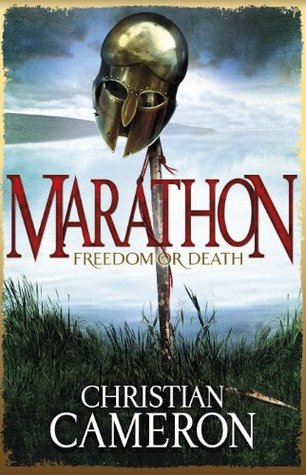
"Arimnestos of Plataea grew up wanting to be a bronze-smith, like his father. Then, in the chaos of war, he was taken to a city in the Persian empire and sold as a slave. To win his freedom he had to show that he could fight and kill. Now, to preserve that freedom, he must kill again. For the Persians are coming. A vast army sent by King Darius to put down the rebellious Greeks and burn the city of Athens to the ground. Standing against them on the plain of Marathon, a much smaller force of Athenians, alongside their Plataean allies. To defeat such overwhelming force seems impossible. And yet to yield would mean the destruction of everything the Greeks have dreamed of. In the dust and heat of Marathon, in the clash of shields and the rush of spears, amidst the thunder of hooves and the screams of the dying, those dreams will undergo their fiercest test - and Arimnestos and his Greek comrades will discover the true price of freedom."
(2011 rv) I finished Marathon after a complete rereading of Killer of Men to get in the spirit of the series and while I liked it a lot, it stopped a little short of blowing me away and I think that Killer of Men is a better book overall; trying to think why - since the writing is very good, the atmosphere pitch perfect as usual and the voice still the same Arimnestos of the series debut with the powerful cast from there - I think that the main reason is that Killer of Men was structured after the hero, while Marathon is structured after historical events and because of that it becomes more rigid and predictable (note 2012: after this year's reread of Marathon and its continuation in Poseidon's Spear the book also jumped a notch to my top 25 list of 2011, though I still slightly prefer Killer of Men as the above reason remains pertinent).
Also Marathon: Freedom or Death is slightly a misnomer since the novel is about two major battles, each taking about half the book including of course the periods up to it. Starting where Killer of Men ends with Arimnestos back home, there is a stretch of passing time and then the hero's return to action under Miltiades is a also a bit contrived, but the part from there to the battle of Lade and its aftermath is superb and that - maybe a third of a book - is what I expected the novel to be and a blow me away narrative.
After Lade, there is another stretch of passing time and while things happen, the tension is simply not there and Arimnestos becomes a pretty awkward narrator on occasion. Then there is the lead up to Marathon and the battle itself and here for some reason I felt the tension from Killer of Men or from the battle of Lade was somewhat lacking and a lot of the action read somewhat repetitive and a bit by the numbers.
Overall, Marathon is a very good book but fails to reach the power of Killer of Men outside the events of the battle of Lade. (note 2012: on the 2012 reread, many details that seemed less important at the time, actually became more interesting here and Arimnestos' domestic happenings and his Athenian odyssey were considerably more involving; the ending is excellent though very emotional, but that is necessary for the segue into Poseidon's Spear)
I am still very interested in the series and look forward to following Arimnestos' tale!
*******************************************************************
Poseidon's Spear (Long War III)
"Arimnestos of Plataea is a man who has seen and done
things that most men only dream about. Sold into slavery as a boy, he
fought his way to freedom - and then to everlasting fame at the Battle
of Marathon where the Greeks crushed the invading Persians.
Sometimes, however, a man's greatest triumph is followed by his greatest sorrow.Returning to his farm, Arimnestos finds that his wife Euphoria has died in childbirth, and in an instant his laurels turn to dust. But the gods are not finished with Arimnestos yet. With nothing left to live for, he throws himself from a cliff into the sea, only to be pulled by strong arms from death's embrace. When he awakes he finds himself chained to an oar in a Phoenician trireme.
And so begins an epic journey that will take Arimnestos and a motley crew of fellow galley slaves to the limits of their courage and beyond the edge of the known world, in a quest for freedom, revenge - and a cargo so precious it is worth dying for."
Sometimes, however, a man's greatest triumph is followed by his greatest sorrow.Returning to his farm, Arimnestos finds that his wife Euphoria has died in childbirth, and in an instant his laurels turn to dust. But the gods are not finished with Arimnestos yet. With nothing left to live for, he throws himself from a cliff into the sea, only to be pulled by strong arms from death's embrace. When he awakes he finds himself chained to an oar in a Phoenician trireme.
And so begins an epic journey that will take Arimnestos and a motley crew of fellow galley slaves to the limits of their courage and beyond the edge of the known world, in a quest for freedom, revenge - and a cargo so precious it is worth dying for."
Poseidon's Spear has
been a novel that was simply impossible to put down the first time and
one I reread immediately again at leisure, while also going back to the earlier two novels to stay in their universe. The book follows Arimnestos from the Marathon aftermath in 490 till
about half way to Thermopyle and Salamis in 480, so till about 485.
The beginning part which may seem a little contrived from the blurb, works very well and the description of the hellish life of a galley slave on a Carthaginian vessel is as vivid and harrowing as it ever gets.
After that, Poseidon's Spear becomes almost a tour through the western part of the "known world" at the time, part that was generally under strong Carthaginian influence due to their powerful war fleet and control of the Gibraltar.
However Arimnestos is nothing but inventive and resourceful, so little details like five Carthaginian warships at the strait, lack of knowledge about Atlantic navigation or about the shape of Gaul and the source of tin, won't deter him and his intrepid multicultural crew - including as officers two black Numidian warriors, a Roman noble, an Ilyrian prince in exile and a Sicilian navigator - of former Carthaginian slaves to get back at their hated masters by plundering their ships, their colonies and their trade...
However Arimnestos is nothing but inventive and resourceful, so little details like five Carthaginian warships at the strait, lack of knowledge about Atlantic navigation or about the shape of Gaul and the source of tin, won't deter him and his intrepid multicultural crew - including as officers two black Numidian warriors, a Roman noble, an Ilyrian prince in exile and a Sicilian navigator - of former Carthaginian slaves to get back at their hated masters by plundering their ships, their colonies and their trade...
The book is largely sea
action, though there is a lot land action too, romance, intrigue, slavery and
we travel to Sicily, Rome, Etruria, Spain, Gaul, Ilyria and even Britain
only to come full circle and prepare the return to Plataea and the war.
Arimnestos breaks one more heart, marries one more time, meets Pythagoras' daughter and current leader of her father's philosophical school and still dreams of Briseis who has also gone to even greater things from wife of the leader of the (failed) rebellion of Asia Minor, to wife of an even more powerful Persian satrap, while (of course) still having the time and inclination for the occasional fling with Arimnestos.
After all, her husband is old and he is Arimnestos' former benefactor from Ephesus, so one could turn a blind eye to a menage a trois if that would bring the famed Greek hero on the Persian side...
After all, her husband is old and he is Arimnestos' former benefactor from Ephesus, so one could turn a blind eye to a menage a trois if that would bring the famed Greek hero on the Persian side...
Monday, October 1, 2012
CLEAN SWEEP, BOOK ONE OF THE INNKEEPER CHRONICLES: FREE New Serial Story by Ilona Andrews (by Mihir Wanchoo)

Read FBC’s Review of “Magic Bites” & “Magic Burns”
Read FBC’s Review of “Magic Strikes” & “Magic Mourns”
Read FBC’s Review of “Magic Bleeds” & “A Questionable Client”
Read FBC’s Review of “Magic Slays” & “Magic Dreams”
Read FBC's Review of "Gunmetal Magic" & "Magic Gifts"
Read FBC's Review of "Retribution Clause" & "Magic Tests"
Due to their books Ilona Andrews have rapidly climbed the reading ranks within the urban fantasy world and my favorites list in the past couple of years. Their writing style as well as their humorous prose along with action-packed story-lines makes their books very addictive to say the least. I’m always looking forward to introduce new readers to their books and so when they announced this new experiment, I was excited to read another new story from this dynamic duo.
This serial story is titled “Clean Sweep” and is book I of the Innkeeper Chronicles. The blurb details were revealed to me by the authors via email & here’s what the plot entails:
“In a quiet Texas suburb, life is calm and peaceful, and that's just like Dina Demille likes it. But now something with long claws and savage teeth is hunting on the night streets, leaving blood on the manicured lawns. As an innkeeper, Dina knows she shouldn't get involved. But with her neighbors' lives at stake, she must make a choice: to remain neutral and stay safe or to risk everything, her magic inn, the safety of her guests, and her life to face an enemy unlike any she had ever expected to meet.”
The first chapter has been posted in parts HERE and HERE, and the first part of the second chapter can be found HERE. This book may or may not be related to the authors' previous work however the authors are being coy about it for now (keep an eye out for clues in the story). For the foreseeable future, the remaining parts of the serial can be found over on this section of their website, be sure to check back every week.
This serial story is titled “Clean Sweep” and is book I of the Innkeeper Chronicles. The blurb details were revealed to me by the authors via email & here’s what the plot entails:
“In a quiet Texas suburb, life is calm and peaceful, and that's just like Dina Demille likes it. But now something with long claws and savage teeth is hunting on the night streets, leaving blood on the manicured lawns. As an innkeeper, Dina knows she shouldn't get involved. But with her neighbors' lives at stake, she must make a choice: to remain neutral and stay safe or to risk everything, her magic inn, the safety of her guests, and her life to face an enemy unlike any she had ever expected to meet.”
The first chapter has been posted in parts HERE and HERE, and the first part of the second chapter can be found HERE. This book may or may not be related to the authors' previous work however the authors are being coy about it for now (keep an eye out for clues in the story). For the foreseeable future, the remaining parts of the serial can be found over on this section of their website, be sure to check back every week.

(list here; click on picture for higher resolution)
Here is the list of the current top 18 books I am looking at courtesy of Goodreads - I cannot emphasize enough how useful Goodreads is to keep track of books you read, you want to read etc, even leaving aside its social network component.
While Imager's Battalion is a truly addictive read that is hard to put down and I am a huge fan of both Rhenn and Quaeryt's tales, the book is coming out only in January, so there is time enough for it if I can resist of course...
On the other hand both Dark Matter (UK) /In Free Fall (US) by Juli Zeh and the trilogy Your Face Tomorrow by Javier Marias are books I have wanted to read for some time now and they seem to fit the spot of "challenging reads of interest" for now.
On the sf front, Alarm of War is a very intriguing Weberian series debut which moves briskly in the 50 pages or so I read so far, while The Fractal Prince is still cluttered, though seems a bit more flowing that The Quantum Thief. As I was not bowled over by that one, The Fractal Prince is a make-or-break series and author book for me and I plan to give it my full attention.
Of the rest, I went fast through the famous and controversial The Reader (63K+ ratings on Goodreads which is a lot) a while ago but I am planning to give it a more thorough read, while the rest are books I want to read given time - some like The Rise of Ransom City, Boxer Beetle, The Black Mausoleum, Breaking Bamboo, Hikikomori and the Rental Sister (this one which is an earc from Net Galley and a January 2013 release has an irresistible title and actually starts very well), The Painter of Silence, The Black Isle and The Uninvited, I am sure I will read at some point for various reasons, the others will see...
Of course the list is not static and as October has some huge asaps (see my comment there) and there is an implied promise by Tony Weisskopf at Baen that an earc of David Weber's Shadow of Freedom will be available to buy by mid-month and even earlier if possible, who knows how this list will look in a week or so...
The mixture of the books above is: 4 SF (including The Last City and The Uninvited) 3 fantasy (including The Black Isle), 11 mainstream, with 7 review copies and 11 books obtained by me. Also 12 are 2012/13 releases, 3 2010/11 ones.
**************************************************************************

(list here; click on picture for higher resolution)
Here, just a quick snapshot of my last 30 books read, covering essentially August and September, and noting that I reviewed either fully or at least in a few thoughts some 14 of the above here on FBC (and Mihir reviewed one more), I plan to review 7 in the near future and maybe talk a little about HHhH too here at some point, while you can find my raw thoughts on Goodreads through the link above.
The mixture of the books above is: 7 SF (including the Steampunk debut The Clockwork Giant) 4 fantasy, 17 mainstream including two installments of a serial, and 2 non-fiction, with 7 review copies and 23 books obtained by me. Also 26/30 have at least one 2012 edition (some are translations, some are US editions of late 2011 UK books).
This
month we are featuring 36 books. There are more than twice as
many new sff and related releases this month in traditional
publishing not to speak of the countless indies from Amazon and
Smashwords but we are limiting ourselves to books that will be
reviewed here or are similar with such. For the full schedule of
October 2012 titles known to us, you can consult the Upcoming Releases page.
The release dates are US unless marked otherwise, though for books released in the UK and US in the same month but on different dates we generally use the US date and they are first edition unless noted differently. The dates are on a best known basis so they are not guaranteed; same about the edition information.
The release dates are US unless marked otherwise, though for books released in the UK and US in the same month but on different dates we generally use the US date and they are first edition unless noted differently. The dates are on a best known basis so they are not guaranteed; same about the edition information.
Since information sometimes is out of date even in the Amazon links we use for listings, books get delayed or sometimes even released earlier, we would truly appreciate if you would send us an email about any listing with incorrect information.

“Mage's Blood” by David Hair. Release Date: October 1, 2012. Published by Jo Fletcher Books. (FAN).
“The Tainted City” by Courtney Schafer. Release Date: October 2, 2012. Published by Night Shade Books. (FAN).
“Daughter of the Sword” by Steve Bein. Release Date: October 2, 2012. Published by Roc. (FAN).
“Between Two Fires” by Christopher Buehlman. Release Date: October 2, 2012. Published by Ace. (FAN/MISC).
“Little Star” by John Ajvide Lindqvist. Release Date: October 2, 2012. Published by Thomas Dunne Books. (HF / US Debut).
“Skarlet” by Thomas Emson. Release Date: October 2, 2012. Published by St. Martin’s Griffin. (HF / US Debut).
*********************************************************************

“Three Parts Dead” by Max Gladstone. Release Date: October 2, 2012. Published by Tor. (FAN).
“Fire Season” by David Weber & Jane Lindskold. Release Date: October 2, 2012. Published by Baen. (YA).
“London Eye” by Tim Lebbon. Release Date: October 2, 2012. Published by Pyr. (YA).
“Quantum Coin” by E.C. Myers. Release Date: October 2, 2012. Published by Pyr. (YA).
“The Assassin's Curse” by Cassandra Rose Clarke. Release Date: October 2, 2012. Published by Angry Robot/Strange Chemistry. (YA).
*********************************************************************

“The Second Ship” by Richard Phillips. Release Date: October 2, 2012. Published by 47North. (SF).
“The Hydrogen Sonata” by Iain M. Banks. Release Date: October 9, 2012. Published by Orbit. (SF).
“Harvest” by William Horwood. UK Release Date: October 11, 2012. Published by Pan Macmillan. (FAN).
“The Twelve” by Justin Cronin. Release Date: October 16, 2012. Published by Ballantine. (SF/MISC).
“The Twelve” by Justin Cronin. Release Date: October 16, 2012. Published by Ballantine. (SF/MISC).
“The Fifty Year Sword” by Mark Z. Danielewski. Release Date: October 16, 2012. Published by Pantheon. (WEIRD/MISC).
“The Secret Keeper” by Kate Morton. Release Date: October 16, 2012. Published by Atria. (MISC).

“Swimming Home” by Deborah Levy. Release Date: October 16, 2012. Published by Bloomsbury. (MISC).
“Zoo Time” by Howard Jacobson. Release Date: October 16, 2012. Published by Bloomsbury. (MISC).
“The Middle Kingdom” by David Wingrove. Release Date: October 18, 2012. Published by Corvus. (SF).
“The King’s Assassin” by Stephen Deas. UK Release Date: October 18, 2012. Published by Gollancz. (YA).
“Tom Swan and the Head of St. George: Part 3 Constantinople” by Christian Cameron. Release Date: October 18, 2012. Published by Orion. (SERIAL/MISC).
“Tom Swan and the Head of St. George: Part 3 Constantinople” by Christian Cameron. Release Date: October 18, 2012. Published by Orion. (SERIAL/MISC).
*********************************************************************

“Luminous Chaos” by Jean-Christophe Valtat. Release Date: October 23, 2012. Published by Melville House. (STPK).
“The Art Forger” by B.A Shapiro. Release Date: October 23, 2012. Published by Algonquin Books. (MISC).
“Jam” by Yahtzee Croshaw. Release Date: October 23, 2012. Published by Dark Horse. (MISC).
“The Night of the Swarm” by Robert V.S. Redick. UK Release Date: October 25, 2012. Published by Gollancz. (FAN).
*********************************************************************
“The Red Knight” by Miles Cameron. UK Release Date: October 25, 2012. Published by Gollancz. (FAN).
“Citadel” by Kate Mosse. UK Release Date: October 25, 2012. Published by Orion. (MISC).
*********************************************************************

“The Death of Light” by Peter Crowther. Release Date: October 30, 2012. Published by Angry Robot. (SF).
“Krampus: The Yule Lord” by Brom. Release Date: October 30, 2012. Published by Harper Voyager. (FAN).
“Ghost Planet” by Sharon Lynn Fisher. Release Date: October 30, 2012. Published by Tor. (SF).
“Black Flower” by Young-ha Kim. Release Date: October 30, 2012. Published by Houghton Mifflin Harcourt (MISC).
“The Lands of Ice & Fire” by George R.R. Martin. Release Date: October 30, 2012. Published by Bantam. (MAPS/MISC).
“Black Flower” by Young-ha Kim. Release Date: October 30, 2012. Published by Houghton Mifflin Harcourt (MISC).
“The Lands of Ice & Fire” by George R.R. Martin. Release Date: October 30, 2012. Published by Bantam. (MAPS/MISC).
“The Tangled Bridge” by Rhodi Hawk. Release Date: October 30, 2012. Published by Tor. (MISC).

John Joseph Adams and Creeping Hemlock Press are proud to present Nightmare, the new online horror magazine, which will be launched on October 1, 2012.

Michael Sullivan’s newest series was announced just a couple of days ago and his next book will be The Crown Tower— a full-length Royce and Hadrian novel—and the first of The Riyria Chronicles, which is scheduled for release by Orbit in August 2013 in trade paperback, electronic book, and audio formats.
Nightmare is an online horror and dark fantasy magazine. In Nightmare’s pages, you will find all kinds of horror fiction, from zombie stories and haunted house tales, to visceral psychological horror. Edited by bestselling anthologist John Joseph Adams, every month Nightmare will bring you a mix of originals and reprints, and featuring a variety of authors—from the bestsellers and award-winners you already know to the best new voices you haven’t heard of yet. When you read Nightmare, it is our hope that you’ll see where horror comes from, where it is now, and where it’s going.
It will also include nonfiction, fiction podcasts, and Q&As with our authors that go behind-the-scenes of their stories. The publication schedule each month will include two pieces of original fiction and two fiction reprints, along with a feature interview, an artist gallery showcasing our cover artist, and our monthly column about horror, “The H Word.” We will publish ebook issues on the first of every month, which will be available for sale in ePub format via our website and also available in other formats such as Kindle and Nook. We will also offer subscriptions to our ebook edition in a variety of formats. Each issue’s contents will be serialized on our website throughout the month, with new features publishing on the first four Wednesdays of every month.
Issue #1
As described above Nightmare will typically feature two original stories and two reprints in every issue. For our debut issue, however, we will be bringing you four all-new, never before published horror stories. Issue #1 will feature new fiction by the following authors: “Property Condemned” by Jonathan Maberry
“Frontier Death Song” by Laird Barron
“Good Fences” by Genevieve Valentine
“Afterlife” by Sarah Langan
Future Issues
Issue #2 (November 2012) will contain an all new tale from horror legend Ramsey Campbell, along with a new story by young writer Desirina Boskovich, as well as classic reprints by award-winning authors Joe Haldeman and Poppy Z. Brite. Future issues will contain work Daniel H. Wilson, Sarah Langan (a second story!), Jeff VanderMeer, Marc Laidlaw, Ted Kosmatka, J. B. Park, Tamsyn Muir, Matt Williamson, and more!
So you can start getting your horror fix over at the Nightmare website as well pre-order the first issue copy!
Issue #1
As described above Nightmare will typically feature two original stories and two reprints in every issue. For our debut issue, however, we will be bringing you four all-new, never before published horror stories. Issue #1 will feature new fiction by the following authors: “Property Condemned” by Jonathan Maberry
“Frontier Death Song” by Laird Barron
“Good Fences” by Genevieve Valentine
“Afterlife” by Sarah Langan
Future Issues
Issue #2 (November 2012) will contain an all new tale from horror legend Ramsey Campbell, along with a new story by young writer Desirina Boskovich, as well as classic reprints by award-winning authors Joe Haldeman and Poppy Z. Brite. Future issues will contain work Daniel H. Wilson, Sarah Langan (a second story!), Jeff VanderMeer, Marc Laidlaw, Ted Kosmatka, J. B. Park, Tamsyn Muir, Matt Williamson, and more!
So you can start getting your horror fix over at the Nightmare website as well pre-order the first issue copy!

Michael Sullivan’s newest series was announced just a couple of days ago and his next book will be The Crown Tower— a full-length Royce and Hadrian novel—and the first of The Riyria Chronicles, which is scheduled for release by Orbit in August 2013 in trade paperback, electronic book, and audio formats.
Here’s what Michael had to say about the prequel series:
“The Riyria Chronicles, as I envision them, are stories that fill in the history of the twelve years of Royce and Hadrian’s life as Riyria. They will be generally standalone novels that I imagine will center on significant events in their career together, told mostly in order, and I was thinking one book for everyone of one their twelve years. That’s not to say I will write twelve books. This isn’t that kind of series. It’s not an ongoing tale or interconnected in the sense that Revelations was, or Song of Ice and Fire is."
"It really can’t be since if you’ve read The Riyria Revelations, you already know how everything turns out. So this won’t be a single story told in parts, but rather much more episodic like The Adventure of Sherlock Holmes or maybe the Dresden Files—only with medieval thieves instead of nineteenth century detectives or modern day wizards.”
"Chronicles will likely hit on topics hinted at in The Riyria Revelations that readers have asked about like the original Drumindor job, the disaster that was Blythe Castle, the Crown Tower heist as well as others never previously touched on. While I have several additional projects under production, The Riyria Chronicles allows me a framework to put out a new Royce and Hadrian story every so often, just for the fun of it without hampering me from stretching my authorial limits by discovering new characters and worlds to explore.“
For more info on the blurb, head over to the Orbit blog and keep an eye out for The Crown Tower next year.
NOTE: Announcements provided by John Joseph Adams and Michael J. Sullivan.
“The Riyria Chronicles, as I envision them, are stories that fill in the history of the twelve years of Royce and Hadrian’s life as Riyria. They will be generally standalone novels that I imagine will center on significant events in their career together, told mostly in order, and I was thinking one book for everyone of one their twelve years. That’s not to say I will write twelve books. This isn’t that kind of series. It’s not an ongoing tale or interconnected in the sense that Revelations was, or Song of Ice and Fire is."
"It really can’t be since if you’ve read The Riyria Revelations, you already know how everything turns out. So this won’t be a single story told in parts, but rather much more episodic like The Adventure of Sherlock Holmes or maybe the Dresden Files—only with medieval thieves instead of nineteenth century detectives or modern day wizards.”
"Chronicles will likely hit on topics hinted at in The Riyria Revelations that readers have asked about like the original Drumindor job, the disaster that was Blythe Castle, the Crown Tower heist as well as others never previously touched on. While I have several additional projects under production, The Riyria Chronicles allows me a framework to put out a new Royce and Hadrian story every so often, just for the fun of it without hampering me from stretching my authorial limits by discovering new characters and worlds to explore.“
For more info on the blurb, head over to the Orbit blog and keep an eye out for The Crown Tower next year.
NOTE: Announcements provided by John Joseph Adams and Michael J. Sullivan.
Subscribe to:
Posts (Atom)


