Wednesday, March 11, 2015
GUEST POST: Fantastic Economies: A Conversation Between Gabriel Squailia and Karina Sumner-Smith

Gabriel Squailia: Karina, one of the most exciting things about discovering your book on the Talos roster is that we’ve both created worlds with fantastic economic systems completely different from what we’ve got on Earth. In Radiant and Defiant, the first two books of your Towers Trilogy, the economy runs on magic, while my debut Dead Boys presents an underworld with an economy based on time. Before we get into the nuts and bolts, I’m curious: how did you develop that part of your world? Were you interested in messing with money from the beginning, or did it evolve as you wrote?
Karina Sumner-Smith: Foolish as it sounds, when I started writing Radiant I didn’t realize that I was writing a book about money (or social class, or economic power) at all. Instead, the book began with an idea: what if there was a far-future, post-apocalyptic world in which everyone had magic, and magic was used for everything—and the main character was a girl with no magic at all?
Easy, I thought. Straightforward. But the interesting thing in building a fantasy world, I think, is taking what appear to be simple premises and watching them cascade.
It didn’t take me long to realize that this magic, this power that could open (literal and figurative) doors, that ensured health and safety and long life, was money. And if magic/money is something that you are born with, how does that shape your view of the world and your place within it? The “value of a person” suddenly has very literal, very real meaning—and very interesting consequences for concepts of social class, social mobility, and poverty within the world.
And if you have no magic—literally no money, no power, and no ability to earn either—what is your life like? How do you survive? What kind of person does that make you? These are the sorts of questions that really kick my story-brain into gear. And, for me, the best way to discover the answers is to start writing!
But how about you? The idea of the deceased residents of the Land of the Dead using time as currency is a fascinating premise. How does that economic system work, and where did the concept come from?
Karina Sumner-Smith: Foolish as it sounds, when I started writing Radiant I didn’t realize that I was writing a book about money (or social class, or economic power) at all. Instead, the book began with an idea: what if there was a far-future, post-apocalyptic world in which everyone had magic, and magic was used for everything—and the main character was a girl with no magic at all?
Easy, I thought. Straightforward. But the interesting thing in building a fantasy world, I think, is taking what appear to be simple premises and watching them cascade.
It didn’t take me long to realize that this magic, this power that could open (literal and figurative) doors, that ensured health and safety and long life, was money. And if magic/money is something that you are born with, how does that shape your view of the world and your place within it? The “value of a person” suddenly has very literal, very real meaning—and very interesting consequences for concepts of social class, social mobility, and poverty within the world.
And if you have no magic—literally no money, no power, and no ability to earn either—what is your life like? How do you survive? What kind of person does that make you? These are the sorts of questions that really kick my story-brain into gear. And, for me, the best way to discover the answers is to start writing!
But how about you? The idea of the deceased residents of the Land of the Dead using time as currency is a fascinating premise. How does that economic system work, and where did the concept come from?
.jpeg)
GS: It’s a startlingly similar origin story. I’d been kicking around the idea of a book set in the underworld for years, but it was only when I broke ground on this draft that I started thinking about money. My characters are all dead, and they all floated in on the River Lethe with whatever they had on them at the moment of death. Occasional floods bring in wrecked buildings and such, but the bottom line is that you’ve got no currency other than the odd bit of pocket change. The corpses of Dead City don’t build or make anything, much less mint currency—they’re a culture of scavengers.
The one thing everyone does have is time. Eternal time, since these corpses decay incredibly slowly. And most of them are spending it drinking, gossiping, and gambling, surefire ways to waste time in any world.
That’s where the notion of time-exchange came in. I needed a city of gamblers, but what would they gamble? Let’s say you start with the coins in your pocket, then lose the buttons on your shirt. You’ve got nothing to do, so you keep going, out of desperate boredom: “I’ll bet you a year I roll a seven next.” And then, when you roll a five instead, you’re my indentured servant for a year.
That’s the mythical textbook version that probably never happened, the equivalent to the barter town where dudes are trading hobnails for pints of mead or whatever. The reality is that once you lose, I don’t want to listen to you complaining for a year, so I trade you in to the guy who owns the gambling halls and keeps the accounts. He takes you, the debtor, into his vast pool of laborers. Then I get a year in my account and gamble it right back into his coffers.
It’s an absurd premise, but it’s how I felt about the debt hanging over me in my twenties: that I’d traded my present for my future, betting that I’d make gobs of money one day even while I suspected it would never happen. That sense of absurdity, coupled with the feeling that all the debt-ridden twentysomethings I knew were supernaturally diminished by the weight of the bills on their backs, was the real genesis of the storyline in Dead Boys.
Once you got in deep, did you discover that the economy of Radiant had similar roots in your own experience?
The one thing everyone does have is time. Eternal time, since these corpses decay incredibly slowly. And most of them are spending it drinking, gossiping, and gambling, surefire ways to waste time in any world.
That’s where the notion of time-exchange came in. I needed a city of gamblers, but what would they gamble? Let’s say you start with the coins in your pocket, then lose the buttons on your shirt. You’ve got nothing to do, so you keep going, out of desperate boredom: “I’ll bet you a year I roll a seven next.” And then, when you roll a five instead, you’re my indentured servant for a year.
That’s the mythical textbook version that probably never happened, the equivalent to the barter town where dudes are trading hobnails for pints of mead or whatever. The reality is that once you lose, I don’t want to listen to you complaining for a year, so I trade you in to the guy who owns the gambling halls and keeps the accounts. He takes you, the debtor, into his vast pool of laborers. Then I get a year in my account and gamble it right back into his coffers.
It’s an absurd premise, but it’s how I felt about the debt hanging over me in my twenties: that I’d traded my present for my future, betting that I’d make gobs of money one day even while I suspected it would never happen. That sense of absurdity, coupled with the feeling that all the debt-ridden twentysomethings I knew were supernaturally diminished by the weight of the bills on their backs, was the real genesis of the storyline in Dead Boys.
Once you got in deep, did you discover that the economy of Radiant had similar roots in your own experience?

KSS: Absolutely. I think that when you begin to actively consider the financial and economic aspects of worldbuilding, what you are talking about are resources and scarcity. Who has something of value, what can they do with it, and what will they do to keep control of that resource? And, on the flipside, what happens to those who have few or no resources? What might they do to change their situation, and/or how do they survive?
In other words, when you’re thinking about economics in this way, you’re delving into some of the root causes of inequality within your constructed world—and I think that issues of inequality are inherently deeply personal. I know that a lot of the thematic questions that I end up posing in Radiant and its sequels are ones that I spend a lot of time thinking about. I loved delving into ideas of privilege and poverty, all the ways a person might have value that are in no way reflected by the numbers on their bank statement, and the things we feel that we are owed or have a right to as members of prosperous, developed nations.
Yet these are also the things that can grind us down on a day to day basis. Exploring such ideas in a fantastic setting provides a bit of distance, I think; lets us (as writers and readers both) explore new perspectives and points of view. So instead of talking about banking crises and discrimination, I’m writing about magic and ghosts, a utopian city of floating towers and the lives scratched out of dirt and ruin below them on the ground.
But magic, in my world, is the power of life—it keeps you healthy, heals the sick, and ensures long life, in addition to being used for a myriad of everyday tasks like buying lunch and sending messages. Yet time is such a different form of currency! What’s the value of money to the characters in Dead Boys? What can time buy?
GS: There’s the rub: animate corpses don’t really need much. They don’t eat, they don’t sleep, they don’t require health care. So from the start, I knocked the bottom rungs off of Maslow’s hierarchy of needs and focused this economy on desire.
Aside from the booze and gambling, there’s a vast marketplace for the ruined objects scavenged from the River Lethe. Corpses will buy anything that reminds them of their lives, and the jetsam is marked up accordingly. But the big money is in preservation: the dead will pay vast sums of time to look more lifelike, even when the result would be hideous to a living human.
The story’s hero, Jacob Campbell, is Dead City’s most successful preservationist, thanks to his taxidermic acumen, and Dead Boys begins with him spending every moment of his fortune in a bid to find something worth doing for the rest of eternity. His quest takes him away from the economy of time into a way of occupying his afterlife with something meaningful.
But time-as-money, accrued for its own sake, is power, too, and that’s what Jacob’s companion Leopold L’Eclair is after. In the end, time means something different to each of the major characters in the story, so using it in the place of cash often felt like a way to riff on the book’s central obsession.
KSS: What about other interesting economies in SFF? I know when I’m trying to think of great examples of speculative economics, my mind goes right to science fiction. There are lots of great examples of novels and series that show interesting, complex speculation on what how a far-future economy might work, and how economic systems may be impacted by ongoing technological change. Books like Iain Banks’ Culture novels, Paolo Bacigalupi’s The Windup Girl, and some of Cory Doctorow’s works come to mind.
GS: Neal Stephenson, too, did amazing things with money in his early novels. My great disappointment in REAMDE had nothing to do with what that book was, but with what I’d hoped it would be: the first act seemed to promise his ultimate thesis on economics and culture, and then the plot kicked in.
In other words, when you’re thinking about economics in this way, you’re delving into some of the root causes of inequality within your constructed world—and I think that issues of inequality are inherently deeply personal. I know that a lot of the thematic questions that I end up posing in Radiant and its sequels are ones that I spend a lot of time thinking about. I loved delving into ideas of privilege and poverty, all the ways a person might have value that are in no way reflected by the numbers on their bank statement, and the things we feel that we are owed or have a right to as members of prosperous, developed nations.
Yet these are also the things that can grind us down on a day to day basis. Exploring such ideas in a fantastic setting provides a bit of distance, I think; lets us (as writers and readers both) explore new perspectives and points of view. So instead of talking about banking crises and discrimination, I’m writing about magic and ghosts, a utopian city of floating towers and the lives scratched out of dirt and ruin below them on the ground.
But magic, in my world, is the power of life—it keeps you healthy, heals the sick, and ensures long life, in addition to being used for a myriad of everyday tasks like buying lunch and sending messages. Yet time is such a different form of currency! What’s the value of money to the characters in Dead Boys? What can time buy?
GS: There’s the rub: animate corpses don’t really need much. They don’t eat, they don’t sleep, they don’t require health care. So from the start, I knocked the bottom rungs off of Maslow’s hierarchy of needs and focused this economy on desire.
Aside from the booze and gambling, there’s a vast marketplace for the ruined objects scavenged from the River Lethe. Corpses will buy anything that reminds them of their lives, and the jetsam is marked up accordingly. But the big money is in preservation: the dead will pay vast sums of time to look more lifelike, even when the result would be hideous to a living human.
The story’s hero, Jacob Campbell, is Dead City’s most successful preservationist, thanks to his taxidermic acumen, and Dead Boys begins with him spending every moment of his fortune in a bid to find something worth doing for the rest of eternity. His quest takes him away from the economy of time into a way of occupying his afterlife with something meaningful.
But time-as-money, accrued for its own sake, is power, too, and that’s what Jacob’s companion Leopold L’Eclair is after. In the end, time means something different to each of the major characters in the story, so using it in the place of cash often felt like a way to riff on the book’s central obsession.
KSS: What about other interesting economies in SFF? I know when I’m trying to think of great examples of speculative economics, my mind goes right to science fiction. There are lots of great examples of novels and series that show interesting, complex speculation on what how a far-future economy might work, and how economic systems may be impacted by ongoing technological change. Books like Iain Banks’ Culture novels, Paolo Bacigalupi’s The Windup Girl, and some of Cory Doctorow’s works come to mind.
GS: Neal Stephenson, too, did amazing things with money in his early novels. My great disappointment in REAMDE had nothing to do with what that book was, but with what I’d hoped it would be: the first act seemed to promise his ultimate thesis on economics and culture, and then the plot kicked in.

Samuel Delany also has a wonderful eye for economics, and ever since I read this passage in his introduction to About Writing I’ve been unable to stop thinking about it:
"One way or the other, directly or indirectly, good fiction tends to be about money … about the effects of having it or of not having it, the tensions caused between people used to having more of it or less of it, or even, sometimes, the money it takes to write the fiction itself, if not to live it. Supremely, it’s about the delusions the having of it or the not having of it force us to assume in order to go on. … the economic is, nevertheless, not the most interesting thing to me as a reader personally … But stories that never address money or the process by which we acquire it—if not directly then indirectly—are usually stillborn."
KSS: When it comes to fantasy, I have to point to Elizabeth Bear’s excellent Eternal Sky trilogy as an example of great fantasy-world economics done well. Of course, the books didn’t strike me as novels about trade and economics, so much as stories in which the economic and cultural impacts of trade were a carefully planned and well-integrated part of the story’s whole. The attention to detail here really worked for me.
Or then there’s Terry Pratchett’s Making Money, a book about … well, banking. (Proof that Pratchett can make anything entertaining.) And on the flipside of that coin (so to speak), where do you think fantasy writers go wrong in writing about economies and their consequences in fantastic worlds? What would you like to see done better, or differently?
"One way or the other, directly or indirectly, good fiction tends to be about money … about the effects of having it or of not having it, the tensions caused between people used to having more of it or less of it, or even, sometimes, the money it takes to write the fiction itself, if not to live it. Supremely, it’s about the delusions the having of it or the not having of it force us to assume in order to go on. … the economic is, nevertheless, not the most interesting thing to me as a reader personally … But stories that never address money or the process by which we acquire it—if not directly then indirectly—are usually stillborn."
KSS: When it comes to fantasy, I have to point to Elizabeth Bear’s excellent Eternal Sky trilogy as an example of great fantasy-world economics done well. Of course, the books didn’t strike me as novels about trade and economics, so much as stories in which the economic and cultural impacts of trade were a carefully planned and well-integrated part of the story’s whole. The attention to detail here really worked for me.
Or then there’s Terry Pratchett’s Making Money, a book about … well, banking. (Proof that Pratchett can make anything entertaining.) And on the flipside of that coin (so to speak), where do you think fantasy writers go wrong in writing about economies and their consequences in fantastic worlds? What would you like to see done better, or differently?

GS: Fantasy in its epic mode tends to treat money as it would be treated in a D&D campaign. I’m not sure that’s a flaw so much as a habit, but it does cause the issue to protrude. Patrick Rothfuss’ scrupulous accounting of Kvothe’s funds in The Name of the Wind often made me wonder if he had a character sheet. I liked that Kvothe didn’t have much of it, that poverty was a constant threat, as opposed to Harry Potter, who’s just got a bunch of gold in a vault, doesn’t he, for pretty much all seven books? He could’ve benefited from a robbery.
But given how much contemporary fantasy plays with magic—what it is, how it works, what it can do—I’d love to see more active toying with the nature of money itself. Since getting it, keeping it, and getting more of it is one of the primary struggles of our lives, it seems like there’s a lot of room to make some radical changes and see how they affect the rest of the story.
Maybe this is antithetical to what fantasy’s trying to do, though. Epic fantasy seems largely concerned with mutating the past but retaining its essential character, or filtering it through the present, while urban fantasy aims to reflect the moment with more pointed metaphors. Completely alternate visions of reality might not be in fantasy’s wheelhouse. But maybe it ought to be urged in that direction. To me, economics seems like a powerful lever to lean on. It seems like a greater emphasis on action means less room for fiddly bits like economics, but I’d love to be proven wrong on that count.
KSS: Done well, I think an interesting speculative economy could be illuminated by or drive an action-oriented plot. Desperate characters take drastic actions—and what makes a character more desperate than having no money, no resources, and a ticking clock?
For me, I have the greatest trouble with the stories that are about massive wars between nations, armies clashing in huge battles, etc., where it’s clear that the author has never considered how those are paid or fed, who’s funding the rebellion, or how these nations trade and interact outside of the battlefield. For me, that’s not just a matter of attention to detail or rigorous worldbuilding; it’s a key part of creating a story that feels real and true. Political scandals, massive social upheavals, war and rebellion, magic and power—money always plays a part.
I’d also love to see more examples that move beyond metal coins as currency in a feudal society, or variations on modern-day capitalism. Why can’t the economic system of a world be as different, fascinating, and complex as its history, politics, or magical system?
GS: I do feel like we’re at the beginning of a new phase for fantastic writing, with far less attention being paid to homage. Maybe the SF/F answer to Liar’s Poker is in the pipeline as we speak!
KSS: And I, for one, would love to read it.
But given how much contemporary fantasy plays with magic—what it is, how it works, what it can do—I’d love to see more active toying with the nature of money itself. Since getting it, keeping it, and getting more of it is one of the primary struggles of our lives, it seems like there’s a lot of room to make some radical changes and see how they affect the rest of the story.
Maybe this is antithetical to what fantasy’s trying to do, though. Epic fantasy seems largely concerned with mutating the past but retaining its essential character, or filtering it through the present, while urban fantasy aims to reflect the moment with more pointed metaphors. Completely alternate visions of reality might not be in fantasy’s wheelhouse. But maybe it ought to be urged in that direction. To me, economics seems like a powerful lever to lean on. It seems like a greater emphasis on action means less room for fiddly bits like economics, but I’d love to be proven wrong on that count.
KSS: Done well, I think an interesting speculative economy could be illuminated by or drive an action-oriented plot. Desperate characters take drastic actions—and what makes a character more desperate than having no money, no resources, and a ticking clock?
For me, I have the greatest trouble with the stories that are about massive wars between nations, armies clashing in huge battles, etc., where it’s clear that the author has never considered how those are paid or fed, who’s funding the rebellion, or how these nations trade and interact outside of the battlefield. For me, that’s not just a matter of attention to detail or rigorous worldbuilding; it’s a key part of creating a story that feels real and true. Political scandals, massive social upheavals, war and rebellion, magic and power—money always plays a part.
I’d also love to see more examples that move beyond metal coins as currency in a feudal society, or variations on modern-day capitalism. Why can’t the economic system of a world be as different, fascinating, and complex as its history, politics, or magical system?
GS: I do feel like we’re at the beginning of a new phase for fantastic writing, with far less attention being paid to homage. Maybe the SF/F answer to Liar’s Poker is in the pipeline as we speak!
KSS: And I, for one, would love to read it.

Official Author Website
Order DEAD BOYS here
GUEST AUTHOR INFORMATION: Gabriel Squailia is the author of the dark fantasy Dead Boys, out March 10 from Talos Press. An alumnus of Friends World Program, he studied storytelling and literature in India, Europe, and the Middle East before settling in the Berkshires of western Massachusetts. Known locally as BFG, he makes his living as a dance-floor DJ. His ramblings, hinged and unhinged, can be found over here.
Order DEAD BOYS here
GUEST AUTHOR INFORMATION: Gabriel Squailia is the author of the dark fantasy Dead Boys, out March 10 from Talos Press. An alumnus of Friends World Program, he studied storytelling and literature in India, Europe, and the Middle East before settling in the Berkshires of western Massachusetts. Known locally as BFG, he makes his living as a dance-floor DJ. His ramblings, hinged and unhinged, can be found over here.

Official Author Website
Order RADIANT here
Pre-order DEFIANT here
Read Cost And Consequence In The Creation Of A Magic System by Karina Sumner-Smith (guest post)
GUEST AUTHOR INFORMATION: Karina Sumner-Smith is the author of the Towers Trilogy from Talos/Skyhorse: Radiant (Sept 2014), Defiant (May 2015), and Towers Fall (Oct 2015). In addition to novel-length work, Karina has published a range of science fiction, fantasy, and horror short stories that have been nominated for the Nebula Award, reprinted in several Year’s Best anthologies, and translated into Spanish and Czech. She lives near the shores of Lake Huron with her husband, a very small dog, and a very large cat. Visit her online on her website.
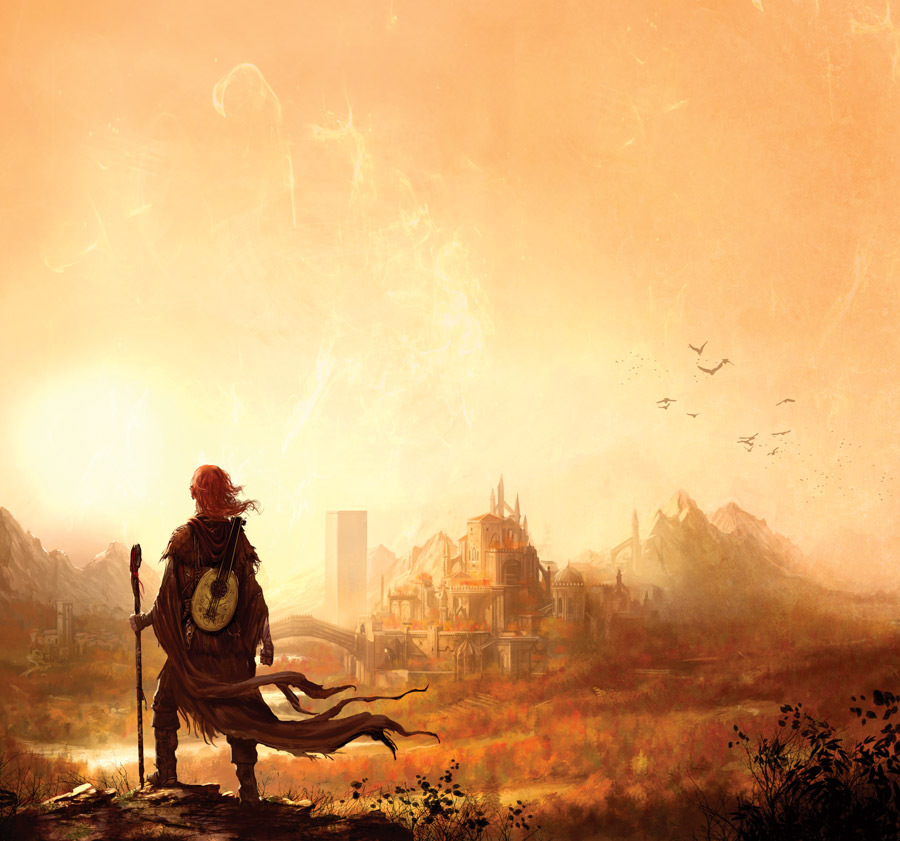
NOTE: Netherworld Capital City art by Jesse Van Dijk. Author pictures courtesy of the authors themselves. Samuel R. Delany picture courtesy of Maria Popova & Brain Pickings. Kvothe artwork by Marc Simonetti.
Order RADIANT here
Pre-order DEFIANT here
Read Cost And Consequence In The Creation Of A Magic System by Karina Sumner-Smith (guest post)
GUEST AUTHOR INFORMATION: Karina Sumner-Smith is the author of the Towers Trilogy from Talos/Skyhorse: Radiant (Sept 2014), Defiant (May 2015), and Towers Fall (Oct 2015). In addition to novel-length work, Karina has published a range of science fiction, fantasy, and horror short stories that have been nominated for the Nebula Award, reprinted in several Year’s Best anthologies, and translated into Spanish and Czech. She lives near the shores of Lake Huron with her husband, a very small dog, and a very large cat. Visit her online on her website.
NOTE: Netherworld Capital City art by Jesse Van Dijk. Author pictures courtesy of the authors themselves. Samuel R. Delany picture courtesy of Maria Popova & Brain Pickings. Kvothe artwork by Marc Simonetti.
 12:00 AM |
  Posted by
The Reader |
Posted by
The Reader |


Order
“The Buried Life” HERE
Read
An Excerpt HERE
Carrie Patel's The Buried Life is out now from Angry
Robot, and it is, in a word, excellent.
The
story takes place sometime in the future, after a mysterious catastrophe has
driven what remains of humanity underground. That event, however, was
generations ago: while this is technically a post-apocalyptic setting, humanity
has had generations to recover and develop new cities and societies. At the
heart, though, there is a mystery: what happened to the ancient humans? This is
a world where knowledge of history is a mark of power, and it's tightly
regulated. When a historian turns up dead, this sets off a spiral of events
that threatens the fabric of modern civilization.
Before
reading this, I would have said I was bored to death not just of
post-apocalyptic settings, but also of police procedural plotting in fantasy,
and I would have been wrong. Patel does
a lot of subversion, so subtly it can go totally unnoticed—but just when I was
worried we were falling into a tired trope, she surprised me and deepened the
story with that expectation.
We
have two protagonists: one highly capable police officer, Liesl Malone, and a laundress with a penchant for stories, Jane Lin. In some ways, Inspector Malone resembles the sort of
hard-boiled, dogged detective we've seen in so many stories before, but I was
relieved she doesn't share their typical angst and disillusionment. Realistic?
Sure. But she believes in what she's doing, and she is absolutely relentless. Jane is practical, conscientious, and
more observant than is quite healthy; and, as the story progresses, she has
more of a taste and knack for handling danger than she'd ever expected.
Their
motivations in the story are very different, but they are both clever (and
believably so, in the contexts this manifests) and competent at their jobs. I
have a deep and abiding love for competent and intelligent characters, so I
would have forgiven the story a lot simply for possessing
such compelling characters. Happily, I didn't need to forgive it anything: this
story is strong all the way through.
What
struck me right from the start is that the writing is incredibly efficient.
This is one of the fastest paced books I've read in a long time. Patel wastes no time with excessive
description or extraneous scenes, but still manages to convey a full sense of
the world and its underlying implications. The stakes are always clear,
transitioning effortlessly from scene to scene, and I found the story
impossible to put down. Fans of fast-paced narratives (for instance, most of Brandon Sanderson's work) should
definitely give this one a look. The ending is perfectly set up, but only in
retrospect: I didn't see it coming, and the world is left completely upturned.
In
short, The Buried Life is a fantastic
start to Carrie Patel's new series,
and this one is going straight onto my “Buy Sequel Immediately Upon Release” list.
Fortunately, I don't have long to wait: the sequel Cities and Thrones will be out this July.
Friday, March 6, 2015
"Veronic Mars: The Thousand Dollar Tan Line" by Rob Thomas and Jennifer Graham (Reviewed by Cindy Hannikman)

OVERVIEW: Ten years
after graduating from high school in Neptune, California, Veronica Mars is back
in the land of sun, sand, crime, and corruption. She's traded in her law degree
for her old private investigating license, struggling to keep Mars
Investigations afloat on the scant cash earned by catching cheating spouses
until she can score her first big case.
Now it's spring break, and college students descend on Neptune, transforming the beaches and boardwalks into a frenzied, week-long rave. When a girl disappears from a party, Veronica is called in to investigate. But this is not a simple missing person's case. The house the girl vanished from belongs to a man with serious criminal ties, and soon Veronica is plunged into a dangerous underworld of drugs and organized crime. And when a major break in the investigation has a shocking connection to Veronica's past, the case hits closer to home than she ever imagined.
Now it's spring break, and college students descend on Neptune, transforming the beaches and boardwalks into a frenzied, week-long rave. When a girl disappears from a party, Veronica is called in to investigate. But this is not a simple missing person's case. The house the girl vanished from belongs to a man with serious criminal ties, and soon Veronica is plunged into a dangerous underworld of drugs and organized crime. And when a major break in the investigation has a shocking connection to Veronica's past, the case hits closer to home than she ever imagined.
FORMAT: Thousand-Dollar Tan Line is the
first Veronica Mars mystery in a proposed series. Fans of Veronica Mars or
those curious about the series will benefit the most by reading this book after
watching the series and the movie. However, it isn't necessary.
The novel stands at 324 pages and was published by Vintage
on March 25, 2014.
ANALYSIS: I became a 'Marshmallow' (the term used to
describe fans of Veronica Mars) a lot later than most people. I had just
finished catching up on the series and watching the movie when I heard that the
series – while not being picked up for TV – was making a comeback of sorts;
this time in book form.
The Thousand-Dollar Tan Line is an
exciting addition to the Veronica Mars franchise. It ultimately picks up a
month or two after the movie, which helps die-hard fans build on the world of
Neptune.
I walked into Thousand-Dollar Tan Line with very
low expectations. I have to admit, I wasn't a huge fan of the movie and the
thought of a book series made it seem as if people were trying to ride the
gravy train. I was pleasantly surprised by my experience.
The Thousand-Dollar Tan Line is far from
a complex mystery novel, but I think the fast pace of the novel mixed with the
fun of seeing old favorite characters from Neptune made up for it. I found the
mystery pretty much standard for the Veronica Mars series. In fact, it was
pretty much run-of-the-mill Neptune mystery.
There were parts of the novel that seemed almost
predictable. Maybe it is because I just saw the entire series and movie, maybe
not. I just had a sense that the novel/plot was going a certain direction and
it was. Again, I'm not so sure this is a book that is trying to win 'best crime
novel', more so that it is trying to give fans a chance to continue the
Veronica Mars world.
One of the biggest disappointments of the book was the
choice to write the book in third person. Veronica Mars was a favorite show of
mine because of her sassy, witty commentary on things. Unfortunately, this book
doesn't really achieve that 'voice'. It feels almost like an outsider looking
on and trying to tell me what Veronica would sassily say or a comeback she'd
have for someone.
I really think this book would have been amazing as a
first-person novel. It would have provided readers a chance to get that
witty/sarcastic commentary in without it feeling forced. Sadly, that wasn't the
way it went and I think it was a major let down.
Would I recommend Thousand-Dollar Tan Line to people
who haven't followed Veronica Mars? Probably not as I think it is more of a
book for fans than a book that will bring in new fans. New fans wouldn't
understand the history of the characters, the nostalgia associated with seeing
different characters return, or even get the dynamics of Neptune.
Fans of Veronica Mars will certain love this novel. Even
though some of Veronica's sass is missing, it still was a nice read. It was
fun, fast, and really serves as a nice, yet different addition to the Veronica
Mars family.
Monday, March 2, 2015
GUEST POST: Finn Fancy vs Discworld: The Humor Fork in My Writing Road by Randy Henderson

When I wrote the first lines of Finn Fancy, it wasn't going to be my book that sold. I was just having some fun while scratching my writing itch because I was burned out on writing deep and seriously serious epicly epics.
That first burst of being silly and having fun took me through the opening with the crazy magical attack, and then after a bit of thought through a crazy Dunkin Donuts story, the first snarky interaction with Finn's sister, and Finn's mother's ghost telling a story about the Holy Crap.
Then I had to pause, because I realized I really was having fun with it, and liking the characters, and wanted to keep going. Many of my short stories featured humor, and I'd read folks like Douglas Adams, Terry Pratchett, Jim C Hines, Michael Underwood and Christopher Moore, but hadn't dared dream I could get published writing humorous novels. Yet I really wanted to keep writing Finn Fancy.
So I had to actually think about where the story was heading, and what would drive the plot. I drafted up a rough outline, and brainstormed an initial cast of characters pretty quickly, then forged forward. And as I did, I realized I had to also begin making more conscious choices about where to insert humor, how to insert it, and how much to insert.
I had reached a kind of fork in the road at that point -- I could either attempt the Adams and Pratchett route of complete (and genius) whacky parody with comical characters and crazy other worlds, and hope that it somehow worked; or I could write a story anchored in our reality (with a hidden magical layer), and give it a humorous voice with the occasional dips into complete whackiness.
I chose door number two, the approach of using the humor to balance the darker or more serious aspects of the story, to break it up and make it more fun than grim, more funny that gritty.
Which is not to say Pratchett and others don't also have serious moments and drama in their stories, obviously, and Pratchett definitely explores issues of religion and politics, culture and economics.
Then I had to pause, because I realized I really was having fun with it, and liking the characters, and wanted to keep going. Many of my short stories featured humor, and I'd read folks like Douglas Adams, Terry Pratchett, Jim C Hines, Michael Underwood and Christopher Moore, but hadn't dared dream I could get published writing humorous novels. Yet I really wanted to keep writing Finn Fancy.
So I had to actually think about where the story was heading, and what would drive the plot. I drafted up a rough outline, and brainstormed an initial cast of characters pretty quickly, then forged forward. And as I did, I realized I had to also begin making more conscious choices about where to insert humor, how to insert it, and how much to insert.
I had reached a kind of fork in the road at that point -- I could either attempt the Adams and Pratchett route of complete (and genius) whacky parody with comical characters and crazy other worlds, and hope that it somehow worked; or I could write a story anchored in our reality (with a hidden magical layer), and give it a humorous voice with the occasional dips into complete whackiness.
I chose door number two, the approach of using the humor to balance the darker or more serious aspects of the story, to break it up and make it more fun than grim, more funny that gritty.
Which is not to say Pratchett and others don't also have serious moments and drama in their stories, obviously, and Pratchett definitely explores issues of religion and politics, culture and economics.

But as an example of the difference, the underlying foundation of Finn's reality is our own world with all its rules and issues, a world of embarrassing high school memories and awkward dates, where the characters are folks you might know in real life; whereas Rincewind's world is a Discworld on the back of elephants on the back of a giant space turtle, filled with characters who are parodies of real world and fictional figures, where Pratchett finds a way to shine a light on the ridiculous (and painful) in our world by taking it out of the context of our world and plopping it down in the middle of his wonderfully crazy fantasy world.
Even Adams, who featured Earth in his work, made his characters completely comical (or comically sad), and quickly made it clear that our world was far more ridiculous than we ever realized. In other words, Pratchett and Adams took it to a whole other level that I completely envy but did not feel was right for Finn Fancy (or perhaps that I just wasn't brave enough to commit to). I come close at times, maybe, but there are entire sentences -- nay, paragraphs even -- where I don't make a single joke.
Perhaps in part because I'd read many manuscripts from fellow aspiring writers who'd attempted humor and parody in the Adams and Pratchett style, and failed. I knew enough to see that if you try to write purely comical stuff, or humor that is deeply cultural in nature, it is like telling a long joke -- some people will get the joke, and some won't, some will like the joke, and some won't.
Even Adams, who featured Earth in his work, made his characters completely comical (or comically sad), and quickly made it clear that our world was far more ridiculous than we ever realized. In other words, Pratchett and Adams took it to a whole other level that I completely envy but did not feel was right for Finn Fancy (or perhaps that I just wasn't brave enough to commit to). I come close at times, maybe, but there are entire sentences -- nay, paragraphs even -- where I don't make a single joke.
Perhaps in part because I'd read many manuscripts from fellow aspiring writers who'd attempted humor and parody in the Adams and Pratchett style, and failed. I knew enough to see that if you try to write purely comical stuff, or humor that is deeply cultural in nature, it is like telling a long joke -- some people will get the joke, and some won't, some will like the joke, and some won't.

What that means in a practical sense is that if the core of your story is the humor, then that will be a tougher sell both to editors and to readers. Unless you are a genius like Pratchett or Adams. Not an impossible sell, just a tougher sell.
But if you incorporate humor as one balanced aspect of a story that also has drama, suspense, action, adventure, and romance, then readers who do not get the joke or find it funny may still enjoy the other aspects of your story.
And while many people are dismissive of humor as being easier to write than serious drama that explores the metaphor and all of that, the truth is humor is often far harder to write -- at least humor that makes the majority of readers actually laugh, and doubly so humor that also makes people think, and triply so makes them laugh again the next day when they think about it, and then think about why they laughed.
Not that Finn Fancy is necessarily at that level (yet). But I am proud of having told a fun story that people seem to enjoy, that will perhaps make someone's crappy day a little less crappy.
Humor: hard work for high risk (and often its own reward). Maybe I should put that on a tee-shirt. With a picture of a fat grumpy cat so it is somehow funny, of course.
And while many people are dismissive of humor as being easier to write than serious drama that explores the metaphor and all of that, the truth is humor is often far harder to write -- at least humor that makes the majority of readers actually laugh, and doubly so humor that also makes people think, and triply so makes them laugh again the next day when they think about it, and then think about why they laughed.
Not that Finn Fancy is necessarily at that level (yet). But I am proud of having told a fun story that people seem to enjoy, that will perhaps make someone's crappy day a little less crappy.
Humor: hard work for high risk (and often its own reward). Maybe I should put that on a tee-shirt. With a picture of a fat grumpy cat so it is somehow funny, of course.

Official Author Website
Order Finn Fancy Necromancy HERE
GUEST AUTHOR INFORMATION: Randy Henderson was born in the state of Washington and is the debut author of the darkly humorous contemporary fantasy novel FINN FANCY NECROMANCY. He is the Golden Pen Grand Prize winner of Writers of the Future for 2014, and his short fiction has appeared in Realms of Fantasy, the M-Brane anthology 2020 Visions, and Every Day Fiction. Randy graduated from the Clarion West writing workshop in 2009.
NOTE: Author picture courtesy of the author and Fantasy Magazine.
Order Finn Fancy Necromancy HERE
GUEST AUTHOR INFORMATION: Randy Henderson was born in the state of Washington and is the debut author of the darkly humorous contemporary fantasy novel FINN FANCY NECROMANCY. He is the Golden Pen Grand Prize winner of Writers of the Future for 2014, and his short fiction has appeared in Realms of Fantasy, the M-Brane anthology 2020 Visions, and Every Day Fiction. Randy graduated from the Clarion West writing workshop in 2009.
NOTE: Author picture courtesy of the author and Fantasy Magazine.
Tuesday, February 24, 2015
NEWS: Kelly Gay's The Cold Light Of Day, Grimm Mistresses, and The Labyrinth Of Flame Kickstarter

Official Author Website
Read my review of The Better Part of Darkness
Read my review of The Darkest Edge of Dawn
Read Fantasy Book Critic's review of The Hour Of Dust and Ashes
Read Fantasy Book Critic’s review of Shadows Before The Sun
Read Fantasy Book Critic's Interview with Kelly Gay
I’m a big fan of Kelly Gay and her dark Charlie Madigan urban fantasy series. The series combined the gritty underbelly of Atlanta with inter-dimensional fantasy, and viola the readers were given an urban fantasy series that bucked most of the urban fantasy tropes and explored new avenues.
The series was published by an imprint of Simon & Schuster and after four books being published, the series was dropped by the publisher for reasons that weren’t quite sure but were most likely financial ones. The fourth book Shadows Before The Sun was published nearly three years ago and since then we have been waiting to hear about the next book in the series.
The author recently revealed via her newsletter that the next book is titled “The Cold Light Of Day” and will be released in the summer. The book will be self-published by the author and will be released in e-book and trade paperback format. The author revealed a bit about the story in an email and here’s what it’s going to be about:
“The tale begins where SHADOWS BEFORE THE SUN left off, with Pen, the Druid King, pressuring Charlie to find out who killed certain characters in the preceding title, and the mysterious Leander returning to make Charlie and Hank an offer they can’t refuse. And, of course, along the way Charlie and Hank’s relationship intensifies, Emma’s powers grow, and Rex gets into deep, deep trouble. “
Obviously there will be a bit more to the story and I can’t wait for the official blurb reveal. Here’s looking to more of Charlie, Rex, Hank, Pen & the others…
Read my review of The Better Part of Darkness
Read my review of The Darkest Edge of Dawn
Read Fantasy Book Critic's review of The Hour Of Dust and Ashes
Read Fantasy Book Critic’s review of Shadows Before The Sun
Read Fantasy Book Critic's Interview with Kelly Gay
I’m a big fan of Kelly Gay and her dark Charlie Madigan urban fantasy series. The series combined the gritty underbelly of Atlanta with inter-dimensional fantasy, and viola the readers were given an urban fantasy series that bucked most of the urban fantasy tropes and explored new avenues.
The series was published by an imprint of Simon & Schuster and after four books being published, the series was dropped by the publisher for reasons that weren’t quite sure but were most likely financial ones. The fourth book Shadows Before The Sun was published nearly three years ago and since then we have been waiting to hear about the next book in the series.
The author recently revealed via her newsletter that the next book is titled “The Cold Light Of Day” and will be released in the summer. The book will be self-published by the author and will be released in e-book and trade paperback format. The author revealed a bit about the story in an email and here’s what it’s going to be about:
“The tale begins where SHADOWS BEFORE THE SUN left off, with Pen, the Druid King, pressuring Charlie to find out who killed certain characters in the preceding title, and the mysterious Leander returning to make Charlie and Hank an offer they can’t refuse. And, of course, along the way Charlie and Hank’s relationship intensifies, Emma’s powers grow, and Rex gets into deep, deep trouble. “
Obviously there will be a bit more to the story and I can’t wait for the official blurb reveal. Here’s looking to more of Charlie, Rex, Hank, Pen & the others…

Order Grim Mistresses HERE
Read Beauty In Ruins' review of Grim Mistresses
Yesterday was also the release day of Grimm Mistresses by Ragnarok Publications. Check out the amazing cover by Brittany Smith and also here’s the blurb:
"Remember the Grimm Brothers? Those dark fairy tales that made you leave the light on long before Disney went and sanitized them? Well, we do! Now the MISTRESSES GRIMM take back the night, five female authors who will leave you shuddering deliciously. Get ready to leave the lights on again with four pieces of short fiction bringing the Grimm Brother’s tales into the present. Be advised: these aren’t your children’s fairy tales!"
Here are the five amazing ladies who are lending their talents to this amazing collection and given below is the table of contents:
"The Night Air" by Stacey Turner
"Little Dead Red" by Mercedes M. Yardley
"Nectar" by Allison M. Dickson
"Hazing Cinderella" by C.W. LaSart
"The Leopard's Pelt" by S.R. Cambridge
So get yourself a copy of this dark, enticing collection, I'll be reviewing it in the upcoming weeks as well.
Read Beauty In Ruins' review of Grim Mistresses
Yesterday was also the release day of Grimm Mistresses by Ragnarok Publications. Check out the amazing cover by Brittany Smith and also here’s the blurb:
"Remember the Grimm Brothers? Those dark fairy tales that made you leave the light on long before Disney went and sanitized them? Well, we do! Now the MISTRESSES GRIMM take back the night, five female authors who will leave you shuddering deliciously. Get ready to leave the lights on again with four pieces of short fiction bringing the Grimm Brother’s tales into the present. Be advised: these aren’t your children’s fairy tales!"
Here are the five amazing ladies who are lending their talents to this amazing collection and given below is the table of contents:
"The Night Air" by Stacey Turner
"Little Dead Red" by Mercedes M. Yardley
"Nectar" by Allison M. Dickson
"Hazing Cinderella" by C.W. LaSart
"The Leopard's Pelt" by S.R. Cambridge
So get yourself a copy of this dark, enticing collection, I'll be reviewing it in the upcoming weeks as well.
.jpg)
Official Author Website
Read Fantasy Book Critic's review of The Whitefire Crossing
Read Fantasy Book Critic's review of The Tainted City
Read Fantasy Book Critic's multi-author interview with Courtney Schafer
We are mightily indebted to Courtney for giving us the golden opportunity to host the cover & blurb reveal of The Labyrinth Of Flame last year. The cover art (seen above) was provided by series regular David Palumbo & the cover design is done by Martha Wade.
Here’s what The Labyrinth Of Flame is going to be about:
"Dev's never been a man afraid of a challenge. Not only has he kept his vow to his dead mentor, rescuing a child in the face of impossible odds, but he's freed his mage friend Kiran from both the sadistic master who seeks to enslave him and the foreign Council that wants to kill him."
"But Kiran's master Ruslan is planning a brutal revenge, one that will raze an entire country to blood and ashes. Kiran is the key to stopping Ruslan; yet Kiran is dying by inches, victim of the Alathian Council's attempt to chain him. Worse yet, Dev and Kiran have drawn the attention of demons from the darkest of ancient legends. Demons whose power Dev knows is all too real, and that he has every reason to fear."
"A fear that grows, as he and Kiran struggle to outmaneuver Ruslan and uncover the secrets locked in Kiran's forgotten childhood. For the demons are playing their own deadly game - and the price of survival may be too terrible to bear."
The kickstarter for the book has been live for the past six days and already has been fully funded at four thousand dollars and is currently very close to reaching its first stretch goal. I’m a backer and I’m hoping many of you consider joining in the kickstarter for this tremendous trilogy ending.
Read Fantasy Book Critic's review of The Whitefire Crossing
Read Fantasy Book Critic's review of The Tainted City
Read Fantasy Book Critic's multi-author interview with Courtney Schafer
We are mightily indebted to Courtney for giving us the golden opportunity to host the cover & blurb reveal of The Labyrinth Of Flame last year. The cover art (seen above) was provided by series regular David Palumbo & the cover design is done by Martha Wade.
Here’s what The Labyrinth Of Flame is going to be about:
"Dev's never been a man afraid of a challenge. Not only has he kept his vow to his dead mentor, rescuing a child in the face of impossible odds, but he's freed his mage friend Kiran from both the sadistic master who seeks to enslave him and the foreign Council that wants to kill him."
"But Kiran's master Ruslan is planning a brutal revenge, one that will raze an entire country to blood and ashes. Kiran is the key to stopping Ruslan; yet Kiran is dying by inches, victim of the Alathian Council's attempt to chain him. Worse yet, Dev and Kiran have drawn the attention of demons from the darkest of ancient legends. Demons whose power Dev knows is all too real, and that he has every reason to fear."
"A fear that grows, as he and Kiran struggle to outmaneuver Ruslan and uncover the secrets locked in Kiran's forgotten childhood. For the demons are playing their own deadly game - and the price of survival may be too terrible to bear."
The kickstarter for the book has been live for the past six days and already has been fully funded at four thousand dollars and is currently very close to reaching its first stretch goal. I’m a backer and I’m hoping many of you consider joining in the kickstarter for this tremendous trilogy ending.

Official Author Website
Read Fantasy Book Critic's review of No Return
Read The Debut Novel: A Series Of Intentions by Zachary Jernigan (guest post)
Zachary Jernigan's No Return was a debut that won me over completely nearly two years ago and now Zachary is releasing the sequel to his complex debut via Nightshade books. Zack was kind enough to allow us to exclusively reveal the cover for Shower Of Stones which has superb art work by Claudia Noble. Also check out the enticing blurb below thanks to the publisher. The book has a tentative release date of July 7th and I can't wait to immerse myself back into the complex world that is Jeroun.
Official Book Blurb — At the moment of his greatest victory, before a crowd of thousands, the warrior Vedas Tezul renounced his faith, calling for revolt against the god Adrash, imploring mankind to unite in this struggle.
Good intentions count for nothing. In the three months since his sacrilegious pronouncement, the world has not changed for the better. In fact, it is now on the verge of dying. The Needle hangs broken in orbit above Jeroun, each of its massive iron spheres poised to fall and blanket the planet’s surface in dust. Long-held truces between Adrashi and Anadrashi break apart as panic spreads.
With no allegiance to either side, the disgraced soldier Churls walks into the divided city of Danoor with a simple plan: murder the monster named Fesuy Amendja, and retrieve from captivity the only two individuals that still matter to her — Vedas Tezul, and the constructed man Berun. The simple plan goes awry, as simple plans do, and in the process Churls and her companions are introduced to one of the world’s deepest secrets: a madman, insisting he is the link to an ancient world, offering the most tempting lie of all . . . hope.
Concluding the visceral, inventive narrative begun in No Return, Shower of Stones pits men against gods and swords against civilization-destroying magic in the fascinatingly harsh world of Jeroun.
Read Fantasy Book Critic's review of No Return
Read The Debut Novel: A Series Of Intentions by Zachary Jernigan (guest post)
Zachary Jernigan's No Return was a debut that won me over completely nearly two years ago and now Zachary is releasing the sequel to his complex debut via Nightshade books. Zack was kind enough to allow us to exclusively reveal the cover for Shower Of Stones which has superb art work by Claudia Noble. Also check out the enticing blurb below thanks to the publisher. The book has a tentative release date of July 7th and I can't wait to immerse myself back into the complex world that is Jeroun.
Official Book Blurb — At the moment of his greatest victory, before a crowd of thousands, the warrior Vedas Tezul renounced his faith, calling for revolt against the god Adrash, imploring mankind to unite in this struggle.
Good intentions count for nothing. In the three months since his sacrilegious pronouncement, the world has not changed for the better. In fact, it is now on the verge of dying. The Needle hangs broken in orbit above Jeroun, each of its massive iron spheres poised to fall and blanket the planet’s surface in dust. Long-held truces between Adrashi and Anadrashi break apart as panic spreads.
With no allegiance to either side, the disgraced soldier Churls walks into the divided city of Danoor with a simple plan: murder the monster named Fesuy Amendja, and retrieve from captivity the only two individuals that still matter to her — Vedas Tezul, and the constructed man Berun. The simple plan goes awry, as simple plans do, and in the process Churls and her companions are introduced to one of the world’s deepest secrets: a madman, insisting he is the link to an ancient world, offering the most tempting lie of all . . . hope.
Concluding the visceral, inventive narrative begun in No Return, Shower of Stones pits men against gods and swords against civilization-destroying magic in the fascinatingly harsh world of Jeroun.
Thursday, February 12, 2015
"The Scandalous Sisterhood of Prickwillow Place" by Julie Berry (Reviewed by Cindy Hannikman)

Visit Julie Berry's Website Here
OVERVIEW: There's a
murderer on the loose—but that doesn't stop the girls of St. Etheldreda's from
attempting to hide the death of their headmistress in this rollicking farce.
The students of St. Etheldreda's School for Girls face a bothersome dilemma. Their irascible headmistress, Mrs. Plackett, and her surly brother, Mr. Godding, have been most inconveniently poisoned at Sunday dinner. Now the school will almost certainly be closed and the girls sent home—unless these seven very proper young ladies can hide the murders and convince their neighbors that nothing is wrong.
The Scandalous Sisterhood of Prickwillow Place is a smart, hilarious Victorian romp, full of outrageous plot twists, mistaken identities, and mysterious happenings.
The students of St. Etheldreda's School for Girls face a bothersome dilemma. Their irascible headmistress, Mrs. Plackett, and her surly brother, Mr. Godding, have been most inconveniently poisoned at Sunday dinner. Now the school will almost certainly be closed and the girls sent home—unless these seven very proper young ladies can hide the murders and convince their neighbors that nothing is wrong.
The Scandalous Sisterhood of Prickwillow Place is a smart, hilarious Victorian romp, full of outrageous plot twists, mistaken identities, and mysterious happenings.
FORMAT: The Scandalous Sisterhood of Prickwillow Place is a
middle grade Victorian murder mystery. It has some heavy topics (a girl's
intense fascination with death, an overly flirtatious character) that make it
one that should be cautious with some of the younger middle grade readers.
It stands at 368 pages and was published by Roaring Brook
Press on September 23, 2014.
ANALYSIS: Writing a good middle grade murder mystery is a
bit of a challenge. Writers don't want to make the plot too simplistic or they
will lose the interest of their readers – both within the target age group and
outside of it. Complicate the story/plot and you run the risk of losing the
target audience, but creating a book that older readers will enjoy.
It truly is a fine line and Julie Berry knows how to toe
that line in her latest novel – The Scandalous
Sisterhood of Prickwillow Place.
The Scandalous
Sisterhood of Prickwillow Place is a delightful murder mystery set in 19th
century England. One evening at St. Etheldreda's – a boarding/finishing school
for young girls – the headmistress and her brother suddenly drop dead while
enjoying an evening meal. Faced with the possibility of their school closing
down and being forced to move – the 7 girls who attend the school leap into action
and create a plan that hopes to fool the small town into thinking nothing is
wrong.
This novel follows the girls as they try to keep the charade
up. While trying to fool the community, the girls work to uncover who may have
committed the murder of their headmistress and her not-so-likeable brother.
Overall, The
Scandalous Sisterhood of Prickwillow Place is a delightful, fun read. The
characters are quirky and there is just enough humor sprinkled throughout the
novel that things don't get too serious.
Considering there are seven main characters, there is
essentially something for everyone in this book. There are enough characters
introduced and well-developed that there is someone almost every reader will
relate to in some way. There is the flirtatious, fun character, the studious
girl who wishes to be a doctor, and the good-hearted, yet not overly beautiful
character.
While the multiple characters help make the story more
relatable to some people it may cause problems for others. The entire story
jumps back and forth between all of these characters. There isn't one main
character, there are seven. Throughout the novel we – the readers – will learn
more about the characters' personalities, pasts, and future hopes and dreams. This can be quite confusing.
Readers may struggle with the jumping around between characters,
especially younger readers. There are so many characters, plot twists, and
different avenues the characters are pursuing that it could be difficult for
some people to keep up.
I admit there were some times, especially at the beginning,
where I got confused about who was who and what they were doing. It worked out
as the book continued, but it was a bit overwhelming at first.
I do want to point out one of the characters is extremely
obsessed with death. There is even mention of the fact that she enjoyed
spending time with corpses and researching dead people. Multiple times
throughout the book she makes references to death, dead bodies and other
gruesome things. The average reader might not be bothered by this, but those
sensitive to the subject or easily bothered may find this off-putting.
While the book is fun and fast-paced, there was one quirk
about the book that I found extremely annoying. Each of the girls in the novel has
an adjective before their name. For example, Smooth Kitty, Stout Alice, and
Dour Elinor.
I am not sure if this was done to be quirky and fun, to help
readers with the characters, or what, but it got old/annoying after a while.
About 90% of the time the girls were referred to in the novel, they had their
adjectives with them. It also hindered the reading experience, as it made it
feel clunky or clumsy. I am sure some people will gloss over this aspect, but
it caught my eye every time it happened.
Another aspect of this novel that has to be pointed out is the
historical aspect of it. The novel takes place in 19th century
England and is fairly accurate. Everything from the timely references to
events/authors to the descriptions and the way the characters acted was very
true to the time period. I found the time period not only interesting to read
about, but fitting. I think it enhanced the novel.
Overall, I found The
Scandalous Sisterhood of Prickwillow Place a fun read. The entire mystery
part wasn't too complex, but it wasn't so simple that I lost interest in the
story. I would be hesitant to hand this novel over to readers on the younger
side of the MG/YA spectrum. The topics of death and even the flirtatious nature
of the one character make it a book that isn't for every middle grade reader.
Mystery fans will be certain to enjoy the twists and turns
of this book. It isn't too heavy/plot intense, but it isn't light, fluffy and
simplistic.
Saturday, February 7, 2015
GUESTPOST: "Steampunk in Seattle And Why The Pacific North-West Beckoned" by Elizabeth Bear

Hi! I’m Elizabeth Bear, and I’m salted caramel gelato. Er, I mean, I’m eating salted caramel gelato, and let me tell you, this stuff is a reason I’m glad I live in the future where ice cream flavors like this exist. But I’m not actually here to sell you Häagen-Dazs, fake umlaut and all. I’m here because I’m the author of Karen Memory, a new book that came out this month, and I’ve been invited to Fantasy Book Critic to talk to you about it. (Maybe you’d rather I was selling you Häagen-Dazs? Well, you’re on a book blog, so you’re pretty much stuck now.)
Karen Memory is a steampunk Weird West adventure set in a fictional city in the Pacific Northwest. (I don’t feel too bad about that—I’m a New Englander, and everybody from H. P. Lovecraft to Stephen King to Jane Langton has felt free to shoehorn an extra town or two into the landscape around here. So I think it’s traditional.)
The book stars the nearly-eponymous Karen Memery. Karen’s a sixteen-year-old bordello girl with an outsize vocabulary, a shaky sense of grammar, and a complete inability to stay out of trouble for more than fifteen minutes at a time. A number of people have asked me why I might want to go and set a steampunk story in the Pacific Northwest.
Well, I’m not the first, by any means. Off the top of my head, there’s Cherie Priest’s delightful Boneshaker, for example. And an interesting thing that’s happened in the past few years is a real groundswell of the Weird Western, a subgenre that used to be pretty much staked out by Stephen King and Joe Lansdale—and also was a lot more horror focused.
Karen Memory is a steampunk Weird West adventure set in a fictional city in the Pacific Northwest. (I don’t feel too bad about that—I’m a New Englander, and everybody from H. P. Lovecraft to Stephen King to Jane Langton has felt free to shoehorn an extra town or two into the landscape around here. So I think it’s traditional.)
The book stars the nearly-eponymous Karen Memery. Karen’s a sixteen-year-old bordello girl with an outsize vocabulary, a shaky sense of grammar, and a complete inability to stay out of trouble for more than fifteen minutes at a time. A number of people have asked me why I might want to go and set a steampunk story in the Pacific Northwest.
Well, I’m not the first, by any means. Off the top of my head, there’s Cherie Priest’s delightful Boneshaker, for example. And an interesting thing that’s happened in the past few years is a real groundswell of the Weird Western, a subgenre that used to be pretty much staked out by Stephen King and Joe Lansdale—and also was a lot more horror focused.

But I started writing Karen Memory in 2009, and the thing I notice is that Emma Bull’s fabulous Western fantasy, Territory, came out a few years before then—and that since, there’s been a steady creep of steampunk elements into Westerns. The TV show and later movie The Wild Wild West is no doubt extremely seminal here, but then we find the blossoming of Cherie’s books, and those of Gemma Files starting with A Book of Tongues, R.S. Belcher’s The Six-Gun Tarot, John Horner Jacob’s The Incorruptibles, Catherynne M. Valente’s Six-Gun Snow White, Tim Pratt’s The Strange Adventures of Rangergirl, Felix Gilman’s The Half-Made-World… well, if you just want a list, Goodreads has a couple!
And apparently they’re bringing back Westworld now? Robot gunslingers? Well all right.
So, the simple answer is because it’s a fascinating time. Steampunk is often criticized for assuming the trappings of empire without bothering to engage with its colonialism and class issues, but honestly, that doesn’t seem to be the case with most of the Weird West steampunk I’ve read. I know that one of the things that attracted me to the Gold Rush northwest was exactly that—the chance to unfurl a cast of characters that draws some of its interest and conflict from the often whitewashed diversity of the West; the chance to show the perspective of a working-class heroine; the chance to talk about rapacious exploitation.
And there’s the added attraction of it being a gorgeous landscape with so much scope for adventure! Meanwhile, let’s talk about the Ben & Jerry’s salted caramel blondie stuff. Because it’s totally sick, yo, and I mean that in the best of all possible ways…
And apparently they’re bringing back Westworld now? Robot gunslingers? Well all right.
So, the simple answer is because it’s a fascinating time. Steampunk is often criticized for assuming the trappings of empire without bothering to engage with its colonialism and class issues, but honestly, that doesn’t seem to be the case with most of the Weird West steampunk I’ve read. I know that one of the things that attracted me to the Gold Rush northwest was exactly that—the chance to unfurl a cast of characters that draws some of its interest and conflict from the often whitewashed diversity of the West; the chance to show the perspective of a working-class heroine; the chance to talk about rapacious exploitation.
And there’s the added attraction of it being a gorgeous landscape with so much scope for adventure! Meanwhile, let’s talk about the Ben & Jerry’s salted caramel blondie stuff. Because it’s totally sick, yo, and I mean that in the best of all possible ways…

GUEST AUTHOR INFORMATION: Elizabeth Bear was born on the same day as Frodo and Bilbo Baggins, but in a different year. This, coupled with a childhood tendency to read the dictionary for fun, led her inevitably to penury, intransigence, the mispronunciation of common English words, and the writing of speculative fiction.
She was the recipient of the John W. Campbell Award for Best New Writer in 2005 and has won two Hugo Awards for her short fiction along with a Sturgeon Award and the Locus Award for Best First Novel.She lives in Massachusetts with a Giant Ridiculous Dog. Her partner, acclaimed fantasy author Scott Lynch, lives in Wisconsin.
She was the recipient of the John W. Campbell Award for Best New Writer in 2005 and has won two Hugo Awards for her short fiction along with a Sturgeon Award and the Locus Award for Best First Novel.She lives in Massachusetts with a Giant Ridiculous Dog. Her partner, acclaimed fantasy author Scott Lynch, lives in Wisconsin.
Subscribe to:
Posts (Atom)