Wednesday, June 1, 2016
THE INDIE DAY GIVEAWAY VI: Win ONE of EIGHT KINDLES featuring M.R. Mathias and his Favorite Independent Authors!!!
Hey Fantasy
Book Critic fans, it’s me again, M. R.
Mathias. Though I am no longer technically an “Indie” author, I still have
books available that are independently published, so I don’t feel it is
blasphemy for me to continue sponsoring the “Indie Kindy” giveaways. This
year’s sponsor is my newest series, The
Legend of Vanx Malic. Vanx the adventurous bard, and his most loyal friend
Chelda, a very ornery lesbian barbarian, have decided that on the 4th
of July, 2016 we are giving away EIGHT
Kindle Fire Tablets, (7" Display, Wi-Fi, 8 GB)—one for each of the
sponsoring books. All eight of The
Legend of Vanx Malic books, along with the titles featured below, will be
loaded onto each of the EIGHT Kindle prizes, or gifted to the winners, once
they receive their device.

Okay, enough chatter about what I have been doing. This giveaway is about new indie authors.
First up we
have a guy who has been around a while, but flying under the radar. His name is
John M.
Davis. His series Fleet was
recommended to me, but I decided to feature his newest steampunk adventure, Heroes
of Destiny, instead.

Next we have
two authors (Morgen Rich and Jack McCarthy) who
have co-written new stuff with my longtime friend, and indie bad ass, Brian Rathbone. Brian’s Godsland series is big and awesome, but I have featured it
before, so this isn’t about him. (Sorry Brian)
While Morgen has several, well-reviewed,
books available, Jack should have
one of his own ready for stores soon.


Next we have
Steven Montano author of The Skullborn Trilogy, and a handful of
other titles worth looking into. Book one of SkullBorn, City
of Scars, is another book I’d like to feature on this year’s prize Kindles.

The last
feature, but definitely not the least, is the talented K. C. May’s, The
Mindstream Chronicles. I featured her title, The Kinshield Legacy a few years ago, and she has been busy since.
These books deserve their place here, as K.
C. is one of the hardest working, most talented, ladies in indie.

There are a
lot of other indie authors I would have liked to feature, but there is never
enough time. Some of you may know my mother has been battling cancer for about
five years. She has endured three rounds of chemo and several surgeries, but
the toll of it all, and the cancer, have taken over the battle. Her condition
was deemed terminal several months ago, so I have not been able to read or work
as much as I normally do. She is a tough cookie and still defying the odds, but
it takes a ton of my time, so please enjoy The
Legend of Vanx Malic’s eight titles…slowly.
It won’t be
long until I am venting all my errant emotion into a new Wardstone Duology. The dedication in The Sword and the Dragon is self-explanatory. On that note, entry to
this giveaway is free, but I would ask that if you enter, you also donate $1 to
any cancer charity, preferably one for children. **This is not a requirement.
Before I go,
I will mention a few more great indie authors, and hope that one or two of them
find their way into your TBR pile and get read. In no particular order:
Daniel Arenson, Jason Halstead, Michael J. Ploof, P. M. Prior, Tracy Falbe, Craig Halloran, Jonathan Moeller, Wayne Edward Clarke, Daniel Potter, and L. R. W. Lee, author of the award winning, Andy
Smithson YA fantasy series.
That’s it,
guys and gals. Have a great summer. I will be at Dragon Con 2016 giving away hundreds of
signed, The Legend of Vanx Malic
paperbacks. I hope to see you there. Good luck in the giveaway drawing, and
even if you don’t win, read an indie book every now and then.
Happy
Independence Day.
M. R.
Mathias
www.mrmathias.com @DahgMahn

To
enter, please send an email to fbcgiveaway@gmail.com with your Name, Mailing Address (Street Addresses Only), and the subject: INDIE KINDY. Giveaway has ENDED.
Thank you for entering and Good Luck!
GIVEAWAY RULES:
1)
Open To Anyone Worldwide
2)
Only One Entry Per Household
(Multiple Entries Will Be Disqualified)
3)
Must Enter Valid Email Address, Name + Mailing Address (Street Addresses Only)
4)
No Purchase Necessary
5)
Giveaway has ENDED
6)
Winners Will Be Randomly Selected and Notified By Email
7)
Personal Information Will Only Be Used In Mailing Out the Prizes to the Winner
 12:00 AM |
 Posted by
Robert |


You host 118 episodes of The Once & Future Podcast (and counting!) and you’re bound to find some recurring themes. My conversations with authors and other creative types for it have all proven illuminating in each their own way, but not only that, there has been an interesting side effect to producing the show.
It has become my weekly psychotherapy session.
Long before producing the show ever entered my brain meat, I had already gotten into the whole fantasy writing business because of an early and deep love of all things nerdtastic. As a creator of fantastical fiction, it became refreshing to produce the podcast because I felt validated when hearing how other authors succeeded/coped/dealt with failure. We had much commonality: we all wrote, we all read, and we were almost to a person fanboys and fangirls of all things genre. Every so often, however, I also discovered that we were all forced to deal with the darker side of fandom, too: outage over the next book in a series not coming out fast enough, fighting over who knew more trivia about comics, literary vs. pop fiction, who worshipped a beloved series more, and who were the real fans out there?
This isn’t the Quickening, Highlanders. It’s not a contest. There can actually be more than one, and as far as taking up my personal sword to chop off the head of the Kurgans lurking in the dark recesses of fandom?
I think I’m done, people. I’m tired, fatigued like I’m seriously pinned down at the Battle of Serenity Valley. Now I realize that this might come off as somewhat hypocritical. I am, after all, nerd rage complaining about complaining in fandom… but I mean, really, what do I get from engaging the seemingly endless stream of haters and elitists? When did we lose all civility towards each other in nerd culture and when the hell did it become all-out war?
This not-so-Civil War of ours takes away from our enjoyment of things, and takes away time we could actually be consuming more of what we love, and to what end?

For starters, it helps to acknowledge that a great deal of arguing on the internet is a fruitless endeavor, much like my attempts to construct a life-size functioning Voltron out of Legos and old computer parts. First I ask myself: can I reason someone out of a position they didn’t use reason or logic to get to in the first place? This question alone eliminates a surprising amount of my personal desire to engage in conflict by at least 80%.
Which is not to say there are not reasonable and worthwhile discussions to be had out there in the nerdiverse. There are problems within our genre community and fandom that do deserve our attention, and there are voices to be listened to, most of which are far more likely to make better points that I could ever articulate on those subject matters. To those voices, I will be an ally and a booster of signals. But as I stare into the abyss of ever-growing negativity in our cultural world, I am just far too fatigued to attempt diving into the endless haystack of OUTRAGE just so I can find that one shining needle of conversational merit.
Therefore, most pointless discussion gets thrown onto the burning funeral pyre of such circular rage-fueled topics as religion, politics, or opposing viewpoints on the series finale of LOST.
So if you can’t beat ‘em… now what? How do you best rage against the hate machine? As your eyes pass over this right here and right now, dear reader, I am asking you to make a choice: embrace the polyfanorous life. Or rather, recommit to it. In all the fandom outrage, you might have forgotten what you love, or why you love it.
Polyfanory is the Zen road to burning away the darkness. It’s flipping the switch in your brain to reclaim all that might currently be lost to you: the root of how you yourself actually got to the point of fanatical love of grokking all things nerd and geek in the first place. How did I get there? By going back to my roots. By going back to allowing myself to unconditionally and unapologetically feeling awesome about all the early things I fell in love with. Why? Because whether others join me or not in this pursuit, I still reap the benefits by choosing to come from a place of love and passion.
If I do find those who also share my passions then that simply becomes icing on an already delicious nerdcake! Sure, the cynics, haters, and detracting trolls want you to believe that the cake is a lie, but think back to a time before all the outrage, to a time from your youth. Cake was amazing, and so was your love of whatever you chose to geek out over.
*puts on old man glasses and shakes cane at you*
Back in my day (meaning the 1990’s), the early wonderment of the internet was not lost on me. As a youthful nerd who spent a lot of time alone and isolated, I fought hard to find my tribe in this amazing new world. I ventured into the net with a positive, hopeful view of humanity, a Star Trek utopian vision of camaraderie and cooperation, boldly going where no Anton had gone before (and probably violating the Prime Directive every chance I got).
There on the Internet I found evidence of my people, my tribe. These were the Avengers who assembled, those who knew who watched the Watchmen, those who understood that all who wander are not lost. Yet underneath all that love ran a deep, Ghostbusters 2-ish toxic river of sludge.
I know more than you ever could about insert-fandom-here, it burbled. I earned my geek cred the one true way. I’m old school, which means my knowledge matters more. No n00bs allowed. My genitalia somehow makes me a more valid consumer of nerd culture than you. And despite all my rage at these attitudes, I couldn’t help but think: So?
Know more about The Silmarillion than me? That’s cool. I could probably tell you more about Battle of the Planets/ Science Ninja Team Gatchaman. I’ll probably even love you all the more for your passion. If your passion, however, is predicated in a believe that someone is less than you just because you know more genre trivia/has different genitals /made an error on Season 3 BUFFY trivia that you pounced on? Then into the Sarlacc Pit of wasting my time with you!
At my core, I grew into who I was as a widespread fan of things because I’m a lover, not a fighter. And I implore the rest of you to embrace your own polyfanorous lifestyle. Love what you love, and love it hard, but without dipping your toes into the toxic river of sludge that flows beneath to do so. Be the Ghostbusters, riding in the Statue of Liberty, using positive energy to turn the tide of toxicity on the New York City of your soul.
I promise you that your passion will kill that hate simply because you’re engaging what is best in you. Even if it doesn’t, it is the journey not the destination that is truly important, and love of anything grows and spreads. And because I’m a big Tolkien nerd, I can’t help but with a quote from Haldir in The Fellowship of the Ring when choosing the light in the face of a seeming darkness that permeates our genre world: “The world is indeed full of peril, and in it there are many dark places; but still there is much that is fair, and though in all lands love is now mingled with grief, it grows perhaps the greater.”

Official Author Website
AUTHOR INFORMATION: Urban fantasy author Anton Strout has given readers equal shares of chills and laughter since the first book of his Simon Canderous paranormal detective series, Dead To Me, came out from Penguin/Ace Books in 2008, giving Jim Butcher fans some entertainment between Dresden Files books. He continued his tales of mayhem in Manhattan with his second series, the Spellmason Chronicles, as he treated readers to the story of a girl and her gargoyle, and explored themes of friendship, loyalty, and love with his trademark snarky twist.
AUTHOR INFORMATION: Urban fantasy author Anton Strout has given readers equal shares of chills and laughter since the first book of his Simon Canderous paranormal detective series, Dead To Me, came out from Penguin/Ace Books in 2008, giving Jim Butcher fans some entertainment between Dresden Files books. He continued his tales of mayhem in Manhattan with his second series, the Spellmason Chronicles, as he treated readers to the story of a girl and her gargoyle, and explored themes of friendship, loyalty, and love with his trademark snarky twist.


Official Author Website
Order Egg And Spoon HERE
AUTHOR INFORMATION: Gregory Maguire is the author of the incredibly popular books in the Wicked Years series, including Wicked: The Life and Times of the Wicked Witch of the West, which inspired the musical. He is also the author of several books for children, including What-the-Dickens, a New York Times bestseller. Gregory Maguire lives outside Boston.
OVERVIEW: Elena Rudina lives in the impoverished Russian countryside, and there is no food. But then a train arrives in the village, a train carrying a cornucopia of food, untold wealth, and a noble family destined to visit the Tsar in Saint Petersburg—a family that includes Ekaterina, a girl of Elena’s age. When the two girls’ lives collide, an adventure is set in motion, an escapade that includes mistaken identity, a monk locked in a tower, a prince traveling incognito, and—in a starring role only Gregory Maguire could have conjured—Baba Yaga, witch of Russian folklore, in her ambulatory house perched on chicken legs.
FORMAT/INFO: Egg And Spoon by Gregory Maguire is a 496 page standalone YA novel based on Russian folklore. It was first published on September 9, 2014 by Candlewick Press and is now available in hardcover, paperback, and as an audiobook and e-book.
ANALYSIS: Having grown up a huge fan of the animated film Anastasia, I have always been fond of stories rooted in Russian history and folklore; and after falling in love with Naomi Novik’s Uprooted, I was eager to read more about Baba Yaga in particular. When I finally discovered that Gregory Maguire’s acclaimed YA novel Egg And Spoon was entirely based on Russian mythology and featured the witch as a primary character, I knew I had to read it immediately. If only I had that epiphany sooner.
Egg And Spoon is a truly beautiful novel. Narrated by a minor character that readers don’t meet until late in the book, the experience of reading Egg And Spoon is akin to being told a story, with plenty of interjected thoughts and opinions that afford the narrator a personality of his own. Perhaps the only part of the book that I wasn’t completely taken with was the narrator’s magical ability to know the events of the two protagonists’ lives without being there to witness them firsthand, but I did find it refreshing to read a book told from the point of view of a character only minimally involved in the events of the story, as first person narratives are most often told by main characters.
The story follows two girls from very different worlds, one a peasant from a starving village and the other an aristocrat on her way to a ball. When the privileged Ekaterina “Cat” Ivanovna de Robichaux’s train is forced to make an unplanned stop in Elena Rudina’s impoverished village, the two girls’ lives are forever changed. What transpires is an accidental swap that lands the superstitious country bumpkin in the shoes of nobility and the educated London schoolgirl alone and hungry in the Russian countryside. And thus begins the two girl’s quests to reach the Czar, Elena to ask for her brother’s release from service so he can care for their dying mother and Cat to return the valuable Fabergé egg that was intended for him as a gift.
Throughout the book, I was constantly being reminded of other favorites: the detailed setting evokes the beautifully wrought, Slavic atmosphere of Naomi Novik’s Uprooted; the lighthearted tone is reminiscent of Cathrynne Valente’s Fairyland books—with the two protagonists often bearing striking similarities to her heartless September; and the eccentric old hag that is MaGuire’s representation of Baba Yaga is in many ways just a battier female version of T. H. White’s Merlin. Then, at the very core of the novel, are well-known Russian stories, woven together with a tale of mistaken identities à la Mark Twain’s The Prince and the Pauper. And yet, despite the familiar aspects of Egg And Spoon, the book never once feels anything less than original. Rather, reading Egg And Spoon was like falling in love with books all over again.
While there was no part of the novel I didn’t enjoy, my favorite were easily any scene that included Baba Yaga. In fact, she is quite possibly my new favorite character. Whether or not you have grown up with stories of the famous Russian witch who eats children and lives in a house that walks on chicken legs, you will undoubtedly fall in love with the eccentric old hag that is Gregory MaGuire’s representation of her. In the nature of Merlin as he is portrayed in T. H. White’s The Once & Future King, Baba Yaga seems to live outside of time.
Throughout the novel—of which, I was happy to discover, she has a prominent role—Baba Yaga is constantly making references to people, places, and things that have not happened yet, or commenting on attributes of well-known historical figures from long ago that only a close friend would know. While many of the references will be lost on younger readers, as they are for the story’s two protagonists and undoubtedly were for me on at least several occasions, they make this the sort of story that a parent reading to a child can truly enjoy. Additionally, it is the measure of a good children’s book if it can hold up to its memory when being reread as a teenager or adult, and these little Easter eggs are sure to delight and surprise repeat readers.
CONCLUSION: If I had read Egg And Spoon as a child, it could easily have replaced The Lion, the Witch, and the Wardrobe and Harry Potter as the book to turn me on to reading fantasy. Magic, adventure, humor, and emotion blend with relatable characters and superior storytelling to offer a tale that can be reread endlessly without ever getting stale. I personally am look forward to my next visit with Cat, Elena, and Baba Yaga. A highly recommended read.

Last Days of Magic was a book that I was really looking
forward to due to its combination of fairy tales, myths, and legends. When Mark
Tompkins asked to guest blog, I accepted right away. So, without further ado
please welcome Mark Tompkins to Fantasy Book Critic as he shares insight into
crafting fantasy from myth.
More information on Last Days of Magic:
An epic novel of magic and mysticism, Celts and faeries,
mad kings and druids, and the goddess struggling to reign over magic’s last
outpost on the Earth
What became of magic in the world? Who needed to do away with it, and for what reasons? Drawing on myth, legend, fairy tales, and Biblical mysteries, The Last Days of Magic brilliantly imagines answers to these questions, sweeping us back to a world where humans and magical beings co-exist as they had for centuries.
Aisling, a goddess in human form, was born to rule both domains and—with her twin, Anya—unite the Celts with the powerful faeries of the Middle Kingdom. But within medieval Ireland interests are divided, and far from its shores greater forces are mustering. Both England and Rome have a stake in driving magic from the Emerald Isle. Jordan, the Vatican commander tasked with vanquishing the remnants of otherworldly creatures from a disenchanted Europe, has built a career on such plots. But increasingly he finds himself torn between duty and his desire to understand the magic that has been forbidden.
As kings prepare, exorcists gather, and divisions widen between the warring clans of Ireland, Aisling and Jordan must come to terms with powers given and withheld, while a world that can still foster magic hangs in the balance. Loyalties are tested, betrayals sown, and the coming war will have repercussions that ripple centuries later, in today’s world—and in particular for a young graduate student named Sara Hill.
The Last Days of Magic introduces us to unforgettable characters who grapple with quests for power, human frailty, and the longing for knowledge that has been made taboo. Mark Tompkins has crafted a remarkable tale—a feat of world-building that poses astonishing and resonant answers to epic questions.
***********************************************************************
Crafting Fantasy from Myth by Mark Tompkins
 Writing about Ireland is writing about magic, the two are bound together, at least to me.
Once I determined to set my debut fantasy novel The Last Days of Magic on the Emerald Isle. I had to make a
decision: Was I going create a new magical system from scratch? Or craft one
from references to existing mythology? Complicating matters was that I planned
to include three factions of magic users: the Irish (including faeries and
druids), the French witches, and the Roman Church’s exorcists.
Two discoveries lead me to the answer. The first was that the
ancient stories depicted the faeries as tall, powerful, and dangerous, none of
this modern, diminutive Tinkerbell stuff. For how could faeries procreate with
humans, as my research indicated they did, if they were dragonfly-sized? The
old legends had them carrying great swords and fighting in epic battles.
I stumbled upon the second discovery when I visited St.
Patrick’s museum in Armagh, Northern Ireland. Displayed prominently in a glass
case was his Bell of the Blood, which Patrick had enchanted so that its ring would
kill people who had not paid their tithing. This was a much darker version of St.
Patrick than that of my Sunday school – it was the version I wanted to write
about. It was then I knew I was going to draw all the novels references to
magic from existing mythology.

This decision was affirmed when I began delving into the origin
stories of the Celtic faeries. The strangest tale, the one used in my novel, traced
faerie bloodlines to the first age of the world when randy angels sneaked out
of heaven to procreate with daughters of Eve, producing magical hybrid
offspring. I could not pass that one up.
For the French witches of the High Coven, I used mythology
from medieval times. All of them but one were based on actual accounts of women
tried or accused of witchcraft, some of who were subsequently burned at the
stake. I was able to take many of their spells, potions, and other exploits
from records of witch trials. For example, there were acquisitions that witches
powered spells by burning or boiling innocent victims, and harvested their fat
to use as a reagent.
 Finding suitable weirdness for the Roman
Church’s sorcerers, aka exorcists, turned out to be easier than I thought.
There was plenty of lore about the magical powers of relics the Vatican was
thought to possess, like the Ring of Solomon and shards of the True Cross of
Jesus. In addition, there were rumors of five hidden books by Moses. Two contained
instructions for the spells Moses used to win the magic contest with the
pharaoh’s sorcerers and the magic he worked during the subsequent exodus of the
Jews. The third explained how to conjure angels and subdue demons using their
true ineffable names. The last two books, sometimes called The Sword of Moses, contained lists of symbols corresponding to
those names. Lots of marvelous material for a fiction writer.
 Using existing mythology to construct a magical medieval
world provided a framework, which produced a grounding effect that helped me
avoid some of the biggest problems with writing fantasy. While magical worlds
are wonderful places for readers to inhabit, they can be devilishly tricky
places to create.
The magic must be powerful enough to be instrumental to the
characters and storyline, and yet not so potent that the characters who wield
it become indomitable and their stories therefore boring. I believe that flawed
and vulnerable characters are essential elements of a good novel. Consistency
is another key. What magic can and cannot do in the first chapter must be the
same in the last. The reader cannot be expected to suspend disbelief and go
with the narrative if the rules are not coherent and do not follow each other
logically.
My hope is that when a reader finishes The Last Days of Magic they can look back and imagine that having
taken a couple of things on faith, the rest could have happened.
–––––––

Mark Tompkins
debut novel, The Last Days of Magic,
is an epic novel of magic and mysticism, Celts and faeries, mad kings and
druids, and the goddess struggling to reign over magic’s last outpost on the Earth.
The
Washington Post
called it “Fantastic…an honest, beautifully detailed book and an entertaining
read.” People Magazine put it on
their Best New Books list, saying it is "A fantastical treat."

I never decided to write a genre-blending novel, it just happened. As a reader, I always craved weird books that are out of the ordinary. I tend to be turned off to a series that stays within traditional genre lines. It’s this predilection that drew me to Stephen King’s Dark Tower series, why I love China Miéville’s New Crobuzon stories so much, and why Neil Gaiman’s American Gods resonates with me. There’s something in those work that feels fresh, new, and free. So it’s only natural that those proclivities show up in my writing as well.
Whenever I talk with new readers about my series,The Bell Forging Cycle, I usually pitch it as “Lovecraftian Urban Fantasy.” But it’s so much more than that; that description comes as a result of simplification. If I were totally honest, I’d describe the series as a "dark cyberpunk post-post-apocalyptic dystopian weird western cosmic horror urban fantasy adventure." Which is a mouthful, but significantly more accurate. I like the vulnerability and risk that comes from working outside established genre tropes. It's a challenge to make a world feel alive. Blending genres means you have to be willing to ask yourself complex questions, and you need to accept that you’re going to follow strange paths along the journey.
There are no common set of rules to make the combination of genres work. But for me, there are four concepts I like to consider with each project:
1) Don’t Worry about Genre, Tell a Good Story - This should always apply. It doesn't matter whether you’re writing space opera, straight fantasy, swashbuckling romance, police procedural mystery, or a combination of genres, telling the story should always come first. That means you should have engaging characters, captivating plots, page turning twists, and an ending your readers will love. The story comes first. If you’re too hung up on something like the genre, then you might find yourself neglecting the parts of the story that matter.
2) Build the World from a Core Idea - I’ve always been a fan of a single core idea for most worldbuilding. I think having one moment that is the catalyst for the world allows the reader only to have to suspend their disbelief a single time. In the case of the books within The Bell Forging Cycle, I decided to create a world emerging from a cataclysm which is a common enough concept. The apocalypse in question came with the return of Lovecraft’s elder gods who wrecked shop and once again disappeared, fading into myth. Their influence was that core idea, and everything else spun out from that single event.
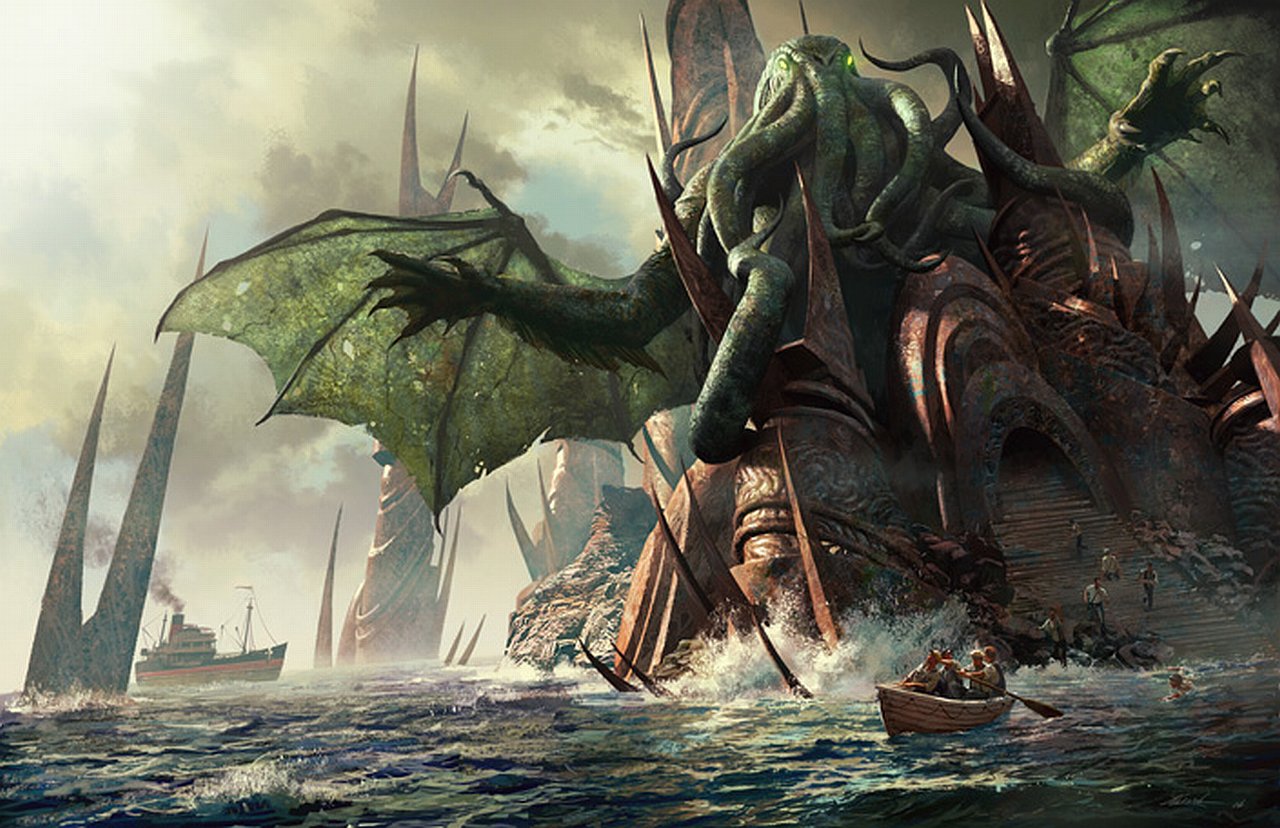
As a result, this series became a setting that has hints of western flair with caravans and pistols and its blue-collar protagonist working the frontier, but it’s often set in the neon soaked streets of a giant multi-leveled city built on the ruins of the old world. Because of the elder gods’ manipulations, the world is now inhabited by strange species which interact with humanity; it's a place where dark magic can conjure darker creatures, where major religions war with one another, and where sinister cults stir in shadows and whisper forgotten prophecies. But, it’s that single core idea—a world after the return of the great old ones—that influences everything and allows the world to feel complete and whole despite its strangeness.
3) Characters Need to Believe - The weird can often be a difficult sell to a reader. Even if you have a central core idea, many readers feel uncomfortable straying too far from traditional concepts that are inherent in genre. Especially if what you’re proposing sets off a wave of questions. I think a lot of this can be mitigated by characters who believe in the world. If a character believes then the reader will as well. This isn't to say you can't have a character discover a place; that is a common trope with the protagonist, however for every Shadow Moon there is a Mr. Wednesday, who knows the world and believes in the weirdness the author presents. Allowing the characters within a world to accept its reality and treat it as normal can go a long way to making a world feel whole.
4) Avoid the Weeds - I have a rule when working in my worlds and my writing: I don’t go down tangents not relevant to the story. I might know how the planet formed, I might understand the complex history of a nation-state, but unless it's critical to the plot, I try to avoid spending too much time explaining all these workings to the reader. How often have we read a science fiction or fantasy novel that end up throwing info dump after info dump at us? More often than not, these bits of world trivia aren't important to the plot and, while they might serve at expanding the world, unless writers give us a reason to care they are superfluous.
They slow everything down. Having that knowledge is important, history, culture, manners, all those things can influence a character's decision. However, explaining it all can make the reading tedious. Instead, work it into the prose. Reveal those details little by little as they become important to the characters and then they'll become important to your readers as well.
Sticking to these tenants has served me well during the creation of The Bell Forging Cycle, and I’ve carried them over into my other projects as well. I’ve heard from many readers that they love how I handle the strangeness of my novels, and it’s something I want to keep doing as I continue to tell stories. Following that weird road from one strange idea to the next is quite rewarding. As China Miéville once said,
“Part of the appeal of the fantastic is taking ridiculous ideas very seriously and pretending they’re not absurd.”
I like that perspective; it’s what makes writing genre-bending weird fiction so enjoyable. The Bell Forging Cycle won’t be my last foray into writing genre-blending books. Each project I delve into has aspects in the weird, from my current fantasy project to a new series that I’m classifying as Riverpunk. What’s Riverpunk you ask? Well, you’ll just have to wait and find out.

Official Author Website
Order The Stars Were Right HERE
GUEST AUTHOR INFORMATION: K. M. Alexander is a Pacific Northwest native and novelist living and working in Seattle with his wife and two dogs. He is an avid hiker, cold-weather enthusiast, world traveler, wannabe cyclist, and a self-proclaimed beer snob. His work explores non-traditional settings within speculative fiction, bending and blending genres to create rich worlds and unique, approachable characters. He published his first book in 2013 and completed his debut trilogy in 2015.
Subscribe to:
Posts (Atom)


