
Author Introduction:
Sarah Ash first got published in 1995 with the release of her book Moths to a Flame since then she has published 8 novels to date.
Almost all her books seem to be located geographically in the same world. The Tears of Artamon trilogy, The Alchemyst’s Legacy duology and Songspinners are intricately connected to each other by intermingling of characters, locations, world history and conflicts. The other two books Moths to a Flame and The Lost Child are rather sparsely connected to the earlier novels as only the mention of certain lands and similar theological aspects connect them to the earlier ones.
Sarah Ash has a background in music. This is reflected in her stories where music seems to play an intricate role in the story and sometimes has an influencing factor on characters. She once commented that there is a secret musical track to go with every book of hers and that it would be lovely if the readers could get to hear it as well. But for this to happen I believe all of her readers will have to happen upon the “Accidie” phenomenon as described in Songspinners.
She currently cultivates her time by writing in the fabulous world of Artamon (the world in which she has created in her books) and running the local school library.
Sarah Ash has been a personal favorite of mine since I first discovered Lord of Snow and Shadows nearly 3-4 years ago. The story concept captivated me when I read the back flap of the first book of the Tears of Artamon trilogy. As I noticed that the trilogy was complete, I picked up the first book with the idea that if I enjoyed this first book I wouldn't have to wait to continue the trilogy and finish the story. The first book appeared to be pretty standard fantasy fare to me, however it wasn't until the middle of the book that I started connecting the story and character and by the end of the book, I was hooked onto the tale with its vast cast and east-European feel.
World of Artamon Overview
Tears of Artamon Trilogy:

Lord of Snow & Shadows, the first book in the Tears of Artamon trilogy, opens with an assassination then proceeded to introduce the reader to the primary characters of the book.
Gavriel Andar, who discovers that he is not just a simple painter but heir to the land known as Azkhendir. After his father’s death he has become the titular figure known as Lord Drakhaon and thereby has to return (rather forcibly) to govern the land. What he does not know is that the title is not just figuratively used but literally, as the Drakhaons of Azhkendir have access to a terrible power with a Faustian cost.
Readers are also introduced to Kikiu, a maid in the service of the Drakhaon of Azhkendir. Kikiu does not know of her past or who her parents are. She soon will be introduced rather violently to her heritage which might prove to be a boon or bane, depending on the circumstances.
The third main character is Prince Eugene of Tielen who has ambitions of forging an empire like the old Artamon Empire and he will brook no opposition to his plans. He has established an armed force utilizing both science and magic to establish himself as an emperor. Though all these points lead us to believe that Eugene will be the titular villain of the piece, it is hardly the case. There are a lot more characters in the first book and against the background of an empire being formed is the clash which will occur between magic and science, namely between the Drakhaon of Azkhendir and the guns of Tielen.

The second book Prisoner of the Ironsea tower aka Prisoner of the Iron Tower [US] opens directly after the climatic events of the first book. Gavril Nagarian is trying to come to terms with his heritage and new found precarious condition. Eugene of Tielen realizes his ambitions can be achieved but at a price that he might not be willing to pay. Kiukiu also grows in this novel as she discovers more and more about her past.
The veritable cast is widened in this book as the author shows the reader the after-effects of Eugene’s actions in the world of Artamon in various locations such as Muscobar and Smarna. Also the religio-political scheming is deepened with the Introduction of Francia (Tielen’s rival nation), its religious order and their hunt for Kasper Linnaeus. Also introduced in this book is Celestine de Joyeuse who is a famed singer and the harbinger of the Francian religious order.
Although serving as a middle volume to a trilogy by setting up events and characters for the "main event", Prisoner of the Iron Tower; excels in other areas. It shows readers a panoramic view of the world and gives them just enough characters to root for and rail against. It also offers more background about the religious schism, which is fundamental to the plot line. There is enough information and events to satisfy the reader while at the same time leaving them hanging for the events that will happen in the third book.

Children of the Serpent Gate directly opens after the events of the second book and is the finale of the trilogy. As both Eugene and Gavril now have to deal with their subjects as well as the fate of the entire world. Kiukiu is experimenting with the boundaries of her powers - however the situations keep on escalating beyond her control. With the addition of the Francian nation in the power scheme, previous plans have started to disintegrate as the nations start squabbling amongst themselves. However there are far worse things than a totalistic iron regime as the world is approaching its end due to various plots and schemes from the previous book.
In this last volume of the trilogy, there is a juggling of sorts with a vast number of characters as they each try to achieve their own ends. The climax is deafening to say the least as all the major characters come together for the conclusion of this series of books. Many of the characters are given total uplifts as there are no clear villains or heroes, every character has a bit of a shade of gray as far as good and evil. Although, Sarah Ash ties almost all the various plot threads there are plenty of opportunities for future books as well.
Although Sarah Ash originally developed the world of Artamon in her first three books Moths to a Flame, Songspinners and The Lost Child. The full depth and flavor of Artamon can be fully appreciated in the Tears of Artamon trilogy, Ash gives readers the various landscapes and people of each country along with various information about each from their religious beliefs to their customs.
While this trilogy is fundamentally about a clash between two characters, Gavril and Eugene, it expands beyond that to encompass all nations and regions of the Artamon world. It allows us to see the theological aspect of the dominant religion of Artamon and allows readers to see the Drakhaons and the history of their entry into the world.
Alchymist Legacy Duology:

Sarah Ash also released a duology later on which ties into the Tears of Artamon trilogy. This time the viewpoint is from Celestine De Joyeuse, a minor character in the trilogy but now the main character of the duology.
Tracing the Shadow takes place before the events of Tears of Artamon, and is set in Francia. Several of the characters from Tears of Artamon make cameo appearances in this book. Readers are given a bit of background on one of the most enigmatic figures, Kasper Linnaius, who had to flee Francia on heretical charges.
Celestine's childhood and that of her companion Jagu de Rustephan are showcased throughout Tracing the Shadow. Also introduced, is Rieuk mordiern, a mage who worked with Kasper Linnaius but escaped the purge by courtesy of a punishment for his mistake. He sets out to become a crystal mage modeled on the person who becomes his savior and tries to locate the aethyrial spirit Azilis whom he released earlier. The book ends on a bit of a cliffhanger and leaves the reader tentatively poised to re-enter the conflict as showcased in the earlier trilogy.

The second book Flight into Darkness then begins amidst the events of book 2 and 3 of the Artamon trilogy and reintroduces us to Celestine, Jagu and Rieuk as they try to settle in their new roles and duties. Readers are given a detailed ending, going beyond the events of the original trilogy to gives us a comprehensive closure to the tale even though 2 of the 3 main characters in the trilogy make a “barely-there” appearance. The ending of this book will give readers a different view of the same events told in Tears of Artamon, however the reader is now equiped with new information and now can have a more thorough understanding to events.
Stand Alone Novels:

Sarah Ash has written some stand alone books: Moths to a Flame, Songspinners and The Lost Child. Of these three Songspinners is the most connected to the tale detailed above as in it the main characters are from the world of the Alchymist’s Legacy duology and have cameos in them. It is a book about music, the nature of oppression and the freedom to pursue one’s happiness. It is my favorite book amongst of all her books as it details a world of composers, music and inherent conflict. The main story focuses upon a young girl, Orial, who is cloistered from music due a certain condition which was both; boon and bane to her mother. Amaru Khassian is a talented music composer who is forced to flee his homeland after his creation is deemed heretical. Acir Korentan is the soldier-priest sent to collect Amaru and bring him back home to either his spiritual redemption or death. Sarah Ash creates a fabulous situation which deals with notions of choice, truth and freedom. The ending of this story while a bit fantastical does deliver a strong punch and therefore is tale closest to my heart. Its characters and themes also reminded me a lot of David Gemmell’s work.
Short Stories:
Sarah Ash began her career by writing short stories. As of to date, she has written 7 short stories. Of those stories: Airs From Another Planet and Divina are the most connected to her main body of work namely Artamon. Both these stories are related to the story set in Songspinners and are set in lands of Sulien and Bel’Esstar respectively. Prince Ilsevir of Allegonde[ a character from Songspinners and Alchemyst’s Legacy] makes a brief appearance in Airs.
Her other short stories are:
Mothmusic , one of her first published short stories, is an earlier version on the theme prevalent in the story Moths To A Flame”(1995).
Brief Flare and Merveille are original stories which aren’t connected to any of her other stories.
Ninufar's Kiss is part of the prologue of a tale which is Sarah’s unpublished Byzantine fantasy novel.[For more information check Q.12 of the FBC interview with Sarah Ash over here ]
Timeswitch is a part of an anthology about real-life supernatural experiences.
Future Plans for the world of Artamon:
Sarah Ash has many plans for the world of Artamon. She plans to write a "vingt ans apres" trilogy to the original Artamon trilogy. This will be a great addition as many readers will be able to find out what ramifications happened on the world of Artamon after the events of the Alchymist's Legacy duology and the Tears of Artamon trilogy. However at the current time due to the recession there is no immediate date for this project.
Another project Sarah Ash has mentioned is the writing of a trilogy set 140 years before the events of the Artamon trilogy. It would focus on Kasper Linnaius, perhaps the most enigmatic character of the entire saga, as he is part-scholar, part mage, and could be the scariest person in the whole series of books. It has also been hinted that this trilogy might feature dragons as a part of the world setting.
Conclusion:
Almost all her books seem to be located geographically in the same world. The Tears of Artamon trilogy, The Alchemyst’s Legacy duology and Songspinners are intricately connected to each other by intermingling of characters, locations, world history and conflicts. The other two books Moths to a Flame and The Lost Child are rather sparsely connected to the earlier novels as only the mention of certain lands and similar theological aspects connect them to the earlier ones.
Sarah Ash has a background in music. This is reflected in her stories where music seems to play an intricate role in the story and sometimes has an influencing factor on characters. She once commented that there is a secret musical track to go with every book of hers and that it would be lovely if the readers could get to hear it as well. But for this to happen I believe all of her readers will have to happen upon the “Accidie” phenomenon as described in Songspinners.
She currently cultivates her time by writing in the fabulous world of Artamon (the world in which she has created in her books) and running the local school library.
Sarah Ash has been a personal favorite of mine since I first discovered Lord of Snow and Shadows nearly 3-4 years ago. The story concept captivated me when I read the back flap of the first book of the Tears of Artamon trilogy. As I noticed that the trilogy was complete, I picked up the first book with the idea that if I enjoyed this first book I wouldn't have to wait to continue the trilogy and finish the story. The first book appeared to be pretty standard fantasy fare to me, however it wasn't until the middle of the book that I started connecting the story and character and by the end of the book, I was hooked onto the tale with its vast cast and east-European feel.
World of Artamon Overview
Tears of Artamon Trilogy:

Lord of Snow & Shadows, the first book in the Tears of Artamon trilogy, opens with an assassination then proceeded to introduce the reader to the primary characters of the book.
Gavriel Andar, who discovers that he is not just a simple painter but heir to the land known as Azkhendir. After his father’s death he has become the titular figure known as Lord Drakhaon and thereby has to return (rather forcibly) to govern the land. What he does not know is that the title is not just figuratively used but literally, as the Drakhaons of Azhkendir have access to a terrible power with a Faustian cost.
Readers are also introduced to Kikiu, a maid in the service of the Drakhaon of Azhkendir. Kikiu does not know of her past or who her parents are. She soon will be introduced rather violently to her heritage which might prove to be a boon or bane, depending on the circumstances.
The third main character is Prince Eugene of Tielen who has ambitions of forging an empire like the old Artamon Empire and he will brook no opposition to his plans. He has established an armed force utilizing both science and magic to establish himself as an emperor. Though all these points lead us to believe that Eugene will be the titular villain of the piece, it is hardly the case. There are a lot more characters in the first book and against the background of an empire being formed is the clash which will occur between magic and science, namely between the Drakhaon of Azkhendir and the guns of Tielen.

The second book Prisoner of the Ironsea tower aka Prisoner of the Iron Tower [US] opens directly after the climatic events of the first book. Gavril Nagarian is trying to come to terms with his heritage and new found precarious condition. Eugene of Tielen realizes his ambitions can be achieved but at a price that he might not be willing to pay. Kiukiu also grows in this novel as she discovers more and more about her past.
The veritable cast is widened in this book as the author shows the reader the after-effects of Eugene’s actions in the world of Artamon in various locations such as Muscobar and Smarna. Also the religio-political scheming is deepened with the Introduction of Francia (Tielen’s rival nation), its religious order and their hunt for Kasper Linnaeus. Also introduced in this book is Celestine de Joyeuse who is a famed singer and the harbinger of the Francian religious order.
Although serving as a middle volume to a trilogy by setting up events and characters for the "main event", Prisoner of the Iron Tower; excels in other areas. It shows readers a panoramic view of the world and gives them just enough characters to root for and rail against. It also offers more background about the religious schism, which is fundamental to the plot line. There is enough information and events to satisfy the reader while at the same time leaving them hanging for the events that will happen in the third book.

Children of the Serpent Gate directly opens after the events of the second book and is the finale of the trilogy. As both Eugene and Gavril now have to deal with their subjects as well as the fate of the entire world. Kiukiu is experimenting with the boundaries of her powers - however the situations keep on escalating beyond her control. With the addition of the Francian nation in the power scheme, previous plans have started to disintegrate as the nations start squabbling amongst themselves. However there are far worse things than a totalistic iron regime as the world is approaching its end due to various plots and schemes from the previous book.
In this last volume of the trilogy, there is a juggling of sorts with a vast number of characters as they each try to achieve their own ends. The climax is deafening to say the least as all the major characters come together for the conclusion of this series of books. Many of the characters are given total uplifts as there are no clear villains or heroes, every character has a bit of a shade of gray as far as good and evil. Although, Sarah Ash ties almost all the various plot threads there are plenty of opportunities for future books as well.
Although Sarah Ash originally developed the world of Artamon in her first three books Moths to a Flame, Songspinners and The Lost Child. The full depth and flavor of Artamon can be fully appreciated in the Tears of Artamon trilogy, Ash gives readers the various landscapes and people of each country along with various information about each from their religious beliefs to their customs.
While this trilogy is fundamentally about a clash between two characters, Gavril and Eugene, it expands beyond that to encompass all nations and regions of the Artamon world. It allows us to see the theological aspect of the dominant religion of Artamon and allows readers to see the Drakhaons and the history of their entry into the world.
Alchymist Legacy Duology:

Sarah Ash also released a duology later on which ties into the Tears of Artamon trilogy. This time the viewpoint is from Celestine De Joyeuse, a minor character in the trilogy but now the main character of the duology.
Tracing the Shadow takes place before the events of Tears of Artamon, and is set in Francia. Several of the characters from Tears of Artamon make cameo appearances in this book. Readers are given a bit of background on one of the most enigmatic figures, Kasper Linnaius, who had to flee Francia on heretical charges.
Celestine's childhood and that of her companion Jagu de Rustephan are showcased throughout Tracing the Shadow. Also introduced, is Rieuk mordiern, a mage who worked with Kasper Linnaius but escaped the purge by courtesy of a punishment for his mistake. He sets out to become a crystal mage modeled on the person who becomes his savior and tries to locate the aethyrial spirit Azilis whom he released earlier. The book ends on a bit of a cliffhanger and leaves the reader tentatively poised to re-enter the conflict as showcased in the earlier trilogy.

The second book Flight into Darkness then begins amidst the events of book 2 and 3 of the Artamon trilogy and reintroduces us to Celestine, Jagu and Rieuk as they try to settle in their new roles and duties. Readers are given a detailed ending, going beyond the events of the original trilogy to gives us a comprehensive closure to the tale even though 2 of the 3 main characters in the trilogy make a “barely-there” appearance. The ending of this book will give readers a different view of the same events told in Tears of Artamon, however the reader is now equiped with new information and now can have a more thorough understanding to events.
Stand Alone Novels:

Sarah Ash has written some stand alone books: Moths to a Flame, Songspinners and The Lost Child. Of these three Songspinners is the most connected to the tale detailed above as in it the main characters are from the world of the Alchymist’s Legacy duology and have cameos in them. It is a book about music, the nature of oppression and the freedom to pursue one’s happiness. It is my favorite book amongst of all her books as it details a world of composers, music and inherent conflict. The main story focuses upon a young girl, Orial, who is cloistered from music due a certain condition which was both; boon and bane to her mother. Amaru Khassian is a talented music composer who is forced to flee his homeland after his creation is deemed heretical. Acir Korentan is the soldier-priest sent to collect Amaru and bring him back home to either his spiritual redemption or death. Sarah Ash creates a fabulous situation which deals with notions of choice, truth and freedom. The ending of this story while a bit fantastical does deliver a strong punch and therefore is tale closest to my heart. Its characters and themes also reminded me a lot of David Gemmell’s work.
Short Stories:
Sarah Ash began her career by writing short stories. As of to date, she has written 7 short stories. Of those stories: Airs From Another Planet and Divina are the most connected to her main body of work namely Artamon. Both these stories are related to the story set in Songspinners and are set in lands of Sulien and Bel’Esstar respectively. Prince Ilsevir of Allegonde[ a character from Songspinners and Alchemyst’s Legacy] makes a brief appearance in Airs.
Her other short stories are:
Mothmusic , one of her first published short stories, is an earlier version on the theme prevalent in the story Moths To A Flame”(1995).
Brief Flare and Merveille are original stories which aren’t connected to any of her other stories.
Ninufar's Kiss is part of the prologue of a tale which is Sarah’s unpublished Byzantine fantasy novel.[For more information check Q.12 of the FBC interview with Sarah Ash over here ]
Timeswitch is a part of an anthology about real-life supernatural experiences.
Future Plans for the world of Artamon:
Sarah Ash has many plans for the world of Artamon. She plans to write a "vingt ans apres" trilogy to the original Artamon trilogy. This will be a great addition as many readers will be able to find out what ramifications happened on the world of Artamon after the events of the Alchymist's Legacy duology and the Tears of Artamon trilogy. However at the current time due to the recession there is no immediate date for this project.
Another project Sarah Ash has mentioned is the writing of a trilogy set 140 years before the events of the Artamon trilogy. It would focus on Kasper Linnaius, perhaps the most enigmatic character of the entire saga, as he is part-scholar, part mage, and could be the scariest person in the whole series of books. It has also been hinted that this trilogy might feature dragons as a part of the world setting.
Conclusion:
For every reader their beloved author’s books are like Beethoven’s symphonies, once hearkened they become delectably addictive, a similar case presides here as well! Sarah Ash’s writing style is very lyrical and lucid and often features a vast array of characters that showcase the whole spectrum of humanity, the whitish-hued, the blackish-toned and largely the grayish-scaled. She shows humanity as they are; a flawed species but capable of greatness and ghastliness at the same time. The intrigue and twists in her tales might not be the same as compared to George R.R. Martin’s A Song of Ice and Fire, however in my mind and in those of her countless fans, they have a special place and are just as enticing to read. Her works are mostly comparable to those by James Clemens, Robin Hobb and David Gemmell for their similarity in vivid storytelling, competent characterization and broad spectrum of emotions displayed.
 12:01 AM |
  Posted by
Cindy |
Posted by
Cindy |


Congratulations to Lourdes Mena (Nebraska), Mary Primorac (Texas), and Timothy Killoran (Washington) who were the winners of a hardback copy of Rachel Ward's Num8ers.
Thanks again to Big Honcho Media for helping with the giveaway. And a big thanks go to all who entered.

Official Douglas Smith Website
Read Excerpts from each Chimerascope story HERE
Order Chimerascope HERE
Read more about Chimerascope at Chizine
Read FBC Review of Impossibilia
INTRODUCTION: 2010 has turned out to be the year of awesome collections so far, with "Chimerascope" the 5th superb such that I read this year and 3rd published in 2010, while the other two have been published in late 2009. I have reviewed "In the Valley of the Kings" by Terrence Holt, "Things We Didn't See Coming" by Steven Amsterdam and "Objects of Worship" by Claude Lalumiere here on FBC and I wrote a detailed mini-review of "A Handful of Pearls" by Beth Bernobich on Goodreads, with a complete review to come here closer to the revised June publication date.
Douglas Smith's debut collection "Impossibilia" which I reviewed last year and which has in the lead story "Bouquet of Flowers in a Vase, by Van Gogh" one of those rare "become a fan for life" pieces, made reading "Chimerascope" a must as soon as I have found out about it. Adding that it has been published by Chi-Zine publications from whom I have read only quality works so far and "Chimerascope" came with the highest expectations for me and it matched them and more with several mind-blowing stories in an ensemble of all-high-level ones.
FORMAT/CLASSIFICATION: Standing at 332 pages, "Chimerascope" contains 16 stories (17 in the special limited signed hardcover edition), mostly previously published and showcasing the author's versatility. There is an introduction by noted author Julie Czerneda and each story comes with author's notes about how it developed and reactions to it.
The stories range from far-flung sf and time-travel, to fantasy-like landscapes and even towards straight horror, so "Chimerascope" as befits its name is a changeable entity, one that cannot be easily confined into a narrow pattern and will appeal to fans to all kinds of speculative fiction.
ANALYSIS: If there is a theme to such a complex collection, it is "change and adaptability". And while the heroes and heroines of the stories here are confronted by major upheavals and challenges, not all manage to overcome them successfully, or sometimes the price is just too high.
I will present a short discussion story by story, while I recommend to check the excerpt site linked above for a taste of each of the pieces in the collection.
Scream Angel Chimerascope starts with a bang in this powerful adventure tale set in the author "Merged Corporate Entity/Rippers" future, in which the malignant "Corporate Entity" took power on Earth in a post-apocalyptic future and led humanity to the stars, only to exploit and rape all non-human life, sentient or not (IP aka Indigenous People) in the name of profit. Using special combat troops with an innocuous name (Rippers - Relocation of Indigenous People) that are addicted to Scream, a special drug that transforms all powerful emotions into highs , allowing the addicts to kill, torture or be abused, beaten by their superiors with a smile on the face so to speak, to exterminate or at best imprison and use the natives, The Entity seems to have an unassailable hold on humanity. But one RIP Force officer who develops a friendship with the strange aliens providing Scream may prove otherwise. A dark and powerful story with a first line that sets the tone for what is to come:
"They stopped beating Trelayne when they saw that he enjoyed it." (A++)
The Red Bird Changing style and tone from the dark tale of the Rippers above, we move here to a mythical fantasy-like medieval Japan, a strange temple and the even stranger bird from the title. Young Asai becomes the last warrior of the "Red Bird", but when the local warlord decides to sacrifice a whole village to get the secret of the temple, what will he do?
Powerful, moving and not quite predictable (A+)
By Her Hand, She Draws You Down This is a straight-out horror story about a painter who is compelled to draw people to feed a dark hunger in herself; her companion/lover fears he will be next. Well done and with a nice twist though farther than usual from my sensibilities. (A)
New Year’s Eve A Y2K bug story based on the author's industry experiences and with overtones of Casablanca of all things, this story worked less well for me and it's more conventional. (B-)
The Boys Are Back in Town A partly funny, partly dark story in which various gods from several pantheons are "back in town", mostly enjoying themselves in a pub. Paulo narrates with Dino as main companion - I leave to the reader to figure out who are the two - I enjoyed this one a lot; one of the most "pure entertainment" tales of the collection, though it has its dark parts too. (A)
State of Disorder Another core story of the collection, this one involves time-travel, revenge and as nasty a villain as it gets on a personal scale. A chilling story of three dinners in the same place and time and a very satisfying ending made this another A++ story for me.
Nothing A short, more experimental story on the horror side, I did not really care for this one though it works as a mood piece. (B-)
Symphony A strong sfnal story about a "sentient light symphony" that objects to humans colonizing "its planet". How would you communicate with such and how would it react to a baby who lacks all "human baggage" are some of the issues addressed here. (A+)
Out of the Light Urban fantasy detective story that read well and was short enough not to be too annoying for me, but overall not my cup of tea. (B)
Enlightenment Another "Merged Corporate Entity/RIP Force" story and one with a very interesting genesis and reader feedback as the author recounts. This time we have strange aliens with supposedly mysterious powers who seemingly gave away all such to live the "simple life"; of course all that works out until nasty Rippers come from the sky and start the usual torturing and killing left and right to get to those secrets. While the general direction of the tale is clear, there are some unexpected twists and a superb ending; the story itself is as powerful as any in the collection (A++)
The Last Ride More mythology on the Nordic pattern with Valkyries this time; what price immortality and what would an immortal sacrifice to know a "regular life"? (A)
Jigsaw As the author tells it, the one YA story of the collection that came by specific circumstances, though it reads very, very well in the traditional derring-do of sf adventures, with Cassie Morant a leading Earth researcher in the ftl wormhole technology of the mysterious "Wormers" that gave humanity the stars and an expedition that encounters seemingly benevolent and less developed human-like aliens; fast and mostly fun traditional sf that shows the scope of the author's range and another favorite of mine (A+)
The Dancer at the Red Door What if there is a secret society of immortals that draw life from a magical dancer? What is the price of joining them? Ultra-successful businessman Alexander King finds out in this excellent story which is traditional urban fantasy at its best. (A)
Going Harvey in the Big House "Big G" is not that bright but he is content with his life inside the "big house" that is his universe until he stumbles upon the unknown; a partly strange structure, partly horror story this one did not work as well as I expected for me mainly because of the main protagonist; I tend to like this type of story and following the mystery of the structure to the end is worth it. (B)
A Taste Sweet and Salty Another superb story about a man that dies every night, only to wake up as someone generally different the next day; all happens in a town from which escape seems impossible until the main hero has an insight; unpredictable and with a great ending this story is another highlight of the collection and the one non-sf A++ for me.
Memories of the Dead Man I would say last and best, but several of the previous stories are on par with this one which is set in the beginning of the reign of the Merged Corporate Entity on Earth. All that you want in a sf short story is here from powerful characters, to action, mysterious happenings and a dark, violent but excellent tale. Read about the "dead men", revenge, superpowers and a woman fighting for survival with her son in a harsh and unforgiving world; a bittersweet ending adds to the power of the story. (A++)
In conclusion I would say that "Chimerascope" (A+ overall) confirms for me what "Impossibilia" affirmed, namely that Douglas Smith is an extraordinary author whom every lover of quality speculative fiction should read.
Read Excerpts from each Chimerascope story HERE
Order Chimerascope HERE
Read more about Chimerascope at Chizine
Read FBC Review of Impossibilia
INTRODUCTION: 2010 has turned out to be the year of awesome collections so far, with "Chimerascope" the 5th superb such that I read this year and 3rd published in 2010, while the other two have been published in late 2009. I have reviewed "In the Valley of the Kings" by Terrence Holt, "Things We Didn't See Coming" by Steven Amsterdam and "Objects of Worship" by Claude Lalumiere here on FBC and I wrote a detailed mini-review of "A Handful of Pearls" by Beth Bernobich on Goodreads, with a complete review to come here closer to the revised June publication date.
Douglas Smith's debut collection "Impossibilia" which I reviewed last year and which has in the lead story "Bouquet of Flowers in a Vase, by Van Gogh" one of those rare "become a fan for life" pieces, made reading "Chimerascope" a must as soon as I have found out about it. Adding that it has been published by Chi-Zine publications from whom I have read only quality works so far and "Chimerascope" came with the highest expectations for me and it matched them and more with several mind-blowing stories in an ensemble of all-high-level ones.
FORMAT/CLASSIFICATION: Standing at 332 pages, "Chimerascope" contains 16 stories (17 in the special limited signed hardcover edition), mostly previously published and showcasing the author's versatility. There is an introduction by noted author Julie Czerneda and each story comes with author's notes about how it developed and reactions to it.
The stories range from far-flung sf and time-travel, to fantasy-like landscapes and even towards straight horror, so "Chimerascope" as befits its name is a changeable entity, one that cannot be easily confined into a narrow pattern and will appeal to fans to all kinds of speculative fiction.
ANALYSIS: If there is a theme to such a complex collection, it is "change and adaptability". And while the heroes and heroines of the stories here are confronted by major upheavals and challenges, not all manage to overcome them successfully, or sometimes the price is just too high.
I will present a short discussion story by story, while I recommend to check the excerpt site linked above for a taste of each of the pieces in the collection.
Scream Angel Chimerascope starts with a bang in this powerful adventure tale set in the author "Merged Corporate Entity/Rippers" future, in which the malignant "Corporate Entity" took power on Earth in a post-apocalyptic future and led humanity to the stars, only to exploit and rape all non-human life, sentient or not (IP aka Indigenous People) in the name of profit. Using special combat troops with an innocuous name (Rippers - Relocation of Indigenous People) that are addicted to Scream, a special drug that transforms all powerful emotions into highs , allowing the addicts to kill, torture or be abused, beaten by their superiors with a smile on the face so to speak, to exterminate or at best imprison and use the natives, The Entity seems to have an unassailable hold on humanity. But one RIP Force officer who develops a friendship with the strange aliens providing Scream may prove otherwise. A dark and powerful story with a first line that sets the tone for what is to come:
"They stopped beating Trelayne when they saw that he enjoyed it." (A++)
The Red Bird Changing style and tone from the dark tale of the Rippers above, we move here to a mythical fantasy-like medieval Japan, a strange temple and the even stranger bird from the title. Young Asai becomes the last warrior of the "Red Bird", but when the local warlord decides to sacrifice a whole village to get the secret of the temple, what will he do?
Powerful, moving and not quite predictable (A+)
By Her Hand, She Draws You Down This is a straight-out horror story about a painter who is compelled to draw people to feed a dark hunger in herself; her companion/lover fears he will be next. Well done and with a nice twist though farther than usual from my sensibilities. (A)
New Year’s Eve A Y2K bug story based on the author's industry experiences and with overtones of Casablanca of all things, this story worked less well for me and it's more conventional. (B-)
The Boys Are Back in Town A partly funny, partly dark story in which various gods from several pantheons are "back in town", mostly enjoying themselves in a pub. Paulo narrates with Dino as main companion - I leave to the reader to figure out who are the two - I enjoyed this one a lot; one of the most "pure entertainment" tales of the collection, though it has its dark parts too. (A)
State of Disorder Another core story of the collection, this one involves time-travel, revenge and as nasty a villain as it gets on a personal scale. A chilling story of three dinners in the same place and time and a very satisfying ending made this another A++ story for me.
Nothing A short, more experimental story on the horror side, I did not really care for this one though it works as a mood piece. (B-)
Symphony A strong sfnal story about a "sentient light symphony" that objects to humans colonizing "its planet". How would you communicate with such and how would it react to a baby who lacks all "human baggage" are some of the issues addressed here. (A+)
Out of the Light Urban fantasy detective story that read well and was short enough not to be too annoying for me, but overall not my cup of tea. (B)
Enlightenment Another "Merged Corporate Entity/RIP Force" story and one with a very interesting genesis and reader feedback as the author recounts. This time we have strange aliens with supposedly mysterious powers who seemingly gave away all such to live the "simple life"; of course all that works out until nasty Rippers come from the sky and start the usual torturing and killing left and right to get to those secrets. While the general direction of the tale is clear, there are some unexpected twists and a superb ending; the story itself is as powerful as any in the collection (A++)
The Last Ride More mythology on the Nordic pattern with Valkyries this time; what price immortality and what would an immortal sacrifice to know a "regular life"? (A)
Jigsaw As the author tells it, the one YA story of the collection that came by specific circumstances, though it reads very, very well in the traditional derring-do of sf adventures, with Cassie Morant a leading Earth researcher in the ftl wormhole technology of the mysterious "Wormers" that gave humanity the stars and an expedition that encounters seemingly benevolent and less developed human-like aliens; fast and mostly fun traditional sf that shows the scope of the author's range and another favorite of mine (A+)
The Dancer at the Red Door What if there is a secret society of immortals that draw life from a magical dancer? What is the price of joining them? Ultra-successful businessman Alexander King finds out in this excellent story which is traditional urban fantasy at its best. (A)
Going Harvey in the Big House "Big G" is not that bright but he is content with his life inside the "big house" that is his universe until he stumbles upon the unknown; a partly strange structure, partly horror story this one did not work as well as I expected for me mainly because of the main protagonist; I tend to like this type of story and following the mystery of the structure to the end is worth it. (B)
A Taste Sweet and Salty Another superb story about a man that dies every night, only to wake up as someone generally different the next day; all happens in a town from which escape seems impossible until the main hero has an insight; unpredictable and with a great ending this story is another highlight of the collection and the one non-sf A++ for me.
Memories of the Dead Man I would say last and best, but several of the previous stories are on par with this one which is set in the beginning of the reign of the Merged Corporate Entity on Earth. All that you want in a sf short story is here from powerful characters, to action, mysterious happenings and a dark, violent but excellent tale. Read about the "dead men", revenge, superpowers and a woman fighting for survival with her son in a harsh and unforgiving world; a bittersweet ending adds to the power of the story. (A++)
In conclusion I would say that "Chimerascope" (A+ overall) confirms for me what "Impossibilia" affirmed, namely that Douglas Smith is an extraordinary author whom every lover of quality speculative fiction should read.

Official Giles Kristian Website
Order "Raven: Sons of Thunder" HERE
Read FBC Review of "Raven: Blood Eye"
INTRODUCTION: In recent times there have been a resurgence in Viking historical fiction and even non-fiction with several ongoing series and a pretty decent reference book by Robert Ferguson. I tried several such series, but none impressed me except the "Raven" one, of which I read and reviewed the debut last year on publication, while based on that, I included the second volume in my 2010 Anticipated Books list with pretty high expectations.
On receiving "Raven:Sons of Thunder", I decided to reread first "Raven:Blood Eye" and I was even more impressed with it since I realized how the Viking world created there was immersive and pitch perfect. And "Sons of Thunder" just picks up where "Blood Eye" ends and continues the same page turning style of adventure, following Jarl Sigurd and his companions of whom Raven is starting to assume a central role.
FORMAT/CLASSIFICATION: “Raven: Sons of Thunder” stands at about 340 pages divided into numbered chapters. The novel opens with a historical note about the Vikings, a map, a list of characters and a short prologue that continues Raven's narration in old age from the previous volume.
The story is told in the first-person present tense except for the prologue and epilogue interludes. “Raven: Sons of Thunder” is self-contained bringing its main thread to a reasonable close, but the story will be continued with the destination very exciting, but I will leave to you to find out where! February 26, 2010 marked the UK Hardcover publication of “Raven: Sons of Thunder” via Bantam UK.
Adventure historical fiction with possible supernatural elements and no flinching or avoiding the darker, blood and guts elements inherent to a tale set in the Viking era.
ANALYSIS: "Sons of Thunder" takes off where "Blood Eye" ended and follows the band of adventurers led by Jarl Sigurd and containing our narrator, Odin-marked Raven, as well as several unlikely companions including an English girl, a priest who has made his life-mission to convert Sigurd and Raven (and through them the fellowship), as well as a Christian English warrior. This time they make their way to the land of the Franks and to Charlemagne's court, visiting a muddy and still village-like Paris of 803 AD and the glittering Aix la Chapelle aka Aachen, capital of the new "Holy Roman Empire".
On the way they have the usual adventures, great duels, cunning tricks, great banter and blood curling happenings, while the book keeps the "no putting down" breakneck pace of the first volume. Charlemagne makes a very impressive cameo appearance and the meeting between the emperor whose life mission is to convert "the pagans" by fire and sword if needed and the famous "heathen" Jarl is among the many high points of the novel. Skulking in the background, the real "wheelers and dealers" of the court, of whom the famous Alcuin is one of the highest placed, try and manage the things for the "public eye".
"Sons of Thunders" has three main strengths and I talked a bit about the impressive "world-building" - or "recreation, if you prefer - above, but I cannot overemphasize how well that is done. Many period historical novels tend to gloss over the unpleasant experiences of life in the respective era, but here the descriptions are unflinching, sometimes very graphical, but they never feel exploitative.
The characters and their constant banter are also well done and we have very distinct personalities emerging. Sigurd is impressive as the battle hardened warrior with a fearsome reputation, but even he has to "manage" his people, so he fights a dangerous duel on fair terms when he could easily have rigged the situation, while later he consults the "fellowship" in each major decision. From his humble beginnings, Raven is emerging too as an incipient "second in command", while the weight of being "Odin's favored" hangs on his shoulders, so he is the one who needs to devise the "impossible trick" when the situation looks desperate.
The pace of the novel is unrelenting and you literally cannot put it down since you want to see what happens next and while the ending is at a reasonable point, I so wanted more... A strong A and the series is among the best adventure historical fiction today regardless of period.
Order "Raven: Sons of Thunder" HERE
Read FBC Review of "Raven: Blood Eye"
INTRODUCTION: In recent times there have been a resurgence in Viking historical fiction and even non-fiction with several ongoing series and a pretty decent reference book by Robert Ferguson. I tried several such series, but none impressed me except the "Raven" one, of which I read and reviewed the debut last year on publication, while based on that, I included the second volume in my 2010 Anticipated Books list with pretty high expectations.
On receiving "Raven:Sons of Thunder", I decided to reread first "Raven:Blood Eye" and I was even more impressed with it since I realized how the Viking world created there was immersive and pitch perfect. And "Sons of Thunder" just picks up where "Blood Eye" ends and continues the same page turning style of adventure, following Jarl Sigurd and his companions of whom Raven is starting to assume a central role.
FORMAT/CLASSIFICATION: “Raven: Sons of Thunder” stands at about 340 pages divided into numbered chapters. The novel opens with a historical note about the Vikings, a map, a list of characters and a short prologue that continues Raven's narration in old age from the previous volume.
The story is told in the first-person present tense except for the prologue and epilogue interludes. “Raven: Sons of Thunder” is self-contained bringing its main thread to a reasonable close, but the story will be continued with the destination very exciting, but I will leave to you to find out where! February 26, 2010 marked the UK Hardcover publication of “Raven: Sons of Thunder” via Bantam UK.
Adventure historical fiction with possible supernatural elements and no flinching or avoiding the darker, blood and guts elements inherent to a tale set in the Viking era.
ANALYSIS: "Sons of Thunder" takes off where "Blood Eye" ended and follows the band of adventurers led by Jarl Sigurd and containing our narrator, Odin-marked Raven, as well as several unlikely companions including an English girl, a priest who has made his life-mission to convert Sigurd and Raven (and through them the fellowship), as well as a Christian English warrior. This time they make their way to the land of the Franks and to Charlemagne's court, visiting a muddy and still village-like Paris of 803 AD and the glittering Aix la Chapelle aka Aachen, capital of the new "Holy Roman Empire".
On the way they have the usual adventures, great duels, cunning tricks, great banter and blood curling happenings, while the book keeps the "no putting down" breakneck pace of the first volume. Charlemagne makes a very impressive cameo appearance and the meeting between the emperor whose life mission is to convert "the pagans" by fire and sword if needed and the famous "heathen" Jarl is among the many high points of the novel. Skulking in the background, the real "wheelers and dealers" of the court, of whom the famous Alcuin is one of the highest placed, try and manage the things for the "public eye".
"Sons of Thunders" has three main strengths and I talked a bit about the impressive "world-building" - or "recreation, if you prefer - above, but I cannot overemphasize how well that is done. Many period historical novels tend to gloss over the unpleasant experiences of life in the respective era, but here the descriptions are unflinching, sometimes very graphical, but they never feel exploitative.
The characters and their constant banter are also well done and we have very distinct personalities emerging. Sigurd is impressive as the battle hardened warrior with a fearsome reputation, but even he has to "manage" his people, so he fights a dangerous duel on fair terms when he could easily have rigged the situation, while later he consults the "fellowship" in each major decision. From his humble beginnings, Raven is emerging too as an incipient "second in command", while the weight of being "Odin's favored" hangs on his shoulders, so he is the one who needs to devise the "impossible trick" when the situation looks desperate.
The pace of the novel is unrelenting and you literally cannot put it down since you want to see what happens next and while the ending is at a reasonable point, I so wanted more... A strong A and the series is among the best adventure historical fiction today regardless of period.
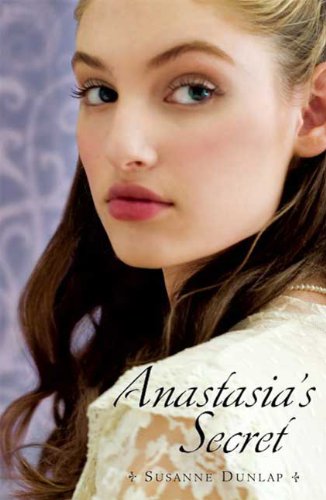
Introduction: Susanne Dunlap is the author of the YA historical novels The Musicians Daughter and Emilie's Voice. Susanne draws upon her experience with music as she has a PHD in music history to draw up her novels.
Overview: Anastasia Romanov is the privileged daughter of the tsar of Russia. She leads a very sheltered life within the palace walls. Everything she could have ever imagined is at her fingertips.
One evening while attending a ball, Anastasia sneaks out to the gardens where she meets a young soldier playing an instrument outside. Instant attraction causes her to come over and start talking to him. Anastasia soon learns that what the people of the outside world think of her and her family isn't what she believes her family is like at all.
A few chance meetings later, the young soldier, known as Sasha, shows Anastasia that the outside of Russia isn't at all like her palace life. That the outside world is cruel, poor and a lot worse off then Anastasia ever believed.
Through the years Anastasia begins to develop a slight crush on Sasha. However a war breaks out and sends Sasha away, and the events of what is to be known as one of histories most dramatic mass murders are about to unfold.
Can Anastasia's secret friendship save not only herself and her family from the terrible fate that is awaiting them?
Format: Anastasia's Secret is a YA historical fiction/romance novel. It stands at 320 pages and is told from the first person point of view of Anastasia Romanov. Anastasia's Secret was published March 2, 2010 from Bloomsbury Publishing.
Analysis: The Romanov period of Russian history is probably one of my favorite periods of time in history. Anything involving the last royal family of Russia has my attention. So when I heard about a YA romance novel that involved Anastasia Romanov and involved some of the actual events that happened I was very excited to get my hands on this novel. However, this novel wasn't exactly what I expected at all.
Anastasia is such a monumental historical figure that taking on a novel that involves her character is a very big undertaking. However it almost feels as though Susanne Dunlap was a little apprehensive in taking any part of Anastasia and making it her own. Instead it feels as though this novel is built around the historical facts of what is known about the life of Anastasia Romanov. However,what is known about Anastasia is very little, she is hardly mentioned in letters and any recordings of history beyond a brief mention or two. Dunlap appears to have stuck simply to historical facts of Anastasia and therefor the character appears a bit flat and doesn't really develop beyond a shell of a character. There isn't much depth to Anastsia's personality and it seems as if this is done because there was never a mention of this in the research that was done so therefore it couldn't come out in this novel.
There isn't much action instead if appears as if all the characters walk around in a very stilted world and not much happens to Anastasia, she lives in the palace and doesn't really go out much. Even the supposed "romance" between Sasha is a bit overstated. Sasha at times is overshadowed in favor of showing off what life in the palace was like. Although he does appear on and off throughout the book, it almost seems as though he takes a back seat to a lot of the other elements, and I would have liked to see a bit more actions between him and Anastasia.
That's not to say this novel isn't good. Susanne Dunlap did her research and there is a lot that can be grasped from this. Her portrayal of what life would have been like in the palace was wonderfully drawn out to readers. There are a lot of references to how the outside world viewed the imperial family and it was very interesting to see Dunlap take advantage of the changing of the attitudes towards the Romonovs. I wouldn't say that someone who doesn't know anything about this period of time would completely understand the whole political undertones of what happened as there are very little explanations of what really happened to the Romonov family but it really would be a wonderful novel for those looking to see what palace life was like after the tsar was overthrown.
I think the main disappointment for myself was the lack of ending, it just sort of ends with no real definite ending. Everyone knows what happened to the family, I'm not sure if this type of ending was supposed to make the readers draw their own conclusions of what happened to Anastasia or if it was again because of the sticking to historical facts and this is where the historical facts get a little sketchy.
Susanne Dunlap is a wonderful historical writer, she really puts her heart and soul into the research. However, it appears as if her undertaking of such a monumental historical character might have fallen a bit short. While her writing show cases a lot of historical facts, it doesn't really grab the essence of the main character's personality and therefore readers don't really get to see Anastasia as a person but instead get a better grasp of what her lifestyle was like then who she is or was.
Overview: Anastasia Romanov is the privileged daughter of the tsar of Russia. She leads a very sheltered life within the palace walls. Everything she could have ever imagined is at her fingertips.
One evening while attending a ball, Anastasia sneaks out to the gardens where she meets a young soldier playing an instrument outside. Instant attraction causes her to come over and start talking to him. Anastasia soon learns that what the people of the outside world think of her and her family isn't what she believes her family is like at all.
A few chance meetings later, the young soldier, known as Sasha, shows Anastasia that the outside of Russia isn't at all like her palace life. That the outside world is cruel, poor and a lot worse off then Anastasia ever believed.
Through the years Anastasia begins to develop a slight crush on Sasha. However a war breaks out and sends Sasha away, and the events of what is to be known as one of histories most dramatic mass murders are about to unfold.
Can Anastasia's secret friendship save not only herself and her family from the terrible fate that is awaiting them?
Format: Anastasia's Secret is a YA historical fiction/romance novel. It stands at 320 pages and is told from the first person point of view of Anastasia Romanov. Anastasia's Secret was published March 2, 2010 from Bloomsbury Publishing.
Analysis: The Romanov period of Russian history is probably one of my favorite periods of time in history. Anything involving the last royal family of Russia has my attention. So when I heard about a YA romance novel that involved Anastasia Romanov and involved some of the actual events that happened I was very excited to get my hands on this novel. However, this novel wasn't exactly what I expected at all.
Anastasia is such a monumental historical figure that taking on a novel that involves her character is a very big undertaking. However it almost feels as though Susanne Dunlap was a little apprehensive in taking any part of Anastasia and making it her own. Instead it feels as though this novel is built around the historical facts of what is known about the life of Anastasia Romanov. However,what is known about Anastasia is very little, she is hardly mentioned in letters and any recordings of history beyond a brief mention or two. Dunlap appears to have stuck simply to historical facts of Anastasia and therefor the character appears a bit flat and doesn't really develop beyond a shell of a character. There isn't much depth to Anastsia's personality and it seems as if this is done because there was never a mention of this in the research that was done so therefore it couldn't come out in this novel.
There isn't much action instead if appears as if all the characters walk around in a very stilted world and not much happens to Anastasia, she lives in the palace and doesn't really go out much. Even the supposed "romance" between Sasha is a bit overstated. Sasha at times is overshadowed in favor of showing off what life in the palace was like. Although he does appear on and off throughout the book, it almost seems as though he takes a back seat to a lot of the other elements, and I would have liked to see a bit more actions between him and Anastasia.
That's not to say this novel isn't good. Susanne Dunlap did her research and there is a lot that can be grasped from this. Her portrayal of what life would have been like in the palace was wonderfully drawn out to readers. There are a lot of references to how the outside world viewed the imperial family and it was very interesting to see Dunlap take advantage of the changing of the attitudes towards the Romonovs. I wouldn't say that someone who doesn't know anything about this period of time would completely understand the whole political undertones of what happened as there are very little explanations of what really happened to the Romonov family but it really would be a wonderful novel for those looking to see what palace life was like after the tsar was overthrown.
I think the main disappointment for myself was the lack of ending, it just sort of ends with no real definite ending. Everyone knows what happened to the family, I'm not sure if this type of ending was supposed to make the readers draw their own conclusions of what happened to Anastasia or if it was again because of the sticking to historical facts and this is where the historical facts get a little sketchy.
Susanne Dunlap is a wonderful historical writer, she really puts her heart and soul into the research. However, it appears as if her undertaking of such a monumental historical character might have fallen a bit short. While her writing show cases a lot of historical facts, it doesn't really grab the essence of the main character's personality and therefore readers don't really get to see Anastasia as a person but instead get a better grasp of what her lifestyle was like then who she is or was.
Tuesday, March 16, 2010
"A Young Man Without Magic" by Lawrence Watt-Evans (Reviewed by Cindy Hannikman)

Introduction: I was in the mood for a bit of epic fantasy and thought I'd give Lawrence Watt-Evans' Young Man Without Magic a try. Knowing that Watt-Evans has penned a lot of other acclaimed fantasy series, made me have fairly high hopes for this book.
Overview: Anrel Murrau has just arrived in his small town after living within the city and studying to be a simple clerk. Anrel lives within a society where only those that have magical ability can hold any type of ruling class. Although Anrel is the child of two very well known and powerful sorcerers, he has no magical ability himself and therefor his options are very limited.
While at his old childhood village, Anrel meets up with an old time friend, Valin. Valin, is a common born mage with a bit of an idealistic streak to him.
Times within Anrel's old childhood home have changed quite a bit, the local lord is very strict and at times a bit unfair. Valin takes it upon himself to try and call out the local lord for an injustice that has been wronged upon a family within the city. This leads to an unexpected challenge to a duel between Valin and the powerful land lord.
Anrel although uncomfortable with Valin calling out the land lord, goes along to the duel and acts as Valin's second. Valin is unsuccessful in the dual and ends up dead.
Anrel makes an attempt to carry on Valin's name and attempts to spread a bit of Valin's beliefs throughout the city. This results in a major riot and Anrel running from the law.
Analysis: A Young Man Without Magic started off very slowly for myself. It appeared as if Lawrence Watt-Evans' enjoyed rambling on and on about topics that really didn't have any impact on the characters that the readers were introduced to or the plot line. It seemed every time a point was brought up the readers were taken on a long journey to understand one point. This could really get a bit frustrating, as sometimes it was hard to know what might be important for later and what was just added fluff. This is a first of a projected series so the bit of fluff might serve as a bit of an introduction to the series that we are about to read.
The characters and action once the book started really suffered from a small bit of predictability. Those that are veterans to the fantasy world will easily see what is going to come before it really happens. This might be a major turn off for some from reading this series.
As with the characters, the main character, Anrel, is a bit of a know it all. He is supposed to be an impartial person who sees justice from all sides, but at times it really just came across as him being ignorant and a bit as though he felt he was better then everyone else. I personally didn't care for this attitude and a bit of my continuing to read was to see if anything happened to Anrel. I really believe if I felt that strongly about a character then the author had to have done something right with the writing.
Despite the bit of predictability and slow start, something about Watt-Evans' writing kept me reading. I found the whole concept of A Young Man Without Magic a bit reminiscent of Elizabethian England, even though it's a complete fantasy world. There's something of a bit of interest for myself with that type of setting so it started to click. At the half way mark of the book action really seemed to pick up, and the book moved a lot quicker. The one thing that I didn't really care for is that it appears as just when the action and setting start to pick up the book ends.
Although Young Man Without Magic is by far not the greatest epic fantasy ever written, it served its purpose very well. There is plenty of magic and village settings to cure my yearning for an epic fantasy like read, but it really won't be for everyone. The amount of predictability, and the rather obnoxious main character will really be a deterrent to many readers. However, there is something about Watt-Evans' writing that captivated me and I will probably pick up more of the series just to see if anything happens to Anrel.

Overview: Melkin Womper is just like any young child growing up. Although he always envisioned a life as a painter, his family isn't wealthy and to be able to send him to be an apprentice in the big city would run the family into the ground. Instead, Mel is being primed to carry on the family business. Secretly Mel has been working on paintings and drawings behind his family's back. He uses various books and stories to recreate the images into drawings, in his spare time.
One afternoon a very strange giant comes to the small town and asks to see Mel's paintings. In a chance of a lifetime, Mel is offered an apprenticeship with the master painter himself.
While in the big city and serving his apprenticeship, Mel and his new friends at the academy, Ludo and Wren, uncover a secret that is better left hidden. The three young children one evening witness the master painter preform some strange gestures in front of his painting and then magically disappear. Upon closer inspection the three of them realize that the master painter hasn't disappeared, but instead is traveling inside the painting that he created. They can see him moving about the picture's landscape as thought it is another world.
Little do Mel, Ludo, and Wren realize that what they have uncovered is the secret to entering Mirrorscape. Mirrorscape is a mysterious land beyond the painting where the imagination's potential is unlimited. Knowing this secret will pull these three into a power struggle that is centuries old and potentially life threatening for each of them.
Format: Mirrorscape is a YA fantasy, that stands at 336 pages. It is the first book of a trilogy. It was published October 13, 2009 by EgmontUSA.
Analysis: Mirrorscape is probably one of the most creative, imaginative YA fantasy books that I have read in a while, but that's not to say it's without it's problems.
The biggest draw of Mirrorscape is the imagination and creative environment that has been developed. There was so much imagination involved in developing the whole imagery that it really comes through in the book. That is really the most attractive thing about this book.
The land of Mirrorscape is this whole world that is beyond the painting. Every picture that has ever been created or painted by a master painter is essential linked through Mirrorscape. The way that Mike Wilks described every picture and the unique qualities of every "land" of Mirrorscape is richly imaginative and as stated is probably the best quality of the book.
The characters of Mirrorscape are a bit mixed as far as one sidedness and being multi-dimensional. At times it would appear that the characters would just start to grow and then all of a sudden it felt as though the characters would revert to old ways and be a bit predictable. I particularly found this habit with Wren and Ludo. They were a bit one sided, and didn't really appear to grow throughout the book. This was a bit frustrating as Mel seemed to grow and advance yet his supporting character cast never grew with him.
There are potential issues with Mirrorscape that prevented my enjoyment of the book.
The first issue was with the way that Mike Wilks explained various elements of the book. There were huge amount of what could only be described as information dumping. The explanations of the lands, while creative and entertaining, were overly long and a bit dry. This happened so often throughout the book that these huge areas of explanations were overwhelming and a bit confusing at times.
Along with the sections of information dumping, it at times felt as if Wilks' actual explanations were a bit confusing. There were several occasions that I found myself constantly flipping back pages because of the confusion or rereading section because I couldn't follow what was going on. It's very rare when I can't figure out what is going on with a book, and this happened a lot during this book.
The second issue I had was with the plot. I understand that Mirrorscape is a land that is based upon imagination. So essentially objects and such can appear by just thinking things through. However it almost felt as if every time there was an issue in Mirrorscape things just popped up to easily. The characters would be trapped in a place that there's no way out and 4 seconds later the solution to the problem would appear out of no where and they are out of the trapped area. Or the characters would run out of a specific ingredient or mixture and poof it's there in a scarf or a book.
Overall Mirrorscape brings about a mixture of experiences for myself. I really enjoyed the imagery and creativity involved with this story but there were plot elements and writing styles that really blocked my total enjoyment. I would probably read the second book in the trilogy Mirrorstorm when it becomes available as I didn't have a totally bad experience but this second book will really be a deciding factor with this trilogy.
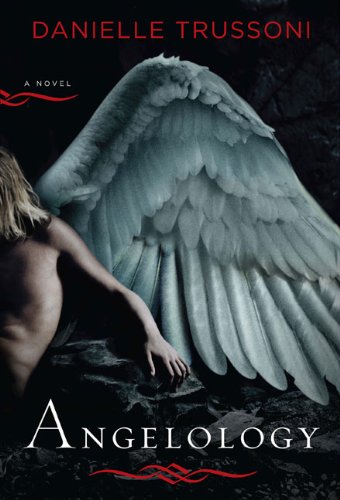
Congratulations to Jessica Madden of South Carolina. She won a signed hardback edition of Danielle Tussoni's Angelology. A big thank you goes out to the folks at Viking Adult for the ir help with the contest!

Official Dan Wells Website
Order “I Am Not A Serial Killer” HERE (US) + HERE (UK)
AUTHOR INFORMATION: Dan Wells has a Bachelor’s Degree in English from Brigham Young University where he was an editor at The Leading Edge Magazine. Dan currently runs www.timewastersguide.com. “I Am Not A Serial Killer” is his first novel.
PLOT SUMMARY: John Wayne Cleaver wants to be a good person, but is fascinated with serial killers and fears that he is fated to become one himself. So for his own sake, and the safety of those around him, John has suppressed the monster inside him through a strict system of rules designed to mimic 'normal' behavior.
Then a demon begins stalking his small town and killing people one by one, and John is forced to give in to his darker nature in order to save them. As he struggles to understand the demon and find a way to kill it, his own mind begins to unravel until he fears he may never regain control. Faced with the reality that he is, perhaps, more monstrous than the monster he is fighting, John must make a final stand against the horrors of both the demon and himself...
CLASSIFICATION: Part serial killer thriller and part supernatural horror with black humor, coming-of-age and teen angst mixed in, “I Am Not A Serial Killer” is like a cross between Dexter, Jeepers Creepers, and a YA dramedy...
FORMAT/INFO: “I Am Not A Serial Killer” is 272 pages long divided over nineteen numbered chapters. Narration is in the first-person exclusively via the fifteen-year-old protagonist, John Wayne Cleaver. “I Am Not A Serial Killer” is self-contained, but is the first volume in a trilogy. The second book, “Mr. Monster”, was published in the UK on March 4, 2010 via Headline.
March 30, 2010 marks the North American Hardcover publication of “I Am Not A Serial Killer” via Tor. The UK edition (see below) was first published on March 5, 2009 (Headline).
 ANALYSIS: I’m a big fan of serial killer stories, both fiction and nonfiction, and in all mediums with Dexter, Scott Bakker’s “Neuropath”, Chelsea Cain’s Gretchen Lowell novels, and the Monster anime some notable recent additions to the subgenre. So when I first heard about Dan Wells’ debut, “I Am Not A Serial Killer”, I was immediately intrigued.
At first, it felt like I was reading a YA version of Dexter with all of John’s rules that he follows, his inability to connect with anyone emotionally, his struggle at trying to appear normal—in this case, a fifteen-year-old teenager—and embracing his darker side for good instead of evil, but pretty soon that didn’t matter because I was hooked by John Wayne Cleaver’s compelling narrative voice. A voice that was both accessible and convincing for a fifteen-year-old teenager . . . that is, a fifteen-year-old teenager with sociopathic tendencies:
“It was like my brain had a screen saver full of blood and screaming, and if I ever left it idle for too long, those thoughts would pop up and take over.”
“I felt like one of Max’s video games, fumbling with unfamiliar controls and watching as my character on the screen ran helplessly in circles.”
In addition to John’s narrative voice, I loved the actual character of John Wayne Cleaver including his fascination with serial killers (their history, characteristics, and profiles); the traits he shares with serial killers (bed-wetting, pyromania, animal cruelty); the relationships in his life (his mom, his only friend Max, his therapist Dr. Neblin, his neighbor Mr. Crowley); and the inner struggle between his good side and ‘Mr. Monster’. On top of that, I enjoyed the many references to famous serial killers (Dennis Rader, Jeffrey Dahmer, John Wayne Gacy, Son of Sam, Jack the Ripper, Ted Bundy, Ed Gein) and the in-depth look at the work of a mortician.
Then there’s the demon. A serial killer with supernatural abilities, the demon—which is how John describes the killer—immediately adds a unique dimension to “I Am Not A Serial Killer”, especially when John decides to kill the demon himself and uses his extensive knowledge of serial killers and his sociopathic tendencies to study and profile the demon, particularly the demon’s methods, reasonings and weaknesses. What’s really interesting about the demon is how it forces John to analyze himself, and the startling things he learns, like what happens when he lets the monster inside loose...
Negatively, my only complaint was that we didn’t learn more of the demon—What it is? Where did it come from? Are there more of them?—but I’m hoping these questions might be addressed in the sequels.
CONCLUSION: Overall, “I Am Not A Serial Killer” is a fantastic debut. The writing is incredibly self-assured for a first novel; John Wayne Cleaver is a fascinating and memorable protagonist with a wonderful narrative voice; the realistic supporting cast does a superb job of illustrating how different John is from normal people; the story is skillfully executed with a nice blend of thrills, angst, humor and thought-provoking examination; and the concept, while partly familiar, is fresh, bold and distinctive as a whole. In short, Dan Wells has written a bona fide winner with “I Am Not A Serial Killer”, and I can’t wait to read more of John Wayne Cleaver...
Order “I Am Not A Serial Killer” HERE (US) + HERE (UK)
AUTHOR INFORMATION: Dan Wells has a Bachelor’s Degree in English from Brigham Young University where he was an editor at The Leading Edge Magazine. Dan currently runs www.timewastersguide.com. “I Am Not A Serial Killer” is his first novel.
PLOT SUMMARY: John Wayne Cleaver wants to be a good person, but is fascinated with serial killers and fears that he is fated to become one himself. So for his own sake, and the safety of those around him, John has suppressed the monster inside him through a strict system of rules designed to mimic 'normal' behavior.
Then a demon begins stalking his small town and killing people one by one, and John is forced to give in to his darker nature in order to save them. As he struggles to understand the demon and find a way to kill it, his own mind begins to unravel until he fears he may never regain control. Faced with the reality that he is, perhaps, more monstrous than the monster he is fighting, John must make a final stand against the horrors of both the demon and himself...
CLASSIFICATION: Part serial killer thriller and part supernatural horror with black humor, coming-of-age and teen angst mixed in, “I Am Not A Serial Killer” is like a cross between Dexter, Jeepers Creepers, and a YA dramedy...
FORMAT/INFO: “I Am Not A Serial Killer” is 272 pages long divided over nineteen numbered chapters. Narration is in the first-person exclusively via the fifteen-year-old protagonist, John Wayne Cleaver. “I Am Not A Serial Killer” is self-contained, but is the first volume in a trilogy. The second book, “Mr. Monster”, was published in the UK on March 4, 2010 via Headline.
March 30, 2010 marks the North American Hardcover publication of “I Am Not A Serial Killer” via Tor. The UK edition (see below) was first published on March 5, 2009 (Headline).
 ANALYSIS: I’m a big fan of serial killer stories, both fiction and nonfiction, and in all mediums with Dexter, Scott Bakker’s “Neuropath”, Chelsea Cain’s Gretchen Lowell novels, and the Monster anime some notable recent additions to the subgenre. So when I first heard about Dan Wells’ debut, “I Am Not A Serial Killer”, I was immediately intrigued.
At first, it felt like I was reading a YA version of Dexter with all of John’s rules that he follows, his inability to connect with anyone emotionally, his struggle at trying to appear normal—in this case, a fifteen-year-old teenager—and embracing his darker side for good instead of evil, but pretty soon that didn’t matter because I was hooked by John Wayne Cleaver’s compelling narrative voice. A voice that was both accessible and convincing for a fifteen-year-old teenager . . . that is, a fifteen-year-old teenager with sociopathic tendencies:
“It was like my brain had a screen saver full of blood and screaming, and if I ever left it idle for too long, those thoughts would pop up and take over.”
“I felt like one of Max’s video games, fumbling with unfamiliar controls and watching as my character on the screen ran helplessly in circles.”
In addition to John’s narrative voice, I loved the actual character of John Wayne Cleaver including his fascination with serial killers (their history, characteristics, and profiles); the traits he shares with serial killers (bed-wetting, pyromania, animal cruelty); the relationships in his life (his mom, his only friend Max, his therapist Dr. Neblin, his neighbor Mr. Crowley); and the inner struggle between his good side and ‘Mr. Monster’. On top of that, I enjoyed the many references to famous serial killers (Dennis Rader, Jeffrey Dahmer, John Wayne Gacy, Son of Sam, Jack the Ripper, Ted Bundy, Ed Gein) and the in-depth look at the work of a mortician.
Then there’s the demon. A serial killer with supernatural abilities, the demon—which is how John describes the killer—immediately adds a unique dimension to “I Am Not A Serial Killer”, especially when John decides to kill the demon himself and uses his extensive knowledge of serial killers and his sociopathic tendencies to study and profile the demon, particularly the demon’s methods, reasonings and weaknesses. What’s really interesting about the demon is how it forces John to analyze himself, and the startling things he learns, like what happens when he lets the monster inside loose...
Negatively, my only complaint was that we didn’t learn more of the demon—What it is? Where did it come from? Are there more of them?—but I’m hoping these questions might be addressed in the sequels.
CONCLUSION: Overall, “I Am Not A Serial Killer” is a fantastic debut. The writing is incredibly self-assured for a first novel; John Wayne Cleaver is a fascinating and memorable protagonist with a wonderful narrative voice; the realistic supporting cast does a superb job of illustrating how different John is from normal people; the story is skillfully executed with a nice blend of thrills, angst, humor and thought-provoking examination; and the concept, while partly familiar, is fresh, bold and distinctive as a whole. In short, Dan Wells has written a bona fide winner with “I Am Not A Serial Killer”, and I can’t wait to read more of John Wayne Cleaver...
Thursday, March 11, 2010
"Nyphron Rising" by Michael Sullivan (Reviewed by Cindy Hannikman and Liviu Suciu)

Official Michael Sullivan Website
Order "Nyphron Rising" HERE
Read FBC Review of The Crown Conspiracy
Read FBC Review of Avempartha
INTRODUCTION: In the space of a short year and a half, Michael Sullivan has moved from a small press debut author that featured in one of my first "Indie Spotlight Reviews" to a "name" in the fantasy field who sold-out his first novel and is getting both critical acclaim and fan appreciation.
So much so, that when I was doing my "2009 Remarkable Small Press Reads", I never even thought of including his superb novels there despite that they technically qualified. Instead in my end-of-the-year rankings, Avempartha went head to head against the "big names" and made both my Top 2009 Books list and Cindy's Top 2009 Book list, while The Crown Conspiracy made Mihir's Top 2009 Reads too. If you have not done so, read the series to date in order to see why, while Nyphron Rising is another great addition to it.
FORMAT/CLASSIFICATION: "Nyphron Rising" stands at about 350 pages divided into 17 named chapters that mainly follow our four main POV's: Royce, Hadrian, Arista and Thrace aka Modina. The novel starts with two detailed maps of the world and ends with a line that will only heighten the interest for what's next. While The Crown Conspiracy and Avempartha were mostly standalone adventure, though they started putting in place the elements of the "big-picture", "Nyphron Rising" gets into the heart of the main story of the series, starting three main threads that presumably will converge later on.
After the more adventure-like first two installments, the series moves firmly into epic territory here and while the building block nature of the novel means that it will be fully appreciated only together with at least the next installment "The Emerald Storm", "Nyphron Rising" moves the series toward the top-line of current fantasy offerings.
ANALYSIS/Cindy: Something about Michael Sullivan's writing has intrigued me from the start. I have been captivated with this series ever since the first two books came out. Nyphron Rising was something I was looking forward to for a while. I had really high expectations for this book, however it's a bit "out of the box" from the other two novels in this series.
Michael Sullivan is a masterful storyteller. The world and action that he has build up in his series is amazing. What's even more amazing is that it was done without having to make the book 600+ pages. Like all great storytellers at some point there has to be a step back from all the action and quest hopping to focus on a major key element in a series: the characters. Nyphron Rising is that book in the series that steps back and develops characterization in favor of a bunch of action sequences.
At first glance it might appear a bit odd that a middle novel would focus upon going back and looking at where the main characters come from and look further into the background that was hinted at within the first two novels, but it oddly fits with the series. If the series focused on non stop action there would be a lack of characterization. if characterization was focused on there would be a lack of action. It seems appropriate that after two up front novels there would be a calmer setting to the third book.
I look at Nyphron Rising almost like a bridge to the other novels to come in this series. It's a bit more toned down as far as action but very important to the series. It builds up the characters, yet at the same time starts paving the way for the future novels. While at first glance it might not seem important without it the series wouldn't hold up as well as it does without this type of novel.
Sullivan does an excellent job of fleshing out the characters from the information readers were presented with in the first two novels, yet is able to move the story along without it appearing the plot is growing stale. In a way this approach has made me even more attracted to this series as I can truly say this has all the elements to make it an epic fantasy series.
Although the Riyria Revelations is built up as a group of stand alone novels with common threads. It really is best to have read the first two novels as I don't feel a reader can fully appreciate what is going on or the build up for some of the plots. There are thread lines that have just started and are not resolved so in my eyes it's at the point where it could no longer be a stand alone.
Since the bar was set so high with the first two books it might appear as though Nyphron Rising doesn't match up to the previous two books, but that isn't the case at all. It just takes a different approach then the previous novels. This novel is still just as much of a page turner and attention grabbing as the other two. The events in this book have set me up to wait anxiously for the next book. I can't wait to see what happens and where Michael Sullivan will take his readers.
Liviu's short take: In hindsight I realize that I failed to fully appreciate Nyphron Rising the first time because it took the series to a different place than I expected after Avempartha which now reads more like a standalone as The Crown Conspiracy was; Nyphron Rising finally starts the maneuvers at the heart of the big-picture in the series and on re-read, a lot is much clearer; while the Thrace/Modina thread is not fully formed and Royce and Hadrian have more of an exploratory/back-story role here, though of course they have an adventure or two, the one following Arista is just superb and the ending line of the novel is for the ages.
Order "Nyphron Rising" HERE
Read FBC Review of The Crown Conspiracy
Read FBC Review of Avempartha
INTRODUCTION: In the space of a short year and a half, Michael Sullivan has moved from a small press debut author that featured in one of my first "Indie Spotlight Reviews" to a "name" in the fantasy field who sold-out his first novel and is getting both critical acclaim and fan appreciation.
So much so, that when I was doing my "2009 Remarkable Small Press Reads", I never even thought of including his superb novels there despite that they technically qualified. Instead in my end-of-the-year rankings, Avempartha went head to head against the "big names" and made both my Top 2009 Books list and Cindy's Top 2009 Book list, while The Crown Conspiracy made Mihir's Top 2009 Reads too. If you have not done so, read the series to date in order to see why, while Nyphron Rising is another great addition to it.
FORMAT/CLASSIFICATION: "Nyphron Rising" stands at about 350 pages divided into 17 named chapters that mainly follow our four main POV's: Royce, Hadrian, Arista and Thrace aka Modina. The novel starts with two detailed maps of the world and ends with a line that will only heighten the interest for what's next. While The Crown Conspiracy and Avempartha were mostly standalone adventure, though they started putting in place the elements of the "big-picture", "Nyphron Rising" gets into the heart of the main story of the series, starting three main threads that presumably will converge later on.
After the more adventure-like first two installments, the series moves firmly into epic territory here and while the building block nature of the novel means that it will be fully appreciated only together with at least the next installment "The Emerald Storm", "Nyphron Rising" moves the series toward the top-line of current fantasy offerings.
ANALYSIS/Cindy: Something about Michael Sullivan's writing has intrigued me from the start. I have been captivated with this series ever since the first two books came out. Nyphron Rising was something I was looking forward to for a while. I had really high expectations for this book, however it's a bit "out of the box" from the other two novels in this series.
Michael Sullivan is a masterful storyteller. The world and action that he has build up in his series is amazing. What's even more amazing is that it was done without having to make the book 600+ pages. Like all great storytellers at some point there has to be a step back from all the action and quest hopping to focus on a major key element in a series: the characters. Nyphron Rising is that book in the series that steps back and develops characterization in favor of a bunch of action sequences.
At first glance it might appear a bit odd that a middle novel would focus upon going back and looking at where the main characters come from and look further into the background that was hinted at within the first two novels, but it oddly fits with the series. If the series focused on non stop action there would be a lack of characterization. if characterization was focused on there would be a lack of action. It seems appropriate that after two up front novels there would be a calmer setting to the third book.
I look at Nyphron Rising almost like a bridge to the other novels to come in this series. It's a bit more toned down as far as action but very important to the series. It builds up the characters, yet at the same time starts paving the way for the future novels. While at first glance it might not seem important without it the series wouldn't hold up as well as it does without this type of novel.
Sullivan does an excellent job of fleshing out the characters from the information readers were presented with in the first two novels, yet is able to move the story along without it appearing the plot is growing stale. In a way this approach has made me even more attracted to this series as I can truly say this has all the elements to make it an epic fantasy series.
Although the Riyria Revelations is built up as a group of stand alone novels with common threads. It really is best to have read the first two novels as I don't feel a reader can fully appreciate what is going on or the build up for some of the plots. There are thread lines that have just started and are not resolved so in my eyes it's at the point where it could no longer be a stand alone.
Since the bar was set so high with the first two books it might appear as though Nyphron Rising doesn't match up to the previous two books, but that isn't the case at all. It just takes a different approach then the previous novels. This novel is still just as much of a page turner and attention grabbing as the other two. The events in this book have set me up to wait anxiously for the next book. I can't wait to see what happens and where Michael Sullivan will take his readers.
Liviu's short take: In hindsight I realize that I failed to fully appreciate Nyphron Rising the first time because it took the series to a different place than I expected after Avempartha which now reads more like a standalone as The Crown Conspiracy was; Nyphron Rising finally starts the maneuvers at the heart of the big-picture in the series and on re-read, a lot is much clearer; while the Thrace/Modina thread is not fully formed and Royce and Hadrian have more of an exploratory/back-story role here, though of course they have an adventure or two, the one following Arista is just superb and the ending line of the novel is for the ages.
Subscribe to:
Posts (Atom)


