
Official Ken MacLeod Website
Order "The Restoration Game" HERE
INTRODUCTION: I have heard of Ken MacLeod many years ago from his association with Iain M. Banks and I have always been eager to try his work, so when he published his Fall Revolution series starting in the mid-90's I got and read the books asap. While quite different from IM Banks work with its focus in the here and now more than in the far future, the Fall Revolution series became an instant favorite for its darkly ironical tone and it's-not-serious-but-it-is attitude, so I became a big time fan and read all his novels to date except for The Night Sessions which I avoided so far since The Execution Channel disappointed me and that one sounded similar.
But when "The Restoration Game" was announced with this irresistible blurb for me:
"There is no such place as Krassnia. Lucy Stone should know - she was born there. In that tiny, troubled region of the former Soviet Union, revolution is brewing." ,
it automatically earned a pretty high spot on my 2010 Anticipated Novels list and after reading the book, I have to say that it quite surpassed my expectations.
FORMAT/CLASSIFICATION: "The Restoration Game" stands at bout 300 pages divided into two parts and 11 named and numbered chapters. There is a prologue that will give you a sense of what the book is really about sfnally and an epilogue narrated in the second person style as the prologue and continuing it, that closes the novel perfectly.
In-between, the novel is narrated by Lucy Stone, with some interludes containing various relevant documents like NKVD interrogations of the 40's as well as back story narrated by Ross Stewart and Amanda Stone.
Lucy is the daughter of academic and CIA - or maybe some other acronym - operative Amanda Stone, with several possible fathers of which current shady businessman and former left wing anticommunist activist Ross Stewart is the second main character. She was born and lived from 1985 until 1991 when it became too dangerous, in the obscure statelet of Krassnia which now stands at the contested border between Georgia and Russia.
With lots of Krassnians connections from the past also, Lucy has the typical red hair of the Vrai, former rulers of Krassnia and supposed guardians of a terrible secret that is rumored to have scared Beria and Stalin among others, though most remaining Vrai have been exterminated in the Great Terror of 1937.
In her "official" work in Krassnia, Amanda Stone "concocted" a national epic The Krassniad drawing from the local legends and the work of an ethnographer of Vrai origins who may have been her (illicit) grandfather and who was shot in 1937 and Lucy grew up with the local legends.
In the present day, Lucy's startup game company is hired - by Amanda's organization with whatever acronyms, though only Lucy knows it - to develop a fantasy game based on The Krassniad to be officially marketed as a niche game, while unofficially to be used by the Krassnians "revolutionaries" aka CIA spies to plot the next color revolution...
Of course things are more complicated than that as Lucy slowly discovers. A sfnal romp with the "same vibes" as last year's celebrated Yellow Blue Tibia, "The Restoration Game" is contemporary adventure sf at its best.
ANALYSIS: When I opened "The Restoration Game" and moved beyond the intriguing prologue which suggested several directions for the book based on "its reality", I found myself hooked by the narration of Lucy Stone and I *knew* this was the book I must read before anything else. I will give you a short example of the many lines that made me laugh out loud quite a few times and irrespective of the location where I was reading the book.
'The guilt wears off with practice.Didn't your mother ever tell you that?'
'No,' I said. 'I guess because she was too busy lying like a rug to me'
'Didn't you get it?', said Ross. 'She was teaching by example.'
As I mentioned in the introduction, the best way to look at "The Restoration Game" is as reflecting the it's-not-serious-but-it-is attitude that has allowed Mr. MacLeod to explore a lot of serious issues - how to organize society, why communism failed, the cultural heritage of the masses versus the elites, why the capitalists are nasty but tend to win - not to speak of introducing sfnal twists, in a fun and engaging way.
"The Restoration Game" sparkles with little gems that touch on the issues above and much more, while the darker stuff like the NKVD interrogation reports or the secret plots of today interweaves in the narration to remind us that "yes, it's serious"...
There is a lot of intrigue and enough action to keep satisfied everyone looking for that and "The Restoration Game" achieved the extremely fine balance I look for in sf romps of its type.
While the final twist is reasonably predictable from the prologue, once you decide on its right interpretation, there are quite a few surprises along the way, including a major one I did not see though it was if not quite obvious, at least likely in hindsight.
"The Restoration Game" (A+) and a personal favorite of 2010 is a good introduction to Ken Macleod's oeuvre and if you enjoy it as much as I did, try the Fall Revolution series or Newton's Wake which is a space opera with the same kind of irony and context as this one.
 12:01 PM |
  Posted by
Liviu |
Posted by
Liviu |


Sunday, July 18, 2010
Odds and Ends: Some Interesting Fictional Characters Part 1: Ladies First (by Liviu Suciu)

I want to present some of the most interesting characters I've encountered in my reading across the years, characters that stayed in my memory for a long time. I will start with the ladies first, then I will do a post about men. I decided to have five categories of three characters each here. Most choices will be the expected ones for anyone who follows my quite repeatedly and far-from-shyly stated preferences, but hopefully there will be a few surprises too.
My usual rules of one character per author in each category, English language availability and some time passed since I have first read the respective books apply.
******************************************************
Most Interesting SF Heroine
Honor Harrington - from the eponymous series by David Weber - no comments needed.
Lady Sharrow - one of the top three IM Banks characters and one of the main reason Against a Dark Background is one of my all time favorite sf novels.
Paula Myo from the Commonwealth/Void series by Peter F Hamilton - a hard choice against Ione Saldana of Night's Dawn, but Paula Myo just commands the page whenever she appears.
******************************************************
Most Interesting Fantasy Heroine
Phedre Delaunay from the Kushiel's Legacy series by Jacqueline Carey - no comments needed and my top choice overall.
Firethorn from the eponymous series by Sarah Micklem; while sometimes compared with Phedre and indeed having some similarities, Firethorn is different in many ways and her story is even more dramatic and heart wrenching, though quite spectacular too. The final concluding volume of the trilogy is one of those top-top expected books of mine, though I have no idea when it will happen.
Arkady Desean from the Tide Lords series by Jennifer Fallon - when immortals fight for one's graces, you know there is a reason; smart, resourceful and determined, while the ending is one for the ages...
******************************************************
Most Interesting Non-SFF Heroine:
Elizabeth Bennett from Pride and Prejudice by Jane Austen - no comments needed.
Eliza from The Baroque Trilogy by Neal Stephenson - no comments needed except to mention that The Baroque Trilogy is indeed non-sff though I usually tend to forget that.
Elizabeth Stone from Stone's Fall by Iain Pears - another no comments needed for anyone who has read the book, otherwise go and check it out.
******************************************************
Most-Interesting SFF Female Villain
Melisande Shahrizai from the Kushiel's Legacy series by Jacqueline Carey - no comments needed and my top choice overall.
Catherine "The Cat" Stewart from the Commonwealth/Void series by Peter F Hamilton - again no comments needed.
Aldona Anisimovna from the Honorverse by David Weber - with the array of memorable female characters created by the author, especially though not only in the Honorverse it is another hard choice against say Cordelia Ransom, Isabel Bardasano, Georgia North or Agnes Norbrandt, but Aldona is the subtlest of all.
******************************************************
Most-Interesting Non-SFF Female Villain
Mahaut Countess d'Artois from Les Rois Maudits (The Accursed Kings) by Maurice Druon. One of the most celebrated historical fiction series of all times is powered by the murderous rivalry between the powerful countess and her scheming nephew Robert.
* In the cover collage above I used the colorful (2005) TV series one for Le Rois Maudits which features Jeanne Moreau as the Countess and while she is very far from the book physical description of the character, she plays the part so powerfully and brilliantly to make one forget all that; sadly the actor playing Robert is miscast and cannot carry the role, though the production values alone make the series a good adaptation
Livia "First Lady of Rome" from I, Claudius by Robert Graves - no comments needed.
"Milady" from The Three Musketeers by Alexandre Dumas - over the top even for Dumas but still...

WOWIO the ebook site of several incarnations to-date is offering Daniel Rabuzzi's superb debut as a free pdf download for July 2010. I reviewed the novel one year ago on its publication and I included it in my Remarkable Small Press Reads of 2009,
The sequel A Tax from Heaven is a highly anticipated novel which I have included in the "2010 maybes" at the end of the post linked above though I still have no idea when it will be published.
The download link for The Choir Boats is HERE - bottom of the page - and hurry since it's available only for two more weeks!

Official Dorian Zari Website
Read a "book-like" excerpt from The Labyrinth or a longer one HERE
Order "The Labyrinth" HERE
INTRODUCTION: "The term of soul mate is about to be redefined as four complete strangers struggle to find each other despite their monstrous pursuer who calls himself the Guardian. Their journey unravels their own past, the startling reality about the Guardian's true nature, but even more - humankind's true origin and purpose"
When some months ago, I received a review query from a young Romanian author who was debuting in English (!) and with a book that had the very interesting premise above, I was quite intrigued so I checked an excerpt and decided to give it a try and I am very glad I did so since The Labyrinth turned out to be a winner.
I would like to note that the review query I have received was the first time I have encountered Dorian Zari's name, though I agree that the fact that we share the same birth country attracted my attention even before I checked the book. I also urge you to check his wonderful biographical note on the website linked above.
FORMAT/CLASSIFICATION: "The Labyrinth" stands at about 320 pages divided into 45 numbered chapters and with a short epilogue. There are four main POV's which are introduced separately though it becomes evident quite early that they are related somehow.
Sarah is a very talented deaf pianist whose music sense is very exquisite despite her disability. Carly is a beautiful stripper with an unusual sense of smell.
Zack is a rich ne'er-do-well who has a problem with food. His taste sense is too developed so on eating he usually tastes the ingredients rather than the result, so in consequence he eats only the blandest food possible.
Dan is a blind man who actually can see events in far away parts of the world. Despite the disbelief of his attending nurses and physicians, Dan's claims merit attention since for example he knows quite a lot of languages which he claims he learned by watching subtitled TV's from all over the world.
And there is a mysterious creature with supernatural powers, called the Guardian who wreaks havoc seemingly at random and seems to want to meet all four of the above together for what one presumes to be nefarious reasons. "The Labyrinth" is essentially the story of the four trying to make sense of both their abilities/handicaps and trying to evade their sinister pursuer, with the meaning of the title one of the best twist revelations I've recently read.
While set in the contemporary world in various locations mostly in America and Europe and with back stories from the past, "The Labyrinth" is a timeless tale of the fantastic at its best with an ending that keeps the reader remembering the novel for a long time.
ANALYSIS: "The Labyrinth" has several strengths. While it is clear that something odd is going on, the author manages to keep the general thrust of the story hidden for a long time and the last part when things are revealed is just superb.
The characters make a good contrast; from foul-mouthed Zack and tougher Carly to the more sensitive Sarah and the seemingly most important of all Dan, they establish their individuality quickly and their voices are quite different throughout the novel. As a suitable menacing character, The Guardian keeps in character all the way to the end though things are definitely not what one would usually expect from the description above, to put it mildly...
While "The Labyrinth" takes a little to get going, or more precisely for the scattered beginning scenes and POV shifting to cohere, the mystery is there from the first pages and you definitely want to find out what happens next.
As style goes, while I quite liked the author's prose overall, I had two small issues with "The Labyrinth" - occasionally the usage of some words/phrases will strike native English speakers as odd, though it made sense for me by substituting Romanian analogues, while in the middle part of the novel the dialogue between the characters gets sometimes too "smart" for its own good - but neither detracts from the tremendous achievement of the novel, both as debut and written in English by a young Romanian.
Overall "The Labyrinth" (strong A from me) is one of these unexpected treats that come out of nowhere and about which I would have never heard if not for my work here at FBC. I wish people will check it out to see what you can easily miss in today's very crowded publishing world. Try the sample and if you like it, give the novel a chance since it's worth it for a great story with interesting characters and a mind-blowing ending to boot!
Read a "book-like" excerpt from The Labyrinth or a longer one HERE
Order "The Labyrinth" HERE
INTRODUCTION: "The term of soul mate is about to be redefined as four complete strangers struggle to find each other despite their monstrous pursuer who calls himself the Guardian. Their journey unravels their own past, the startling reality about the Guardian's true nature, but even more - humankind's true origin and purpose"
When some months ago, I received a review query from a young Romanian author who was debuting in English (!) and with a book that had the very interesting premise above, I was quite intrigued so I checked an excerpt and decided to give it a try and I am very glad I did so since The Labyrinth turned out to be a winner.
I would like to note that the review query I have received was the first time I have encountered Dorian Zari's name, though I agree that the fact that we share the same birth country attracted my attention even before I checked the book. I also urge you to check his wonderful biographical note on the website linked above.
FORMAT/CLASSIFICATION: "The Labyrinth" stands at about 320 pages divided into 45 numbered chapters and with a short epilogue. There are four main POV's which are introduced separately though it becomes evident quite early that they are related somehow.
Sarah is a very talented deaf pianist whose music sense is very exquisite despite her disability. Carly is a beautiful stripper with an unusual sense of smell.
Zack is a rich ne'er-do-well who has a problem with food. His taste sense is too developed so on eating he usually tastes the ingredients rather than the result, so in consequence he eats only the blandest food possible.
Dan is a blind man who actually can see events in far away parts of the world. Despite the disbelief of his attending nurses and physicians, Dan's claims merit attention since for example he knows quite a lot of languages which he claims he learned by watching subtitled TV's from all over the world.
And there is a mysterious creature with supernatural powers, called the Guardian who wreaks havoc seemingly at random and seems to want to meet all four of the above together for what one presumes to be nefarious reasons. "The Labyrinth" is essentially the story of the four trying to make sense of both their abilities/handicaps and trying to evade their sinister pursuer, with the meaning of the title one of the best twist revelations I've recently read.
While set in the contemporary world in various locations mostly in America and Europe and with back stories from the past, "The Labyrinth" is a timeless tale of the fantastic at its best with an ending that keeps the reader remembering the novel for a long time.
ANALYSIS: "The Labyrinth" has several strengths. While it is clear that something odd is going on, the author manages to keep the general thrust of the story hidden for a long time and the last part when things are revealed is just superb.
The characters make a good contrast; from foul-mouthed Zack and tougher Carly to the more sensitive Sarah and the seemingly most important of all Dan, they establish their individuality quickly and their voices are quite different throughout the novel. As a suitable menacing character, The Guardian keeps in character all the way to the end though things are definitely not what one would usually expect from the description above, to put it mildly...
While "The Labyrinth" takes a little to get going, or more precisely for the scattered beginning scenes and POV shifting to cohere, the mystery is there from the first pages and you definitely want to find out what happens next.
As style goes, while I quite liked the author's prose overall, I had two small issues with "The Labyrinth" - occasionally the usage of some words/phrases will strike native English speakers as odd, though it made sense for me by substituting Romanian analogues, while in the middle part of the novel the dialogue between the characters gets sometimes too "smart" for its own good - but neither detracts from the tremendous achievement of the novel, both as debut and written in English by a young Romanian.
Overall "The Labyrinth" (strong A from me) is one of these unexpected treats that come out of nowhere and about which I would have never heard if not for my work here at FBC. I wish people will check it out to see what you can easily miss in today's very crowded publishing world. Try the sample and if you like it, give the novel a chance since it's worth it for a great story with interesting characters and a mind-blowing ending to boot!

When posting about the recent sad passing of James Hogan and checking his bibliography, I discovered a bit to my surprise that across time I have read 13 novels authored by him. So I thought to do a list of authors I've read a minimum of 10 novels - or in a few cases novels + collections and in one case all non-fiction - list that I present below in alphabetical order.
There are more or less obvious abbreviations of the genres read by me from the respective author's work ordered by number of books (m = mainstream, adv = adventure, f=fantasy, thr=thrillers, hf = historical fiction, myst = mysteries).
There are 54 authors on the main list and 7 on the secondary list which contains authors who are not - or very little - translated in English as far as I know. As expected sf heavily dominates the main list.
Authors I've Read a Minimum of 10 Novels - available in English
Eric Ambler (thr, myst)
Neal Asher (sf)
Isaac Asimov (sf, non-fiction)
Honore de Balzac (m)
Iain M. Banks (sf, m)
William Barton (sf)
Stephen Baxter (sf)
Barrington Bayley (sf)
Greg Bear (sf)
Gregory Benford (sf)
Chris Bunch (f, sf)
Lois Bujold (sf,f)
Jack Chalker (sf)
Agatha Christie (myst)
AC Clarke (sf)
Arthur Conan Doyle (myst, sf, hf)
David Drake (sf)
Alexandre Dumas (hf)
Greg Egan (novels + collections, sf)
Jennifer Fallon (f)
Eric Flint (sf)
Alan Furst (hf)
John Galsworthy (m)
Martin Gardner (non-fiction: math, puzzles, debunking paranormal/pseudoscience)
Simon Green (sf)
Jon Courtenay Grimwood (sf)
Peter Hamilton (sf)
Harry Harrison (sf)
Sven Hassel (hf)
Robert Heinlein (sf)
Robin Hobb (f)
James Hogan (sf)
Paul McAuley (sf, thr)
Ken MacLeod (sf)
Jack McDevitt (sf)
Karl May (adv, hf)
L.E. Modesitt (f, sf)
Vladimir Nabokov (m)
KJ Parker (f)
Erich Maria Remarque (m)
Mary Renault (hf)
Alastair Reynolds (novels + collections, sf)
John Ringo (sf, thr)
Steven Saylor (hf)
Charles Sheffield (sf)
Brian Stableford (sf)
S.A. Swann (sf,thr)
Harry Turtledove (sf, f, hf)
Jack Vance (sf)
AE VanVogt (sf)
Jules Verne (adv, sf)
David Weber (sf, f)
Sean Williams (sf)
Gene Wolfe (sf,f)
Authors not available in English:
Serge Brussolo (sf, thr, hf)
Theodor Constantin (myst, thr, hf)
Radu Tudoran (hf, m, adv)
Vintila Corbul (hf, thr)
Rodica Ojog Brasoveanu (myst, thr, hf)
Michel Zevaco (hf)
Haralamb Zinca (myst, thr)
Comments: There are four authors I've read 9 novels from and I expect I will read #10 next year - Jacqueline Carey (f,sf), Adam Roberts (sf), CS Friedman (f,sf), KJ Anderson (sf,f), while if Sean Russell (f) gets to write another fantasy novel, it will make 10 also since I read all his nine fantasy novels so far.

Yesterday night I found out from Locus Online that:
"British author James P. Hogan, 69, died in his home in the Republic of Ireland on July 12, 2010. The cause of death has not yet been determined. Hogan, a hard SF writer, won three Seiun Awards and two Prometheus Awards. Hogan is best known for the Minervan Experiment or Giants series, beginning with debut novel Inherit the Stars (1977) and continuing with The Gentle Giants of Ganymede (1978), Giants’ Star (1981), and Entoverse (1991)."
The complete list of his published novels is HERE and perusing it, I realized that I have read and enjoyed some 13 of the books there, most recently his possibly last published one Migration which I have reviewed several months ago.
I was really looking forward to more James Hogan novels in the future but it's not to be. Very sad and tragic news...

Official L.E. Modesitt Website
Order "Imager's Intrigue" HERE
Read FBC Review of Imager
Read FBC Review of Imager's Challenge
INTRODUCTION: After the complete duology Imager and Imager's Challenge that introduced us to Rhenn, one of the most enchanting narrators in recent fantasy, "Imager's Intrigue" continues Rhenn's odyssey through the murky politics and divided society of Solidar as well as his ascent in the powerful but very small Collegium of magicians that both protects and is protected by the Solidar's tripartite powers embodied in the Council.
The first two novels need to be read together since they are essentially one huge book split in two, but the ending of Imager's Challenge was complete enough to allow lots of freedom for the next book. "Imager's Intrigue" starts some five years after and while building on the events back, is pretty much a standalone with another clear and definite ending.
Since the next Imager's Portfolio novel will start a trilogy set centuries in the past, there may or may not be more Rhenn novels and while I would love to see more of him, his family and friends, "Imager's Intrigue" is a very satisfying ending for now.
FORMAT/CLASSIFICATION: "Imager's Intrigue" stands at about 500 pages and is divided into 70 numbered chapters. There is a list of characters at the beginning of the novel with their rank/title, as well as a map of L'Excelsis the capital of Solidar where most of the action takes place as in the previous two novels.
I actually read Imager's Intrigue soon after I got it so the glossary was useful; after finishing it I did not want to depart from its wonderful universe, so I reread all the three books in order. While we provided a lengthy overview of the setting in the earlier reviews, I would present a summary here, so people can jump directly into this book if they want.
Solidar is the most powerful country of the world with an early industrial economy - railways, guns, steamers, navy but no real army - over 50 million people and occupying an island continent. Solidar is also the home of the Collegium, where magicians called Imagers for their capabilities of "imagining" stuff in and out of existence reside, while being oppressed or even killed on sight in other countries. Solidar is actually a corporate society based on the balance of power between the land nobility - High Holders - the capitalist entrepreneurs - Factors - and the artisans and worker unions - Guilds - who split the leading Council between them, while the Collegium advises.
There is no representation outside the tripartite structure, women generally have no political rights - though there are ways around and of course they can be artisans or factors like Rhenn's wife and sister respectively - while the poorer people outside of the structure - landless laborers, slum - taudis - dwellers and the like have no direct power outside of rioting, drug dealing and so on...
Solidar's navy tries to keep the balance - free trade, neutrality, no other country getting too powerful - and of course Solidar has the Imagers whose covert branch is not above sabotage or well timed assassinations of foreign leaders that may upset said balance, but who have not used their powers in a scorched earth lesson against another country in a century or so. But times are changing and Solidar's main rival Ferrum which is an all capitalist state that is fast developing through ruthless competition, has plans.
While defeated 5 years ago by Solidar's navy and stalemated on land by Solidar's backward allies, the Jariolans, Ferrum now has better "land cruisers", better warships and a better plan to throw Solidar into chaos. Since Solidar is a corporate state, there is not really a coherent notion of loyalty or treason, each of three "protected classes" acting first and foremost in its interest and if their Council representatives dare defy that, they tend to have short remaining lives.
Narrator Rhenn stands at the confluence of classes - eldest son of a prosperous "mid-level" factor, artisan - journeyman painter - by training for more than 10 years before he discovered his powerful magic, friend of the younger High Holder generation as per the events in the first two books, Master Imager of the 2nd level and 3rd district police captain on loan from the Collegium.
He is married with well off artisan of Pharsi origins - an enterprising minority, sometimes resented both by the lower classes and by some factors - Seliora who has some magic of her own in foresight flashes and the couple has currently a 3 year old daughter Diestria named after Seliora's larger than life grandmother that was such an important a character in the first two volumes.
"Imager's Intrigue" is classified best as fantasy thriller with exquisite world building, where the tension that starts from the first page, builds and builds until events start happening fast about 200 pages in and from then on it's a fast, "cannot put it down" kind of ride to the end.
ANALYSIS: Quietly the Imager Portfolio series has became a big time favorite of mine and the latest addition "Imager's Intrigue" raises the tension, stakes and action levels quite a lot, though I also liked the slower paced first two novels for their superb narrator and pitch perfect world building. Here though we are plugged almost from the first pages into the action, when after five relatively quite years, external tensions are heating up and maybe coincidentally, maybe not, various forms of unrest start spreading across Solidar.
On his daily routine of taking his wife and daughter under heavy personal shields to Seliora's "fortified" compound which is both her workplace and former family home before going to start a new day as police chief of the 3rd district and reading the daily newspapers that mention both the Ferran' s imminent invasion of Jariola and the troubles across Solidar, Rhenn "knows" the quiet times are at an end...
There are local conflicts up to minor bombings between High Holders and the upstart Free Holders - which are part of the capitalist factor class and whose more efficient production techniques leave the less entrepreneurial High Holders behind and in debt - there is a new more potent form of "weed" that even long term users overdose easily on and die, there are explosions in various cities including L'Excelsis, the army and navy are missing gunpowder and bombards and prominent people not least Rhenn are targeted for assassination.
Of course as a Maitre D'Structure, Patrol Captain and reporting also to the Imager chief of operations and 2nd in Collegium rank - Maitre D'Esprit Dichartyn, Rhenn is in the best position to try and make sense of what happens and prevent further havoc.
But the Collegium is used to operate from the shade, Dichartyn and Police Chief Artois need proof, Police Sub-chief Cydarth who detests Rhenn schemes to become Chief since the incorruptibility of Artois did not endear him to the Council and Rhenn suspects Cydarth is up to no good.
The High Holders stand under the specter of losing control of the Council as their numbers are perilously close to dipping below the crucial 1000 mark, there are some rich and powerful Factors who would not mind if Solidar would become more like Ferrum and may even be guilty of treason - whatever that means - and the Guilds want to slow down all mechanized progress - jobs, jobs - even at the cost of the Solidaran Navy becoming outgunned by the Ferrans. The joys of the tripartite structure that served Solidar so well across the centuries, but now under Ferran intense innovation may be its downfall...
So all the ingredients of the high-stakes thriller are in play and "Imager's Intrigue" works perfectly as such with Rhenn almost racing against the time to prevent - well he does not really know what, but his and Seliora's foresight flashes hint at terrible things.
The other main aspect of the novel is how all the detailed world building from the previous two volumes which essentially powered the books until the final fast and furious action, come together here in a coherent whole and make the continual survival of Solidar - at least as presently constituted - a logical plot point, with all the pro's and con's of the tripartite system mentioned above. So L.E. Modesitt's almost "didacticism" from the first two novels pays off big time since everything that happens here makes sense - however unusual is for us used to unitary states with one main center of power.
And of course there is Rhenn's voice who ultimately makes or breaks the series, but I talked enough about that. If there is one niggle is that many women of the series, including Khethila who is now a "factoria" in far off Kheirseilles - Seliora and Diestra, are less prominent here, though Iryela, Alynkya and the "proto-feminist" writer and activist, Madame D'Shendael have some great scenes and of course there is Master D'Esprit Dyana the 3rd ranking Imager of the Collegium...
An A++ both for the book and for where it took the series, "Imager's Intrigue" is as perfect a fantasy thriller set in a secondary world as it gets.

I happen to like lists of recent and upcoming books - whether it's best of the year, the year at half, anticipated books, new anticipated books. I also prefer to talk about "disappointing books" rather than "bad" books with few exceptions.
The main attraction of "best of" lists is that they force a "paring" down of what someone liked and after the passage of time tempered the possible initial enthusiasm, or conversely brought a book that stayed with the reader to the forefront.
"Anticipated" lists beside the obvious use in finding out what new books are projected to come out, give also an indication of what priorities the list maker has in his or her reading.
Books have their readers and readers have their books is my motto, so most of the time the fact that I dislike a book is manifest of the fact that the book is not for me, though of course there are books that I disliked intensely:
The Magicians (reading it was like water drop torture, Quentin, drop, Quentin, drop...) and The Tome of the Undergates (potty and generally very juvenile humor, all caps words, almost at the "so bad to be really funny" level of the North Korean movies of my childhood) which is not to be confused with a meh or book that failed for me but which did not generate the "hate passion" of above: Fall of Thanes, The City and the City or the Dervish House, to give some notable examples.
I am not a series completist, so I never forgo reading a series installment because the series is not "done", but it's true that there are series books that I start, something else comes up and so on, so they end up back on the "to-read" pile until a new series installment - or something related for that matter - comes and rekindles my interest and that's sometimes noticeable in my lists too.
I usually find historical lists of much less interest for various reasons, most notably I find their 'interesting/nothing new" ratio very skewed towards the latter, but that's generally my bias towards reading newer books as opposed to older ones.
So in the spirit of paring down as if forced to choose *and order* the top 10 books (overall and sff) of 2010 so far:
1. The Invisible Bridge by Julie Orringer - literary historical fiction, standalone and author's novelistic debut, came out of nowhere (full rv) - this novel has the combination of exuberant and dark that I find irresistible and of course the fantastic world building - or re-imagining if you wish - coupled with the Eastern Europe setting of the second half, made it the #1 choice.
2. The Folding Knife by KJ Parker - fantasy, standalone, my number two anticipated novel of 2010 (full rv); still powerful, still a masterpiece and most likely still my number #1 sff of the year, though the new Culture novel coming out in October may change that...
3. Cold Magic by Kate Eliott - fantasy, series debut, came out of nowhere with no expectations (full rv September, short take HERE)
Exuberant and with a superb ending that made me both eager for "Cold Fire" and made me satisfied with the first installment in itself.
4. The Thousand Autumns of Jacob de Zoet by David Mitchell - literary historical fiction with a touch of the fantastic, standalone, my top non-sff anticipated novel of 2010 (full rv)
5. The Evolutionary Void by Peter F. Hamilton - sf, series ending and another Top 10 Anticipated 2010 Book (full rv August, short take HERE) - while the whole 5 volume series including the Commonwealth duology is nothing short of brilliant as sense of wonder or plotting and is both magnificent sf and shows what sf can be at its best, the essential immortality of the characters deprives the books of a lot of the "real consequences" motif and I think I still prefer the author "Night's Dawn" a little bit more for its awesome character set.
6. Black Prism by Brent Weeks - fantasy series opening 1/3 and another Top 10 Anticipated 2010 Book (full rv August, short take HERE); this one has one flaw, it ends and despite its 600+ pages I wanted 600 more...This series has the potential of becoming if not my best fantasy one ever - since the six volume Kushiel's Legacy linked double trilogy will be very hard to dethrone from there - but close to that since it has the depth, originality and characters for that.
7. Salute the Dark by Adrian Tchaikovsky - fantasy, #4/10 (full rv); this is both for the book and for the series to date
8. The Last Page by Anthony Huso - fantasy, author debut, part of a duology and one of two awesome debuts (full rv August, short take HERE); while essentially a two character show, the book is not quite romantic as the blurb implies, but very matter of fact as their relationship goes; invetiveness galore, excellent writing and the best melding of steampunk and high magic I've seen.
9. City of Ruin by Mark Newton - fantasy, #2/4, Top 10 Anticipated (full rv) - if the weirdness descent continues unabated, while keeping the awesome characters and inventiveness of the first two books, the next one will be a strong competitor for #1
10. The Left Hand of God by Paul Hoffman - sf in setting, fantasy in spirit, very divisive - love it/hate it novel - but it really impressed me and its sequel stands among my highest anticipated ones ever (full dual rv that reflects this opinion split to an extent); when outside perennial favorites of 15+ years (Honor, Gordianus, Culture), you find yourself wanting the next book in a series as bad as I want this one, there is no choice but to include it on my top 10 list despite all the controversy...
11/Overall and 9 sff: Bitter Seeds by Ian Tregillis - historical fantasy, author debut as original work goes, part of a trilogy and the second of the awesome debuts of 2010 (full rv); characters and writing style dominate here
12/Overall and 10 sff; The Emerald Storm by Michael Sullivan - fantasy, #4/6 (full rv) - this is both for the book and for the series to date
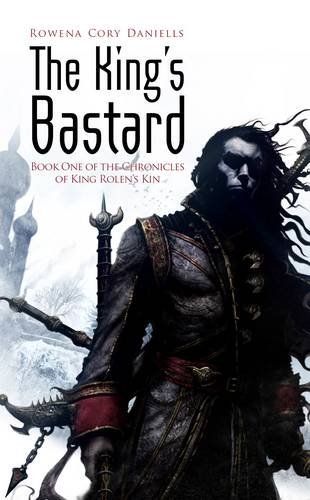
In honor of Rowena Cory Daniells' guest blog spot here, Fantasy Book Critic is excited to offer a giveaway of Rowena Cory Daniells' new book The King's Bastard.
A big thank you goes out to Rowena for supplying the giveaway for our readers.
The giveaway will be a little different. A question will be asked about Rowena's guest blog post. You email me the answer and a random winner will be chosen.
The question is: What are Rowena's two favourite genres?
To Enter:
1. This contest is open to everyone, anywhere in the world!
2. Only one entry per person. All duplicate entries will result in deletion.
3. Please send an email with the answer of the question, your name, and address to fbcgiveaway@gmail.com. With a subject of King's Bastard or something similar.
4. This contest will start at 12:01 EST AM July 11, 2010 and end on July 20, 2010 at 12:01 EST PM.
5. Good luck and Happy Reading!

Visit Rowena's Blog Here
Visit Rowena's Official website Here
Fantasy Book Critic is pleased to present Rowena Cory Daniells. She is the author of the new series, The Chronicles King Rolen's Kin , which the first book in the series, The King's Bastard, was published this month. With the following two books, The Uncrown King and The Usurper.
A review of The King's Bastard can be expected later this week, as both Cindy and Liviu have enjoyed reading this novel.
Rowena will also be stopping by throughout the day to answer questions that you might have for her!
**************************************************************************


I love genre. I make no apology.
When I sat down to write the King Rolen’s Kin trilogy I set out to write the kind of books that you turn to after a hard week at work. It’s Saturday, you’ve done all the washing, driven the kids around, put a roast on for dinner and now, for a couple of hours, you’re free to indulge yourself. So what do you do? You reach for a good book.
On a day like that you turn to a fantasy books because it’s going to sweep you away from the mundane world, into a world where people battle larger concerns than whether their power bill has just gone up again. It’s a world where the little person and reach deep into themselves and find greatness, where the pure of heart can make a difference.
So, yes, I love the genre.
I’ve always loved fantasy. Children’s stories are teaming with magic and wonder.
When we’re children, adults encourage us to be imaginative. Why should we have to put that sense of wonder away, just because we’re no longer children?
Actively seeking out things that amaze us helps to keep our minds flexible. According to Jonah Lehrer over at the Science blog thinking like a child helps boost creativity. And even more interesting, falling in love makes us more creative. Apparently it ‘… makes us think differently in that it triggers global processing, which in turn promotes creative thinking and interferes with analytic thinking.’ For the full article see here.
So give me a fantasy or science fiction book any day. They’ve been my favourites since I first learnt to read. As Carl Sagan said: ‘ Imagination will often carry us to worlds that never were. But without it we go nowhere.’ For some great quotes on the power of imagination see here.
So when ever I pick up a fantasy book I want the author to sweep me off my feet.
Here’s hoping the King Rolen’s Kin trilogy sweeps you away.
Rowena Cory Daniells
Subscribe to:
Posts (Atom)


