Tuesday, August 13, 2019
SPFBO: Semifinalist Interview with Randall McNally (Interviewed by Mihir Wanchoo)

(Not the author or is it?)
Order Shadowless over HERE
Read Fantasy Book Critic's review of Shadowless
Q] Welcome to Fantasy Book Critic. To begin with, could you tell us a little about yourself and your background?
RM: Thank you for asking me to take part in this interview, it’s an honour to be here. I’m currently a project manager, working for a large software company, and I write in my spare time. I’m from Ireland and I have a degree in Astrophysics; so with the scientific education and over ten years’ experience working as a computer programmer you would think I’d have written a Sci-Fi book, but no.
Q] Can you tell us what inspired you to be a writer in the first place, what experience you went through in finishing your book, & why you choose to go the self-publishing route?
RM: A few years back, when I was working as a developer, I landed a new job. Programmers tend to jump between companies every 2-3 years and so this was normal. A few things happened and the move turned sour. I had only just joined the company and I didn’t want to leave right away – if anything, leaving so soon would have looked bad on a CV.
One day on my lunch break I read an article about a lady in America who gave up her day job to become a writer. She worked in a call center (cube farm) and sat behind a large man who ate egg sandwiches and flatulated all day. While I couldn’t afford to just leave my job this lady’s story definitely struck a chord. It was then I began writing; in the evenings, at the weekends, holidays. Some days in work I’d even churn out a few hundred words over lunch and email them to myself.
Writing the book was a massive undertaking and in all honesty, if I had known what was involved and how much it was going to cost, I’m not entirely sure I would have ever started. Anyway, the company I was working for, when I began writing Shadowless, was little more than a start-up and when a huge shift occurred in the industry people had to work longer hours without getting paid overtime or time in lieu. Trying to squeeze in writing during this time was difficult, and so because of this Shadowless took 2 years just to write (the entire process took 3 years). I’d never written a book before so everything was new to me, from finding an experienced proof-reader, a professional copy editor, a cover artist and a graphic design team. Sourcing all these people took time and, of course, money.
Why did I choose to self-publish? I didn’t choose. It was lack of option. I contacted thirty four literary agents/publishers (I know because I kept their details in a spread sheet so I didn’t contact the same ones twice) and pitched them my idea, sent them the first 3 chapters, etc. The eight that replied all said something similar…"Great idea, love the premise, strong writing style…just not what we’re looking for at the minute."
Q] Many writers have a muse, who directs their writing, and others do not seem to be affected the same way. Which group do you fall into? What is your main motivation and source of inspiration?
RM: The best source of inspiration I know is people. Sometimes I’ll be sitting in a canteen, bus or a bar and overhear a witty or insightful comment. If it sounds like something one of my main characters would say then I type it into my phone quickly, before I forget it.
Q] How did you hear about SPFBO and what helped you decide to submit your debut in this edition?
RM: Last year I contacted a book-blogger via Twitter and offered them a free copy of my book in exchange for an honest reviewer. They read it and loved it. Afterwards they got in touch with me and suggested that I submit Shadowless into the SPFBO competition. This was last September so I’ve been waiting about 10 months to submit my book.

Q] Please elaborate how the genesis of Shadowless occurred. How long have you been working on it? Has it evolved from its original idea (if any)?
RM: Growing up I used to play RPG’s and computer games, all of which tended to be fantasy-based, even the films I watched and books I read were mainly sword and sorcery. There was something about the genre that appealed to me, so when I started to write it was obviously going to be fantasy. The idea for Shadowless had been rolling around in my head for a few years but never fully took shape until I began writing. I didn’t actually set out to write a book, merely to write short stories. It was only when I had a few of these stories written that a friend suggested connecting them. It took a few rewrites but I managed to get them to gel together into something that (hopefully) makes sense.
Q] Shadowless seems to be the opening volume in a saga. Could you give us a progress report about the sequel and outline your plans for the series as a whole? Also what would the series title?
RM: Yeah, everything is set up for a trilogy of books or even more. The world building and map are in place, a cast of main and supporting characters have been established and I have enough material for at least a few more books. Realistically however, a sequel was always going to be dependent on the success of the first book, and even though Shadowless has been well received it’s still nowhere near close to paying for itself. Despite that, I have got a rough draft of the first few chapters of a second book written, but it’s really slow going (not that the first one was written quickly). I changed jobs again soon after Shadowless was published and so don’t have the same need for the escape mechanism that writing provided.
I’m not sure what a series would be called? I was going to call the first book ‘Tales from the Northern Realms’ right up until the last second…but the title didn’t really go with the cover art. I’m glad I changed it. If anyone reading this has any ideas of what a series should be called then I’d love to hear them.
Q] Your book has a very unique approach to its POV structure. You roughly have about 20 POV chapters, each dealing with a new godling character (even though some POV characters make appearances in some other POV chapters). Why did you write your debut in such a distinctive manner?
RM: I didn’t realise the chapter format was that distinctive until people began commenting on it. This is my first book and I hadn’t done any writing since school, I mean…I wrote at university but it was all equations, lab reports and experiment write-ups…certainly no creative writing.
The distinctive format of the book came about because I began writing short stories about different characters in far-flung lands, each with a unique power and each with a very distinctive personality. It was only after the first few chapters that I started to link things together, flesh out the details and introduce the overall narrative. As you mention, some of the character’s chapters are (seemingly) standalone while others weave in and out of the novel’s main storyline. The chapters are deliberately in a specific order so as to drip-feed the reader with the book’s main elements rather than bombard them with information.
Q] Your book had a very Clash of The Titans feel to it. The Gods in your world are alien, cruel and very, very powerful. What was your inspiration for them and the world being the way it is and what are your thoughts on world-building in general?
RM: Clash of the Titans (the proper one with Laurence Olivier) was, of course, a major inspiration for the book, but I wanted to take it one step further. I grew up watching films like Jason and the Argonauts and marvelled at the way the gods used mortals as pawns, pitting them against each other and often plunging them into dangerous situations and watching how they reacted.
In these legends some of the gods breed with mortals to produce heroes of renown. I wanted to turn this on its head and have the gods breed with mortals with an aim to killing their offspring further down the line.
Building a world for my book was probably one of the most straightforward parts of it, I simply described it through the eyes of my characters. Yes, there’s dragons and gods in the world I created…but grass is still green and the sky is still blue.
RM: Growing up I used to play RPG’s and computer games, all of which tended to be fantasy-based, even the films I watched and books I read were mainly sword and sorcery. There was something about the genre that appealed to me, so when I started to write it was obviously going to be fantasy. The idea for Shadowless had been rolling around in my head for a few years but never fully took shape until I began writing. I didn’t actually set out to write a book, merely to write short stories. It was only when I had a few of these stories written that a friend suggested connecting them. It took a few rewrites but I managed to get them to gel together into something that (hopefully) makes sense.
Q] Shadowless seems to be the opening volume in a saga. Could you give us a progress report about the sequel and outline your plans for the series as a whole? Also what would the series title?
RM: Yeah, everything is set up for a trilogy of books or even more. The world building and map are in place, a cast of main and supporting characters have been established and I have enough material for at least a few more books. Realistically however, a sequel was always going to be dependent on the success of the first book, and even though Shadowless has been well received it’s still nowhere near close to paying for itself. Despite that, I have got a rough draft of the first few chapters of a second book written, but it’s really slow going (not that the first one was written quickly). I changed jobs again soon after Shadowless was published and so don’t have the same need for the escape mechanism that writing provided.
I’m not sure what a series would be called? I was going to call the first book ‘Tales from the Northern Realms’ right up until the last second…but the title didn’t really go with the cover art. I’m glad I changed it. If anyone reading this has any ideas of what a series should be called then I’d love to hear them.
Q] Your book has a very unique approach to its POV structure. You roughly have about 20 POV chapters, each dealing with a new godling character (even though some POV characters make appearances in some other POV chapters). Why did you write your debut in such a distinctive manner?
RM: I didn’t realise the chapter format was that distinctive until people began commenting on it. This is my first book and I hadn’t done any writing since school, I mean…I wrote at university but it was all equations, lab reports and experiment write-ups…certainly no creative writing.
The distinctive format of the book came about because I began writing short stories about different characters in far-flung lands, each with a unique power and each with a very distinctive personality. It was only after the first few chapters that I started to link things together, flesh out the details and introduce the overall narrative. As you mention, some of the character’s chapters are (seemingly) standalone while others weave in and out of the novel’s main storyline. The chapters are deliberately in a specific order so as to drip-feed the reader with the book’s main elements rather than bombard them with information.
Q] Your book had a very Clash of The Titans feel to it. The Gods in your world are alien, cruel and very, very powerful. What was your inspiration for them and the world being the way it is and what are your thoughts on world-building in general?
RM: Clash of the Titans (the proper one with Laurence Olivier) was, of course, a major inspiration for the book, but I wanted to take it one step further. I grew up watching films like Jason and the Argonauts and marvelled at the way the gods used mortals as pawns, pitting them against each other and often plunging them into dangerous situations and watching how they reacted.
In these legends some of the gods breed with mortals to produce heroes of renown. I wanted to turn this on its head and have the gods breed with mortals with an aim to killing their offspring further down the line.
Building a world for my book was probably one of the most straightforward parts of it, I simply described it through the eyes of my characters. Yes, there’s dragons and gods in the world I created…but grass is still green and the sky is still blue.

Q] Can you tell us more about the world that the Shadowless is set in and some of the book’s major characters? There are some Greco-Roman influences (arena fighting and weapons) as well as medieval touches (heraldry and nobility). What are curiosities (geographical, mystical, etc.) of this world?
RM: Shadowless is set in the Northern Realms. As you can see by the map the continent is about the size of North America and contains differing climates and untamed wildernesses. The map itself took almost 200 hours to draw and required me teaching myself how to use Photoshop.
The Northern Realms is made up of thirteen independent and very different realms. Each one has their own laws and their own variations of nobility, much like our own world. Some of the secrets of the Northern Realms are teased out over the course of the book; yes there’s magic in the world but it’s subtle. It’s implied and hinted at, not shoved in your face without a backstory or context.
Q] The Shadowless world and the creation process for each semi-divine persona is quite dark. With that being said, would you call your book a dark fantasy or a grimdark one?
RM: I’ve tried to make my novel as real as possible (as real as you can be when thirty-foot tall armoured gods are involved); some of the characters get into dangerous predicaments and some even die. I think if a book like this doesn’t have an element of grimdark then realism gets suspended and readers get bored. I’ve heard people say that their biggest pet hate is characters who have Plot Armour.
The world in which the book is set is a really dangerous place for the main characters who live there, that’s not to say that Shadowless is four hundred and fifty pages of blood and violence. I’ve tried to tell a story in the best way I could and to give readers a glimpse into the lives of the characters in it. If readers can identify with even the smallest part of any of them then maybe I’ll have achieved something.
Q] Let’s talk about that cover, I really like it and I believe it very specifically ties into a crucial scene from the book. Who’s the artist for it and how did you collaborate with them for this striking cover? Did you give them any particular scenes or ideas to work on?
RM: The artwork was drawn by an artist called Mon Macairap and the rest of the cover was done by a graphics design company called Streetlight Graphics. I’m from Ireland, Mon is from the Philippines and the graphics design company is based in the U.S., so yeah, creating the book cover was a global effort.
RM: Shadowless is set in the Northern Realms. As you can see by the map the continent is about the size of North America and contains differing climates and untamed wildernesses. The map itself took almost 200 hours to draw and required me teaching myself how to use Photoshop.
The Northern Realms is made up of thirteen independent and very different realms. Each one has their own laws and their own variations of nobility, much like our own world. Some of the secrets of the Northern Realms are teased out over the course of the book; yes there’s magic in the world but it’s subtle. It’s implied and hinted at, not shoved in your face without a backstory or context.
Q] The Shadowless world and the creation process for each semi-divine persona is quite dark. With that being said, would you call your book a dark fantasy or a grimdark one?
RM: I’ve tried to make my novel as real as possible (as real as you can be when thirty-foot tall armoured gods are involved); some of the characters get into dangerous predicaments and some even die. I think if a book like this doesn’t have an element of grimdark then realism gets suspended and readers get bored. I’ve heard people say that their biggest pet hate is characters who have Plot Armour.
The world in which the book is set is a really dangerous place for the main characters who live there, that’s not to say that Shadowless is four hundred and fifty pages of blood and violence. I’ve tried to tell a story in the best way I could and to give readers a glimpse into the lives of the characters in it. If readers can identify with even the smallest part of any of them then maybe I’ll have achieved something.
Q] Let’s talk about that cover, I really like it and I believe it very specifically ties into a crucial scene from the book. Who’s the artist for it and how did you collaborate with them for this striking cover? Did you give them any particular scenes or ideas to work on?
RM: The artwork was drawn by an artist called Mon Macairap and the rest of the cover was done by a graphics design company called Streetlight Graphics. I’m from Ireland, Mon is from the Philippines and the graphics design company is based in the U.S., so yeah, creating the book cover was a global effort.

I’m glad you like the cover, I’ve had so many people comment on it. I think it captures the mood and feel of the book perfectly. The inspiration for the cover came from John Howe’s picture of Ulmo. I’m a big Tolkien fan and when I saw John Howe’s picture, years ago, it stuck with me. In terms of what I asked Mon for, I explained the scene and what the characters looked like…the rest was all down to him.
It seems you’re not on your own in liking the cover, it recently won the public vote for Best Cover in this year’s SPFBO Cover Competition.
Q] Please tell us about the books and authors who have captured your imagination and inspired you to become a wordsmith in your own right. Similarly, are there any current authors you would like to give a shout out to?
RM: J.R.R. Tolkien and HP Lovecraft were the two main inspirations I had growing up. I’m also a fan of David Gemmell and Stephen King books.
Q] Thank you for taking the time to answer all the questions. In closing, do you have any parting thoughts or comments you’d like to share with our readers?
RM: I’d just like to say thank you once again for inviting me to take part in this interview. I’d also like to take the time to thank everyone who’s read my book up to now and to everyone who voted for my cover in the recent SPFBO Cover Competition.
My book comes with a map but it seems that some of the detail was lost when the map was shrunk down to fit into the book, if anyone would like a high-resolution jpg version of the map then please email me at RandallMcNally09@gmail.com and I’ll be happy to supply one.
NOTE: All the artwork & Snowball picture courtesy of the author.
It seems you’re not on your own in liking the cover, it recently won the public vote for Best Cover in this year’s SPFBO Cover Competition.
Q] Please tell us about the books and authors who have captured your imagination and inspired you to become a wordsmith in your own right. Similarly, are there any current authors you would like to give a shout out to?
RM: J.R.R. Tolkien and HP Lovecraft were the two main inspirations I had growing up. I’m also a fan of David Gemmell and Stephen King books.
Q] Thank you for taking the time to answer all the questions. In closing, do you have any parting thoughts or comments you’d like to share with our readers?
RM: I’d just like to say thank you once again for inviting me to take part in this interview. I’d also like to take the time to thank everyone who’s read my book up to now and to everyone who voted for my cover in the recent SPFBO Cover Competition.
My book comes with a map but it seems that some of the detail was lost when the map was shrunk down to fit into the book, if anyone would like a high-resolution jpg version of the map then please email me at RandallMcNally09@gmail.com and I’ll be happy to supply one.
NOTE: All the artwork & Snowball picture courtesy of the author.
 12:00 AM |
  Posted by
The Reader |
Posted by
The Reader |


Official Author Website
Order Wayfarer over HERE (USA) & HERE (UK)
OFFICIAL AUTHOR INFORMATION: Jay Phillips lives on the Gulf Coast with his wife and two children. A lifelong lover of comic books, Star Wars, Doctor Who, and everything else from the nerd culture, he prides himself on writing fiction that crosses boundaries.
Order Wayfarer over HERE (USA) & HERE (UK)
OFFICIAL AUTHOR INFORMATION: Jay Phillips lives on the Gulf Coast with his wife and two children. A lifelong lover of comic books, Star Wars, Doctor Who, and everything else from the nerd culture, he prides himself on writing fiction that crosses boundaries.
OFFICIAL BLURB: Years ago, a gene virus ran rampant across the planet, leaving a small percentage of people gifted/ cursed with extraordinary abilities and humanity itself forever changed. Suddenly, there were people with super strength and speed, people who could read minds, people who could teleport themselves from place to place with but a single thought.
Set in a world ruthlessly ruled by former superheroes known as the Seven, it pulls no punches in presenting a new form of dictatorship. We learn about world-altering events through a short introduction and skillful use of the newspaper clippings, transcripts of recordings and diaries between the scenes. Before the change of the power structure a gene virus affected a small percentage of the world population by mutations that manifested as enhanced mental and physical skills.
Philips paints a gruesome picture of people discovering their powers:
“A woman in Peoria accidentally burned her husband alive when her ability to manifest flames turned on as she was climaxing during sex; a college student in Houston inadvertently lobotomized his History professor while searching the teacher’s mind for the answers to a test;a child in Denver was killed when he unknowingly teleported himself onto a major highway.”
Initially, superheroes wanted to protect the United States against crime and supervillains. But then the government made a fatal mistake and started to perceive them as a threat to the world’s safety and to persecute them. Agent America, and his team of powerful mutants, The Seven conquered states and created a dictatorship their leader perceives as a real-life Utopia. When a mysterious killer murders The Seven one by one (in gruesome ways), Agent America offers a deal to Canadian superhuman knows as the Detective who hates The Seven himself. Mayhem ensues in the best possible way.
The novel draws from famous comic book arcs and presents characters similar to Marvel’s iconic characters. It starts almost like the Watchmen - with a brutal murder of the member of the Seven, a brilliant scientist Anthony Barren who flies around in technologically advanced suits. When the killer puts his hand on Anthony’s most advanced suit, he gains access to the hidden records concerning the strengths and weaknesses of members of the Seven, which include plans to neutralize them allies in a fight (an arc inspired by excellent JLA: Tower of Babel by Mark Waid).
You won’t have to look very hard to spot characters inspired by Iceman, Captain America, Colossus, or Cloak&Dagger . And if like me you’re a geek raised on Marvel and DC, occasional nods to well-known characters will add another layer of fun to the edge-of-your-seat narrative. The action moves at a breakneck pace, from one location to another as The Detective tries to solve the murder mystery and stop the killer. The Detective himself is an intriguing character with a knack for the witty that’s top of the line (as long as you enjoy lines from 80’s B Movies). He speaks a lot and I could describe him as a mix of Peter Parker and Deadpool. See for yourself if you’ll enjoy his voice:
“Nothing like a bullet wound and sex with a beautiful woman to make a man feel the pangs of freedom.”
Or this exchange with a gal who’s just about to kill him:
“Oh well,” she said. “At least we had tonight. That means something, doesn’t it?” “Not to me,” he said, smirking for what he assumed would be the last time. “I doubt I’ll even remember you in the morning.”
Such cheesy lines brighten otherwise gruesome and violent reality of survival in the world rules by Agent America. You just can’t approach them seriously. The characterization has enough depth to make the reader care, but it doesn’t try to explore the deepest layers of a human psyche. Despite some shortcuts, I would never call the Detective one-dimensional. Unfortunately, I can’t say the same about female characters who are shown as hot and flirtatious types who can’t resist the Detective. Sure, it’s part of neo-noir canon, but it’s also sexist. As long as you accept it and turn a blind eye to the flawed characterization of females, you’ll enjoy the story. Dissect it, and I don’t think you’ll want to finish it.
Kingdom of Heroes is an excellent popcorn fun. It’s fast, furious and loud. If you like Hollywood pacing, superheroes, and crime you’re in for a rare treat.
Kingdom of Heroes is an excellent popcorn fun. It’s fast, furious and loud. If you like Hollywood pacing, superheroes, and crime you’re in for a rare treat.
 Labels:
Official Author Page
Order Shadowless over HERE
OFFICIAL AUTHOR INFORMATION: Randall McNally is originally from Ireland and has a background in Astrophysics. He has previously worked as a computer programmer as well as project management. He was inspired to take up writing after reading an articles about an author who began her writing career after being stuck in cube farm. Shadowless is his debut.
OFFICIAL BOOK BLURB: What if the gods themselves wanted you dead?
A young boy lies on a beach on a warm summer's day. While trying to block the sun from his eyes Arpherius makes a shocking discovery; he has no shadow. Confused and bewildered he asks his uncle why he is shadowless. What he learns is a terrifying secret that will change his life forever.
Set in the Northern Realms, Shadowless is a fantasy novel about individuals born without a shadow. Spawned by the malevolent deities of this world these children of the gods are persecuted at every turn. Hunted by the high priests who carry out the wishes of their gods, hunted by the Shadow Watchers; armed soldiers who are assigned to each temple, and hunted by the gods themselves.
Part-mortal and part-god, the Shadowless live for centuries and face a battle for survival, constantly on the run or hiding in far-flung corners of the Northern Realms.
Soon their lives and fates become intertwined, expedited by the mysterious monk Amrodan. Driven by a series of visions Amrodan travels through the Northern Realms, seeking out the Shadowless and trying to enlist their help to take a stand and fight back against the gods.
FORMAT/INFO: Shadowless is 499 pages long divided over twenty titled chapters with a prologue and epilogue. Shadowless is the first book in the Shadowless series. Narration is entirely in third person and takes place via several different characters.
The book was released on December 5, 2017 and was self-published by the author in paperback and ebook formats. The cover art is by Mon Macairap and design is by Streetlight Graphics.
OVERVIEW/ANALYSIS: Shadowless by Randall McNally is a debut book that touches upon quite a few genres such as epic fantasy, dark fantasy & godpunk to name a few. The story is a bit hard to describe because of the unique way the author has written it. For me, the cover was certainly striking and the blurb while being so vague (which after reading the book, I completely understand why) still drew me in and this was the first book in my lot with which I decided to start SPFBO 2019.
The story is set on a huge continent called the Northern Realms, which is further divided into thirteen realms who have their own rules and ways of dominion. The biggest shocking aspect of the series is the presence of the gods and their copulative meddling in all but one of the realms. As described in the book, there was a civil war among the gods and all the female gods are dead. Thus the male gods from time to time, take a human guise and impregnate females. Who upon birthing the godling children die. These godlings have a special characteristic that they don’t have any shadows and hence the title. They also share a bit of the specific god’s powers. What’s also cruel is that these same gods then harvest their children by killing and getting their power back (with interest). This sadistic cycle has been ongoing for many centuries.
As you can imagine, there’s a lot going on in the background. To add to that, the author inserts another twist by having twenty chapters. Plus each chapter has its own POV Shadowless narrator, this makes it a grand epic storyline. As we get 20 characters whom get to follow and know more about in each chapter, before the author whisks us to the next Shadowless godling in a different region and time period. This effect can be a bit disorienting in the first few chapters but pretty soon, you get the hang of things and start discovering minute ties within chapters. The biggest draw for me was trying to figure out what was the actual chronological timeline as a couple of chapters mention events which we later find out have occurred in the past. There’s also a central druid/wizard character who makes appearances in a few chapters before making a bow in his own. Lastly towards the end we get a strong culmination of several character and events which leave us with a terrifically action-packed climax which also heralds the start of a new war on the gods.
The author has to be lauded for his worldbuilding skills as he showcases each of the thirteen different realms and the magic system that prevails throughout the story. The magic system is of the understated sorts as we along with the characters face a similar amount of confusion in trying to figure it out. The Gods are also alien, hugely powerful and very Greek in their dealings with the inhabitants of the Northern Realms. This book strongly gives a Clash Of The Titans vibe as demigod children are forced to hide from or fight back against their immortal fathers. The gods often rape their human mothers so they can birth the godlings (who also receive a portion of the god’s power). With each godling, the longer they live, the more powerful they get. Hence if the gods kill them after a while, they get an interest on their portion that was given to the godling. I thought this was a very well thought and decidedly dark area of the book. The author takes care to never showcase any rape on the pages and it is only hinted at.
We also get a wide variety of characters, the warrior child who’s fated to be the Shadowmancer. A demigod herbalist who might not be as silly as he seems. A child who can harness the power of weather and who feels rage like none other. The priest who’s trying to helps all the shadowless. A brother-sister duo who take on slavery as they seek their future and many more such intriguing characters who make up the Shadowless. With each chapter, we are thrust into the life of a new Shadowless godling both heroic and horrible. These characters are very intriguing and there were a few that I couldn’t get enough of and I hope the author gives us more in the sequels.
With regards to any drawbacks, we have to keep in mind, this is a big book. The pace of the story fluctuates from chapter to chapter and many might feel a sense of disorientation as the reader is uprooted and inserted into a whole new angle each time. For those who don’t like the darker bent of fantasy or those who like their stories with a lot of action might not find this debut entirely to their liking. The dialogue also isn’t the most striking but definitely conveys the needed emotions.
CONCLUSION: Shadowless is a debut that is strikingly original in scope, execution and plot. I loved how Randall McNally presented a world that while alien, struck a chord in my mind. Shadowless is the bastard child of Clash Of The Titans and Rob J. Bennett’s Divine Cities trilogy but unlike its titular characters, it is entirely welcome and utterly fantastic.
Order Shadowless over HERE
OFFICIAL AUTHOR INFORMATION: Randall McNally is originally from Ireland and has a background in Astrophysics. He has previously worked as a computer programmer as well as project management. He was inspired to take up writing after reading an articles about an author who began her writing career after being stuck in cube farm. Shadowless is his debut.
OFFICIAL BOOK BLURB: What if the gods themselves wanted you dead?
A young boy lies on a beach on a warm summer's day. While trying to block the sun from his eyes Arpherius makes a shocking discovery; he has no shadow. Confused and bewildered he asks his uncle why he is shadowless. What he learns is a terrifying secret that will change his life forever.
Set in the Northern Realms, Shadowless is a fantasy novel about individuals born without a shadow. Spawned by the malevolent deities of this world these children of the gods are persecuted at every turn. Hunted by the high priests who carry out the wishes of their gods, hunted by the Shadow Watchers; armed soldiers who are assigned to each temple, and hunted by the gods themselves.
Part-mortal and part-god, the Shadowless live for centuries and face a battle for survival, constantly on the run or hiding in far-flung corners of the Northern Realms.
Soon their lives and fates become intertwined, expedited by the mysterious monk Amrodan. Driven by a series of visions Amrodan travels through the Northern Realms, seeking out the Shadowless and trying to enlist their help to take a stand and fight back against the gods.
FORMAT/INFO: Shadowless is 499 pages long divided over twenty titled chapters with a prologue and epilogue. Shadowless is the first book in the Shadowless series. Narration is entirely in third person and takes place via several different characters.
The book was released on December 5, 2017 and was self-published by the author in paperback and ebook formats. The cover art is by Mon Macairap and design is by Streetlight Graphics.
OVERVIEW/ANALYSIS: Shadowless by Randall McNally is a debut book that touches upon quite a few genres such as epic fantasy, dark fantasy & godpunk to name a few. The story is a bit hard to describe because of the unique way the author has written it. For me, the cover was certainly striking and the blurb while being so vague (which after reading the book, I completely understand why) still drew me in and this was the first book in my lot with which I decided to start SPFBO 2019.
The story is set on a huge continent called the Northern Realms, which is further divided into thirteen realms who have their own rules and ways of dominion. The biggest shocking aspect of the series is the presence of the gods and their copulative meddling in all but one of the realms. As described in the book, there was a civil war among the gods and all the female gods are dead. Thus the male gods from time to time, take a human guise and impregnate females. Who upon birthing the godling children die. These godlings have a special characteristic that they don’t have any shadows and hence the title. They also share a bit of the specific god’s powers. What’s also cruel is that these same gods then harvest their children by killing and getting their power back (with interest). This sadistic cycle has been ongoing for many centuries.
As you can imagine, there’s a lot going on in the background. To add to that, the author inserts another twist by having twenty chapters. Plus each chapter has its own POV Shadowless narrator, this makes it a grand epic storyline. As we get 20 characters whom get to follow and know more about in each chapter, before the author whisks us to the next Shadowless godling in a different region and time period. This effect can be a bit disorienting in the first few chapters but pretty soon, you get the hang of things and start discovering minute ties within chapters. The biggest draw for me was trying to figure out what was the actual chronological timeline as a couple of chapters mention events which we later find out have occurred in the past. There’s also a central druid/wizard character who makes appearances in a few chapters before making a bow in his own. Lastly towards the end we get a strong culmination of several character and events which leave us with a terrifically action-packed climax which also heralds the start of a new war on the gods.
The author has to be lauded for his worldbuilding skills as he showcases each of the thirteen different realms and the magic system that prevails throughout the story. The magic system is of the understated sorts as we along with the characters face a similar amount of confusion in trying to figure it out. The Gods are also alien, hugely powerful and very Greek in their dealings with the inhabitants of the Northern Realms. This book strongly gives a Clash Of The Titans vibe as demigod children are forced to hide from or fight back against their immortal fathers. The gods often rape their human mothers so they can birth the godlings (who also receive a portion of the god’s power). With each godling, the longer they live, the more powerful they get. Hence if the gods kill them after a while, they get an interest on their portion that was given to the godling. I thought this was a very well thought and decidedly dark area of the book. The author takes care to never showcase any rape on the pages and it is only hinted at.
We also get a wide variety of characters, the warrior child who’s fated to be the Shadowmancer. A demigod herbalist who might not be as silly as he seems. A child who can harness the power of weather and who feels rage like none other. The priest who’s trying to helps all the shadowless. A brother-sister duo who take on slavery as they seek their future and many more such intriguing characters who make up the Shadowless. With each chapter, we are thrust into the life of a new Shadowless godling both heroic and horrible. These characters are very intriguing and there were a few that I couldn’t get enough of and I hope the author gives us more in the sequels.
With regards to any drawbacks, we have to keep in mind, this is a big book. The pace of the story fluctuates from chapter to chapter and many might feel a sense of disorientation as the reader is uprooted and inserted into a whole new angle each time. For those who don’t like the darker bent of fantasy or those who like their stories with a lot of action might not find this debut entirely to their liking. The dialogue also isn’t the most striking but definitely conveys the needed emotions.
CONCLUSION: Shadowless is a debut that is strikingly original in scope, execution and plot. I loved how Randall McNally presented a world that while alien, struck a chord in my mind. Shadowless is the bastard child of Clash Of The Titans and Rob J. Bennett’s Divine Cities trilogy but unlike its titular characters, it is entirely welcome and utterly fantastic.

Read Fantasy Book Critic's First Semifinalist Update
As with Lukasz's post a few weeks earlier, today we have our second round of cuts. As explained in our introductory post, all five of us have randomly been assigned six titles. These were the titles in my lot:
The Stolen Karma of Nathaniel Valentine by Justin Bloch
Ayana by Geeta Krishnan
Shadowless by Randall McNally
A Halo of Mushrooms by Andrew Hiller
Children of Shadows by A. M. Hall
Enchantress Undercover by AC Spahn
To start with, I read through about 25-30% of each of them before deciding whether to continue or not. I eventually did read almost all of them fully and only two of them were titles that I thoroughly enjoyed. So without further ado, here are my thoughts on all six of them:
As with Lukasz's post a few weeks earlier, today we have our second round of cuts. As explained in our introductory post, all five of us have randomly been assigned six titles. These were the titles in my lot:
The Stolen Karma of Nathaniel Valentine by Justin Bloch
Ayana by Geeta Krishnan
Shadowless by Randall McNally
A Halo of Mushrooms by Andrew Hiller
Children of Shadows by A. M. Hall
Enchantress Undercover by AC Spahn
To start with, I read through about 25-30% of each of them before deciding whether to continue or not. I eventually did read almost all of them fully and only two of them were titles that I thoroughly enjoyed. So without further ado, here are my thoughts on all six of them:

Ayana by Geetha Krishnan – This book while having such a passé cover, really intrigued me as the blurb indicated that this was going to be a story about the Indian epic Ramayana. I dove into it with a high amount of anticipation. The story focuses on Ravana, Rama & Sita, the three main characters of the epic and we get a very streamlined story.
For someone who already knows the complete saga, this story was a fun iteration. Those who have no idea or background about the epic. This book will be a great segue into the epic story and perhaps can find other books that dwell deeper. Overall I enjoyed this story as it really simplifies the entire epic to a few characters while presenting it as something more. The author’s writing style has to be commended for making this Indian epic so accessible to a non-desi audience. My only complaint about it was that it perhaps didn’t go deep enough and maybe that’s a personal preference.
For someone who already knows the complete saga, this story was a fun iteration. Those who have no idea or background about the epic. This book will be a great segue into the epic story and perhaps can find other books that dwell deeper. Overall I enjoyed this story as it really simplifies the entire epic to a few characters while presenting it as something more. The author’s writing style has to be commended for making this Indian epic so accessible to a non-desi audience. My only complaint about it was that it perhaps didn’t go deep enough and maybe that’s a personal preference.

The Stolen Karma of Nathaniel Valentine by Justin Bloch – This was a very intriguing story as from the blurb it promised an epic story but told from a single person’s perspective. The story opens up with an attack on our titular character by a spider demon and from then on, the tale just spirals into a weird wonderland of sorts. Similar to Nathan Valentine, the reader is equally confused about the nature of the person who brought Nathaniel into the strange world and the world itself.
I read nearly a third of the story and while it was captivating with regards to the Alice In Wonderland aspect, the main character and a couple of the other characters that were introduced by then didn’t really hold my interest. I would have read more in to the story if the prose and characterization would have been more striking. As the story goes, the prose and characterization was good but not exciting enough for me to continue. The central plot mystery was a good one and I was definitely intrigued by that. Maybe in the near future, I’ll read the rest of the book to see how the book fares in its entirety.
I read nearly a third of the story and while it was captivating with regards to the Alice In Wonderland aspect, the main character and a couple of the other characters that were introduced by then didn’t really hold my interest. I would have read more in to the story if the prose and characterization would have been more striking. As the story goes, the prose and characterization was good but not exciting enough for me to continue. The central plot mystery was a good one and I was definitely intrigued by that. Maybe in the near future, I’ll read the rest of the book to see how the book fares in its entirety.

Children Of Shadows by A. M. Hall – This was another of those books whose mysterious blurb drew me in. The book deals with four characters mainly Kyra, Emerald, Tom and Sam who deal with various events and are taken away from their rural lives. This story was an interesting one and had quite a slow start.
Overall this story had a mix of high fantasy and a YA feel to it. The story takes a while to get going and takes nearly half of its length before we find out what it is it about. This aspect didn’t quite work for me as I was hoping that the pace would pick up soon. Alas that didn’t quite happen as soon as I hoped it would. The ending though is quite an action packed one and it helped me to enjoy the book a lot more than I thought I would.
Overall this story had a mix of high fantasy and a YA feel to it. The story takes a while to get going and takes nearly half of its length before we find out what it is it about. This aspect didn’t quite work for me as I was hoping that the pace would pick up soon. Alas that didn’t quite happen as soon as I hoped it would. The ending though is quite an action packed one and it helped me to enjoy the book a lot more than I thought I would.

A Halo Of Mushrooms by Andrew Hiller – This was one of the stranger books in my lot. It combined a bunch of genres and it left me thinking a lot. First the title is definitely something that will throw you off. The plot is just bonkers, it begins on a different planet and then with our protagonist Derik. It combines marauding monsters, magic focused on cooking and other food items, hunters and much more colourful characters. All in all, this story just started of on a weird tangent and kept on going off in weirder directions.
This book though isn’t for everyone. The writing style is a simplistic one and makes it easy to read. The imagination which is prevalent in this story is very, very cool. Lastly the story kept me intrigued with its weird twists and turns and then ended on an unpredictable note. A Halo Of Mushrooms indeed seems like someone wrote while chewing on the aforementioned mushrooms, such is the weird genre mix in the story. Read a sample to see if it draws your interest.
This book though isn’t for everyone. The writing style is a simplistic one and makes it easy to read. The imagination which is prevalent in this story is very, very cool. Lastly the story kept me intrigued with its weird twists and turns and then ended on an unpredictable note. A Halo Of Mushrooms indeed seems like someone wrote while chewing on the aforementioned mushrooms, such is the weird genre mix in the story. Read a sample to see if it draws your interest.
Shadowless by Randall McNally – This book firstly has a lot of going for it. Namely that awesome cover which turns out is a pivotal moment in the book. Secondly the godpunk nature of the plot which blew my mind. The world scenario is a very dark one and the author definitely pairs it with a complex world and magic system. There’s also the unique nature of the POV structure which could have gone wrong horribly but the author manages it quite well.
Overall this book is a monster with over 220k words but with a fascinating writing style and a darker bent to the magic and world-building, the author kept me invested in the story throughout till its excellent climax and then a twisted epilogue. Shadowless is an absolute blast to read.
Overall this book is a monster with over 220k words but with a fascinating writing style and a darker bent to the magic and world-building, the author kept me invested in the story throughout till its excellent climax and then a twisted epilogue. Shadowless is an absolute blast to read.

Enchantress Undercover by AC Spahn – I’m a fan of urban fantasy so I was very excited for this book. Focusing on alternate historical America wherein people with paranormal powers live among the normal folks trying to frantically avoid the presence of the “Voids”. The main narrator Adrienne Morales is of Columbian origin and is running away from some horrific things in her past. Adrienne is an enchantress who channels magic through her artwork and also can pass of charms through her pieces. Things however catch up with her as the Voids are alerted to her presence.
The best thing about this book is magic system which is thoroughly explained and is grounded. The humour is also a strong point and I’ve to mention Kendall the squirrel shifter who gets most of the punch lines. I would have really enjoyed reading this book ten years ago when I was new to the UF genre. However now it just is a mish-mash of the same tropes that are highly visible in the UF genre. Not to say that’s a bad thing but this book just didn't offer anything new for me and that reduced my enjoyment. Those readers wanting to have a quick, fun read in the UF subgenre, then Enchantress Undercover is certainly the book for you. For those who seek a little extra in your urban fantasy reads might want to skip this one.
So those were the titles in my lot and as I mentioned before, of the six, only two books really struck a chord in my mind and those two were:
- Ayana
- Shadowless
Both these titles intrigued me with their plots and overall they were really solid reads. Shadowless wowed me with its premise of alien gods and a Clash of the Titans-like atmosphere. Ayana was a solid retelling of the Ramayana epic while also simplifying it nicely to increase its accessibility and make it more about the characters within.
The best thing about this book is magic system which is thoroughly explained and is grounded. The humour is also a strong point and I’ve to mention Kendall the squirrel shifter who gets most of the punch lines. I would have really enjoyed reading this book ten years ago when I was new to the UF genre. However now it just is a mish-mash of the same tropes that are highly visible in the UF genre. Not to say that’s a bad thing but this book just didn't offer anything new for me and that reduced my enjoyment. Those readers wanting to have a quick, fun read in the UF subgenre, then Enchantress Undercover is certainly the book for you. For those who seek a little extra in your urban fantasy reads might want to skip this one.
So those were the titles in my lot and as I mentioned before, of the six, only two books really struck a chord in my mind and those two were:
- Ayana
- Shadowless
Both these titles intrigued me with their plots and overall they were really solid reads. Shadowless wowed me with its premise of alien gods and a Clash of the Titans-like atmosphere. Ayana was a solid retelling of the Ramayana epic while also simplifying it nicely to increase its accessibility and make it more about the characters within.

Overall I’m a tad torn between both of the titles as ideally I wanted to select a single semifinalist. But since both of them were good for different reasons (I’m still conflicted as I write this). I’m going to go ahead and review them both.
So congratulations to Randall McNally & Geetha Krishnan, your books beguiled and thoroughly entertained me and hence are the second and third FBC semifinalists. I’ll be reviewing Shadowless this coming Friday and my Ayana review will be posted next week.
So congratulations to Randall McNally & Geetha Krishnan, your books beguiled and thoroughly entertained me and hence are the second and third FBC semifinalists. I’ll be reviewing Shadowless this coming Friday and my Ayana review will be posted next week.

Official Author Website
Order Wayfarer over HERE (USA) & HERE (UK)
OFFICIAL AUTHOR INFORMATION: K.M. Weiland lives in make-believe worlds, talks to imaginary friends, and survives primarily on chocolate truffles and espresso.
She is the IPPY, NIEA, and Lyra Award-winning and internationally published author of the acclaimed writing guides Outlining Your Novel, Structuring Your Novel, and Creating Character Arcs, as well as Jane Eyre: The Writer’s Digest Annotated Classic.
Order Wayfarer over HERE (USA) & HERE (UK)
OFFICIAL AUTHOR INFORMATION: K.M. Weiland lives in make-believe worlds, talks to imaginary friends, and survives primarily on chocolate truffles and espresso.
She is the IPPY, NIEA, and Lyra Award-winning and internationally published author of the acclaimed writing guides Outlining Your Novel, Structuring Your Novel, and Creating Character Arcs, as well as Jane Eyre: The Writer’s Digest Annotated Classic.
OFFICIAL BLURB: In this heroic gaslamp fantasy, superhuman abilities bring an adventurous new dimension to 1820 London, where an outlaw speedster and a master of illusion do battle to decide who will own the city.
FORMAT/INFO: Wayfarer is 502 pages divided over 46 numbered chapters. It's a standalone novel. KM Weiland self-published it in 2018. The cover design was done by Damonza.
Set in the Regency England, the story takes place in 1820 London, where an outlaw speedster and a master of illusion confront each other to decide who will own the city. It seems the author has done a lot of research to make things feel and sound right. Weiland’s London is one of the most vivid and memorable settings I’ve had the pleasure to read about recently. You can almost smell it (not recommended, Regency England isn’t famous for hygiene or environmental care).
Sure, she used more than few solid paragraphs to paint the world, but I didn’t mind. The setting played an important role in the events.
The level of detail, cultural and language accuracy feels immersive without being overly expositional. It should impress history enthusiasts. Weiland incorporates a vernacular to her storytelling and as much as I appreciate her elegant language I admit the use of archaisms (naughts, aughts, and more) tired me and took out of the story few times. I needed a while to get used to it but with time I started to appreciate the richness of her writing. Coupled with the unique twists, it made Wayfarer difficult to put down, especially the final third, which seemed to fly by.
Main and secondary characters feel distinct, well-rounded and three-dimensional, but it’s the antagonist, Fitzroy, who truly shines and overshadows others with a distinct personality and single-minded focus on reforming London, no matter the cost. Despite the atrocities he commits, at times it was difficult not to respect him. As a vengeful politician with dark secrets and impressive powers, he stands out as a memorable villain.
Wayfarer himself is a simple lad trying to figure out what to do with his new powers and longing for a better life. He makes mistakes and pays for them. His choices are questionable, but he remains relatable and believable throughout. He falls for a beautiful (and smart!) girl from high-society. I’m not a fan of romance in books, but Weiland made it balanced, difficult and clever. No complaints here.
Any issues/drawbacks? Well, Weiland loves language. Sometimes too much and her writing becomes too wordy (subjective). Also, the climax. She didn’t pull the punches, but it was just too long (also subjective). Anything else? I don’t think so.
Readers appreciating elegant (if sometimes flowery) prose and immersive settings will appreciate the book. But it offers much more than just craftsmanship and dedication to well-rounded and beautiful sentences. Weiland’s way of blending action, suspense and drama keep the novel moving with a superb pace and she knows well when and how to tug at reader’s heartstrings. If you’re in the mood for a well-written gaslamp heroic fantasy, consider Wayfarer as your next read.
Monday, August 5, 2019
Exclusive Cover Reveal & Q/A: Right To The Kill by Craig Schaefer (by Mihir Wanchoo)

(Cover art & design by James T. Egan of Bookfly Design)
Read Fantasy Book Critic's review of The Long Way Down
Read Fantasy Book Critic's review of The White Gold Score
Read Fantasy Book Critic's review of Redemption Song
Read Fantasy Book Critic's review of The Living End
Read Fantasy Book Critic's review of A Plain-Dealing Villain
Read Fantasy Book Critic's review of The Killing Floor Blues
Read Fantasy Book Critic's review of The Castle Doctrine
Read Fantasy Book Critic's review of Double Or Nothing
Read Fantasy Book Critic's review of The Neon Boneyard
Read Fantasy Book Critic's review of Sworn To The Night
Read Fantasy Book Critic's review of Detonation Boulevard

Read Fantasy Book Critic's review of Winter's Reach
Read Fantasy Book Critic's review of The Instruments Of Control
Read Fantasy Book Critic's review of Harmony Black
Read Fantasy Book Critic's review of Red Knight Falling
Read Fantasy Book Critic's review of Glass Predator
Read Fantasy Book Critic's review of Cold Spectrum
Read Fantasy Book Critic's review of Ghosts Of Gotham
Read Fantasy Book Critic's review of The Loot


Read Fantasy Book Critic's review of Cold Spectrum
Read Fantasy Book Critic's review of Ghosts Of Gotham
Read Fantasy Book Critic's review of The Loot
Read Fantasy Book Critic's Harmony Black Series Interview with Craig Schaefer
Read Double Or Nothing Cover Reveal Mini-Interview with Craig Schaefer
Read Part I of Fantasy Book Critic's In-depth Interview with Craig Schaefer
Read Part II of Fantasy Book Critic's In-depth Interview with Craig Schaefer
Read the Wisdom's Grave Trilogy Completion Interview with Craig Schaefer
Read the 2019 And Beyond Interview with Craig Schaefer
Read My Sworn To The Night Cover Reveal Q&A with Craig Schaefer
Read Part I of Fantasy Book Critic's In-depth Interview with Craig Schaefer
Read Part II of Fantasy Book Critic's In-depth Interview with Craig Schaefer
Read the Wisdom's Grave Trilogy Completion Interview with Craig Schaefer
Read the 2019 And Beyond Interview with Craig Schaefer
Read My Sworn To The Night Cover Reveal Q&A with Craig Schaefer
Today we are extremely honoured to exclusively reveal the cover art for one of our alltime favourite authors. Craig Schaefer’s Right To The Kill is the first self-published title in his Harmony Black series which was previously published by 47 North. Craig had previously talked about why he’s re-launching this series under his self-publishing handle. I’m a fan of Harmony Black as a character and I especially love the horror-thriller vibe of her series. Within this small Q&A, Craig discusses why he went a new direction with the cover art (and as usual James T. Egan knocks it outta the park). What structural & format changes can readers expect within the books (think Casino Royale) and why you are NEVER safe going back in the water. Read on and enjoy
Q] Craig welcome back to Fantasy Book Critic and thank you again for being generous with your time. 2019 has been a unique year for you. With the release of Ghosts Of Gotham and The Loot, you have two traditionally published series making their debut and then you also are relaunching the Harmony Black series under your self-publishing handle. What would you say about 2019 and the things that you have accomplished?
CS: 2019 has been a year of experiments. Last year’s completion of the Wisdom’s Grave trilogy felt like the capstone of my first phase as a writer. While that multiverse and the related series (Daniel Faust and Harmony Black) will go on, I’m really looking into how I can evolve, push myself further and harder as an artist, and ask tougher questions of my own material. How can I do more, say more, make a stronger impact on my readers?
Answering those questions requires an author to step out of their comfort zone and try new things. Ghosts Of Gotham was a big departure for me, and it won’t be the last. The Loot is another, obviously, as I venture into an entirely new (to me) genre. And while Right To The Kill is the continuation of an existing series, I’m using the opportunity of a soft relaunch to really get into the guts of the engine, look at what worked and what didn’t work in the first four books, and make some changes.
Q] Let’s talk about the gorgeous cover for Right To The Kill. Firstly kudos to James T. Egan and you for nailing this soft relaunch, secondly what were your pointers to him on this cover and the potential trilogy to follow
CS: The first thing we decided together was not to mimic the original covers. He was game to try, if that was what I wanted, but I know the kind of striking work James is capable of and I knew he could better capture the feel of the work. (Also, asking a cover designer to mimic another designer’s work just feels incredibly rude. Like asking a musician to play a cover song instead of his own material.)
Q] Craig welcome back to Fantasy Book Critic and thank you again for being generous with your time. 2019 has been a unique year for you. With the release of Ghosts Of Gotham and The Loot, you have two traditionally published series making their debut and then you also are relaunching the Harmony Black series under your self-publishing handle. What would you say about 2019 and the things that you have accomplished?
CS: 2019 has been a year of experiments. Last year’s completion of the Wisdom’s Grave trilogy felt like the capstone of my first phase as a writer. While that multiverse and the related series (Daniel Faust and Harmony Black) will go on, I’m really looking into how I can evolve, push myself further and harder as an artist, and ask tougher questions of my own material. How can I do more, say more, make a stronger impact on my readers?
Answering those questions requires an author to step out of their comfort zone and try new things. Ghosts Of Gotham was a big departure for me, and it won’t be the last. The Loot is another, obviously, as I venture into an entirely new (to me) genre. And while Right To The Kill is the continuation of an existing series, I’m using the opportunity of a soft relaunch to really get into the guts of the engine, look at what worked and what didn’t work in the first four books, and make some changes.
Q] Let’s talk about the gorgeous cover for Right To The Kill. Firstly kudos to James T. Egan and you for nailing this soft relaunch, secondly what were your pointers to him on this cover and the potential trilogy to follow
CS: The first thing we decided together was not to mimic the original covers. He was game to try, if that was what I wanted, but I know the kind of striking work James is capable of and I knew he could better capture the feel of the work. (Also, asking a cover designer to mimic another designer’s work just feels incredibly rude. Like asking a musician to play a cover song instead of his own material.)

Mood is everything. The Harmony Black series suffered, I think, from some tonal mismatch; my original concept for the series was “spies, with magic” (much like the Daniel Faust series is “gangsters, with magic”), while my publisher wanted a more “occult X-Files” feel. I tried to cover both bases at once, and managed to not nail either of them. A priority for the new trilogy was bringing that narrative voice into crystal focus.
As part of that, I told James I was looking for something with the feel of a spy thriller, with a hint of the supernatural; specifically, I was looking to evoke the feeling of a vintage Ian Fleming novel. We went over a synopsis of the story and he keyed on one particular scene – which I’m not going to talk about, but you’ll know it when you get there – and I agreed that it would make for a striking cover treatment.
Q] Besides the change to the books on the outside, what are some of the structural changes occurring within these books and the Harmony Black series in general?
CS: The biggest structural change was going from a first-person perspective to third person. Writing in first person was a constant hindrance in the first four books, because Harmony is part of a team; I had to jettison a lot of ideas where Jessie, her partner, would have done something really compelling on her own, because the only way to express it was to have her come back after and deliver exposition. Likewise, I had to constantly come up with improbable reasons to bring April and Kevin (their support staff) into the field and into danger, because otherwise their interactions would come down to endless phone calls.
Moving to a third-person format gives everyone on the team a chance to shine. They can execute elaborate plans, coordinate operations with lots of moving parts, and generally do much cooler spy-type stuff. Readers will see what I mean right away; Right To The Kill is, on a lot of levels, a knowing and winking homage to classic James Bond stories. Appropriately, it begins in the middle of an undercover mission, with the team working to compromise a target at the heart of a bustling party. The action flows from character to character as each one pulls off their part of the plan (or fails to), in a way I never could have written in first person.
It’s also a matter of characterization. For one thing, Harmony is not neurotypical. Contrary as it may sound, I think I’m able to portray that much more clearly, and show a more sympathetic and nuanced take, from a slight distance (as we get both her perspective and how she comes off to the people around her). And this lets me get more into Jessie’s head (spoiler: it’s a scary place) and show the world from her perspective, not to mention the lupine passenger riding around in her brain.
I’m aiming for this book to be a jumping-on point for new readers. The main consequence of this is that the situation that was set up in the epilogue of Cold Spectrum has to wait one more book to get resolved; I was concerned that “oh, and here are all these other antagonists and all the continuity you need to know about” would have been overwhelming to a newcomer in addition to all the necessary worldbuilding. So, we’ll ease into it, but it’s definitely coming.
As part of that, I told James I was looking for something with the feel of a spy thriller, with a hint of the supernatural; specifically, I was looking to evoke the feeling of a vintage Ian Fleming novel. We went over a synopsis of the story and he keyed on one particular scene – which I’m not going to talk about, but you’ll know it when you get there – and I agreed that it would make for a striking cover treatment.
Q] Besides the change to the books on the outside, what are some of the structural changes occurring within these books and the Harmony Black series in general?
CS: The biggest structural change was going from a first-person perspective to third person. Writing in first person was a constant hindrance in the first four books, because Harmony is part of a team; I had to jettison a lot of ideas where Jessie, her partner, would have done something really compelling on her own, because the only way to express it was to have her come back after and deliver exposition. Likewise, I had to constantly come up with improbable reasons to bring April and Kevin (their support staff) into the field and into danger, because otherwise their interactions would come down to endless phone calls.
Moving to a third-person format gives everyone on the team a chance to shine. They can execute elaborate plans, coordinate operations with lots of moving parts, and generally do much cooler spy-type stuff. Readers will see what I mean right away; Right To The Kill is, on a lot of levels, a knowing and winking homage to classic James Bond stories. Appropriately, it begins in the middle of an undercover mission, with the team working to compromise a target at the heart of a bustling party. The action flows from character to character as each one pulls off their part of the plan (or fails to), in a way I never could have written in first person.
It’s also a matter of characterization. For one thing, Harmony is not neurotypical. Contrary as it may sound, I think I’m able to portray that much more clearly, and show a more sympathetic and nuanced take, from a slight distance (as we get both her perspective and how she comes off to the people around her). And this lets me get more into Jessie’s head (spoiler: it’s a scary place) and show the world from her perspective, not to mention the lupine passenger riding around in her brain.
I’m aiming for this book to be a jumping-on point for new readers. The main consequence of this is that the situation that was set up in the epilogue of Cold Spectrum has to wait one more book to get resolved; I was concerned that “oh, and here are all these other antagonists and all the continuity you need to know about” would have been overwhelming to a newcomer in addition to all the necessary worldbuilding. So, we’ll ease into it, but it’s definitely coming.

Q] The cover also showcases a certain amount of tentacles. Coupled with what you had mentioned in your previous interview “except that there’s a particular watery connection that readers of Detonation Boulevard will find familiar…”. Is it safe to say that Thalassophobiacs aren’t going to be thanking you any time soon?
CS: Remember the tagline of Jaws 2? “Just when you thought it was safe to go back in the water”?
Thanks to multiverse drift and leakage between parallel worlds, it is my duty to inform you that you are NEVER safe going back in the water. Just don’t do it. Of course, sometimes it’s the humans on land who are even scarier than the monsters beneath…
Q] With the soft relaunch of the Harmony Black series, what can the readers expect? Will it follow the horror-thriller trend of the first four titles or will it be more action-adventure oriented?
CS: Still very much a horror-thriller feel. I’m tinkering with the engine, but I’m not swapping it out for a new car. I love my longtime fans and didn’t want to do anything that would turn them off; the idea is to take what worked in the first four books, lean into those strengths, and make them better than before.
Q] Each of the first four books revealed an important aspect of the pasts of the Vigilant Lock team. Who will be getting the spotlight shined on in this fifth book? Linder? Someone else?
CS: This time, it’s all about the team as a whole; they’ve worked through their past history (more or less) and now they’re coming together, in the wake of their organization’s purge and rebirth, to build something new. Something that will last.
CS: Remember the tagline of Jaws 2? “Just when you thought it was safe to go back in the water”?
Thanks to multiverse drift and leakage between parallel worlds, it is my duty to inform you that you are NEVER safe going back in the water. Just don’t do it. Of course, sometimes it’s the humans on land who are even scarier than the monsters beneath…
Q] With the soft relaunch of the Harmony Black series, what can the readers expect? Will it follow the horror-thriller trend of the first four titles or will it be more action-adventure oriented?
CS: Still very much a horror-thriller feel. I’m tinkering with the engine, but I’m not swapping it out for a new car. I love my longtime fans and didn’t want to do anything that would turn them off; the idea is to take what worked in the first four books, lean into those strengths, and make them better than before.
Q] Each of the first four books revealed an important aspect of the pasts of the Vigilant Lock team. Who will be getting the spotlight shined on in this fifth book? Linder? Someone else?
CS: This time, it’s all about the team as a whole; they’ve worked through their past history (more or less) and now they’re coming together, in the wake of their organization’s purge and rebirth, to build something new. Something that will last.

Q] After the first arc in the Harmony Black series, any pointers about what the next arc will bring for our heroes?
CS: Right To The Kill picks up several months after the events of the Wisdom’s Grave trilogy -- which changed the face of the occult underground forever -- and well after Cold Spectrum, in which the heroines wrested control of the Vigilant Lock organization from the demons who had corrupted it. Harmony and Jessie are in the driver’s seat now, for the first time, building a foundation for the future in a radically different world.
Several series mainstays are dead, thanks to the “Wisdom’s Grave Incident,” and the occult-mafia Network is in utter chaos with its surviving leadership scattered across the multiverse. The courts of hell are on the brink of civil war, and every one of them wants Vigilant destroyed (save for the west coast which, thanks to Caitlin, has offered a shaky hand of truce – a tough challenge for the once-morally-uncompromising Harmony). Meanwhile, Harmony’s nemesis Bobby Diehl is a cornered rat: his corporate empire is in ruins, his billions frozen, and he’s had no choice but to flee in disgrace – which means he’s never been more dangerous.
It’s chaos. Harmony and Jessie are fighting a secret war on a dozen fronts at once while the reborn Vigilant struggles to survive, navigating uncertain alliances and finding its footing on ever-shifting ground. As far as Harmony is concerned, their mandate hasn’t changed: their job is to protect the innocent from the forces lurking in the dark. But can you shake a monster’s hand, to stop an even worse one? And how long can you rub shoulders with monsters before you risk becoming one yourself?
There are some hard choices ahead, and every choice has consequences. Readers can also expect mystery, adventure, weapons-grade snark, gun-fu, magic-fu, wolf-fu, tentacle-fu, highly unsafe boating practices, and a remote little New England town that may give you second thoughts about your next road trip.
Also, Jessie might get laid.
Q] Many thanks for your time once again and when is the book tentatively scheduled for release?
CS: Thank you! We’re set on an October release, probably close to Halloween (with the ebook, paperback and audiobook versions ideally going on sale at the same time), and preorders will go live in September.
CS: Right To The Kill picks up several months after the events of the Wisdom’s Grave trilogy -- which changed the face of the occult underground forever -- and well after Cold Spectrum, in which the heroines wrested control of the Vigilant Lock organization from the demons who had corrupted it. Harmony and Jessie are in the driver’s seat now, for the first time, building a foundation for the future in a radically different world.
Several series mainstays are dead, thanks to the “Wisdom’s Grave Incident,” and the occult-mafia Network is in utter chaos with its surviving leadership scattered across the multiverse. The courts of hell are on the brink of civil war, and every one of them wants Vigilant destroyed (save for the west coast which, thanks to Caitlin, has offered a shaky hand of truce – a tough challenge for the once-morally-uncompromising Harmony). Meanwhile, Harmony’s nemesis Bobby Diehl is a cornered rat: his corporate empire is in ruins, his billions frozen, and he’s had no choice but to flee in disgrace – which means he’s never been more dangerous.
It’s chaos. Harmony and Jessie are fighting a secret war on a dozen fronts at once while the reborn Vigilant struggles to survive, navigating uncertain alliances and finding its footing on ever-shifting ground. As far as Harmony is concerned, their mandate hasn’t changed: their job is to protect the innocent from the forces lurking in the dark. But can you shake a monster’s hand, to stop an even worse one? And how long can you rub shoulders with monsters before you risk becoming one yourself?
There are some hard choices ahead, and every choice has consequences. Readers can also expect mystery, adventure, weapons-grade snark, gun-fu, magic-fu, wolf-fu, tentacle-fu, highly unsafe boating practices, and a remote little New England town that may give you second thoughts about your next road trip.
Also, Jessie might get laid.
Q] Many thanks for your time once again and when is the book tentatively scheduled for release?
CS: Thank you! We’re set on an October release, probably close to Halloween (with the ebook, paperback and audiobook versions ideally going on sale at the same time), and preorders will go live in September.
*---------------*---------------*---------------*

Official Book Blurb: When two operatives go dark in Tampa, chasing the trail of an oligarch with ties to the demonic underworld, Vigilant Lock — the nation’s first and last line of defense against occult attack — sends their best to the rescue: Harmony Black, a troubled investigator and an elemental witch with a keen but tangled mind; and her partner Jessie Temple, the daughter of a supernatural slasher and the inheritor of her father’s powers.
The trail of clues leads them to the doorstep of Judah Cranston, a wealthy scientist with dark secrets and a darker agenda. Toss in an alluring marine biologist with eyes for Harmony, and a pair of demon-blooded troubleshooters on a hunt of their own, and Tampa Bay is heating up fast. As the mission takes Harmony and Jessie from the sun-drenched Florida coast to a gloomy New England fishing town steeped in forgotten history, they find themselves up against a threat far greater — and more otherworldly — than they ever expected.
The trail of clues leads them to the doorstep of Judah Cranston, a wealthy scientist with dark secrets and a darker agenda. Toss in an alluring marine biologist with eyes for Harmony, and a pair of demon-blooded troubleshooters on a hunt of their own, and Tampa Bay is heating up fast. As the mission takes Harmony and Jessie from the sun-drenched Florida coast to a gloomy New England fishing town steeped in forgotten history, they find themselves up against a threat far greater — and more otherworldly — than they ever expected.

Blood Under Water is the second adventure for Giulia Degarno: assassin, thief-catcher, occasional thief and the closest thing that the magically-enhanced Renaissance has to a tough private eye. She and her friend Hugh – an aging but still dangerous knight – have travelled to the city-state of Averrio to seek a new life. However, when two old friends of Hugh’s mysteriously arrive, and the body of a priest is found floating in a canal, Giulia finds herself accused of murder. Wanted by the City Watch, and hunted by an evil conspiracy, she has a week to find the killer – or go to the gallows in his place.
I’m no expert in how pictures and art are produced. However, as the author, I had a pretty strong idea of how I’d want someone to view both Giulia’s first adventure, Up To The Throne, and the sequel, Blood Under Water, and the feelings and ideas that I’d like them to take away from seeing the covers. I’ve been very lucky with covers, and my illustrator, Claire Peacey of Autumnsky has done a terrific job.
I’m no expert in how pictures and art are produced. However, as the author, I had a pretty strong idea of how I’d want someone to view both Giulia’s first adventure, Up To The Throne, and the sequel, Blood Under Water, and the feelings and ideas that I’d like them to take away from seeing the covers. I’ve been very lucky with covers, and my illustrator, Claire Peacey of Autumnsky has done a terrific job.
Claire and I agreed that the covers for all the Giulia books – I plan to release a trilogy – would need reoccurring features to link them, while depicting different aspects of Giulia’s world. Obviously, the titles and other writing are presented in a very similar way on both covers. Likewise, the colours are quite muted and sinister. Also, on both covers the reader’s eye follows a cloaked figure into a mysterious world.
I wanted the book covers to reflect both the literal things in the story and its overall tone. While there is violence in both books, it’s rapid and unheroic. A cover involving combat wouldn’t be appropriate. Also, I wanted to show some of the setting: its architecture, and its sense of foreboding. I’m a big fan of Mervyn Peake’s Gormenghast books, and that sense of the surroundings reflecting the tone of the story really appeals to me.
Obviously, having a human figure on a cover lends the book a more, er, human feeling. In crude, D&D terms, Giulia is a thief, but what sort of thief? I saw her as pragmatic, rather cynical, a little like a private detective. She definitely isn’t like Catwoman. So she ended up with a short, practical cloak and dark, anonymous clothing. Also, I didn’t want people to see Giulia’s face. It’s scarred, but it’s up to the reader to decide how bad those scars are. Sometimes, I think, it’s important to let readers make decisions in a book for themselves.
I wanted the book covers to reflect both the literal things in the story and its overall tone. While there is violence in both books, it’s rapid and unheroic. A cover involving combat wouldn’t be appropriate. Also, I wanted to show some of the setting: its architecture, and its sense of foreboding. I’m a big fan of Mervyn Peake’s Gormenghast books, and that sense of the surroundings reflecting the tone of the story really appeals to me.
Obviously, having a human figure on a cover lends the book a more, er, human feeling. In crude, D&D terms, Giulia is a thief, but what sort of thief? I saw her as pragmatic, rather cynical, a little like a private detective. She definitely isn’t like Catwoman. So she ended up with a short, practical cloak and dark, anonymous clothing. Also, I didn’t want people to see Giulia’s face. It’s scarred, but it’s up to the reader to decide how bad those scars are. Sometimes, I think, it’s important to let readers make decisions in a book for themselves.

One aspect that I particularly like is the square-and-circle shape around the edge. This acts as a frame, but also suggests the outline of Leonardo da Vinci’s famous drawing of the Vitruvian Man, which hints at the Renaissance technology that powers Giulia’s world. All credit here to Claire – it was her idea and it works really well!
Overall, I’m really pleased with both covers. I feel that they capture the style of the novels without giving too much away. I’m looking forward to coming up with ideas for the third cover – something with Romans, perhaps, and undead…
Overall, I’m really pleased with both covers. I feel that they capture the style of the novels without giving too much away. I’m looking forward to coming up with ideas for the third cover – something with Romans, perhaps, and undead…
*---------------*---------------*---------------*
Pre-order Blood Under Water over HERE (releasing on August 5, 2019)
OFFICIAL BOOK BLURB: When there's blood in the water, there'll be death on the streets... …
Giulia thought that coming to Averrio would be the start of a new life. But when a renegade priest turns up dead in a canal, the City Watch needs somebody to take the blame. And who better than a woman with a dark past and an even darker future? …
Now Giulia has seven days to clear her name and find the killer. But as the violence mounts and the danger rises, she comes up against a conspiracy founded on gold, murder and evil magic. Giulia must deal with a cunning, ruthless enemy - and friends she may no longer be able to trust.…
OFFICIAL BOOK BLURB: When there's blood in the water, there'll be death on the streets... …
Giulia thought that coming to Averrio would be the start of a new life. But when a renegade priest turns up dead in a canal, the City Watch needs somebody to take the blame. And who better than a woman with a dark past and an even darker future? …
Now Giulia has seven days to clear her name and find the killer. But as the violence mounts and the danger rises, she comes up against a conspiracy founded on gold, murder and evil magic. Giulia must deal with a cunning, ruthless enemy - and friends she may no longer be able to trust.…

Official Author Website
OFFICIAL AUTHOR INFORMATION: T. A. (Toby) Frost is the author of the Warhammer 40,000 novel Straken, published by Black Library, and six science fiction comedy novels about Space Captain Smith, published by Myrmidon Books. Toby has written short stories for Black Library and the collections Sharkpunk and The Immersion Book of Steampunk, as well as articles for the website Fantasy Faction. …
Up To The Throne is Toby’s first self-published novel, and is a tale of intrigue and revenge in a magically-supercharged Renaissance. He has recently finished writing the sequel, Blood Under Water, which will be out in paperback and on Kindle on August 5th 2019. First chapters and more information are available at his website.
OFFICIAL AUTHOR INFORMATION: T. A. (Toby) Frost is the author of the Warhammer 40,000 novel Straken, published by Black Library, and six science fiction comedy novels about Space Captain Smith, published by Myrmidon Books. Toby has written short stories for Black Library and the collections Sharkpunk and The Immersion Book of Steampunk, as well as articles for the website Fantasy Faction. …
Up To The Throne is Toby’s first self-published novel, and is a tale of intrigue and revenge in a magically-supercharged Renaissance. He has recently finished writing the sequel, Blood Under Water, which will be out in paperback and on Kindle on August 5th 2019. First chapters and more information are available at his website.
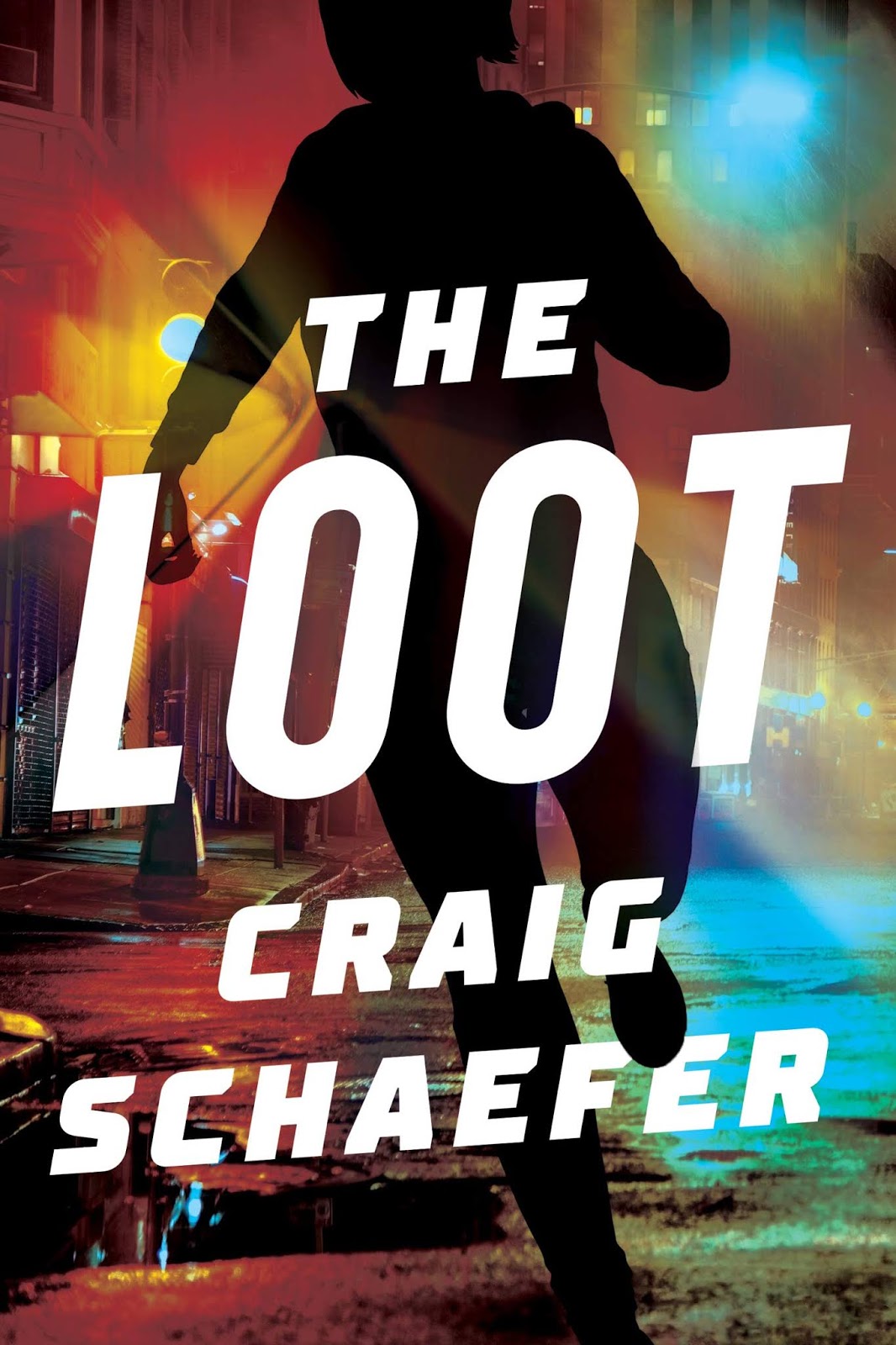
Pre-order The Loot over HERE
Read Fantasy Book Critic's review of The Long Way Down
Read Fantasy Book Critic's review of The White Gold Score
Read Fantasy Book Critic's review of Redemption Song
Read Fantasy Book Critic's review of The Living End
Read Fantasy Book Critic's review of A Plain-Dealing Villain
Read Fantasy Book Critic's review of The Killing Floor Blues
Read Fantasy Book Critic's review of The Castle Doctrine
Read Fantasy Book Critic's review of Double Or Nothing
Read Fantasy Book Critic's review of The Neon Boneyard
Read Fantasy Book Critic's review of Sworn To The Night
Read Fantasy Book Critic's review of Detonation Boulevard
Read Fantasy Book Critic's review of Winter's Reach
Read Fantasy Book Critic's review of The Instruments Of Control
Read Fantasy Book Critic's review of Harmony Black
Read Fantasy Book Critic's review of Red Knight Falling
Read Fantasy Book Critic's review of Glass Predator
Read Fantasy Book Critic's review of Cold Spectrum
Read Fantasy Book Critic's review of Ghosts Of Gotham
AUTHOR INFORMATION: Craig Schaefer was born in Chicago and wanted to be a writer since a very young age. His writing was inspired by Elmore Leonard, Richard Stark, Clive Barker & H. P. Lovecraft. After reaching his 40th birthday he decided to give in to his passion and since then has released twelve novels in the last three years. He currently lives in North Carolina and loves visiting museums and libraries for inspiration.
OFFICIAL BOOK BLURB: She fought for her country. Now she’s fighting for her family.
When Sergeant Charlie McCabe returns from fighting in Afghanistan, she hopes to leave the war behind. Instead, she comes home to a father whose gambling has put him in deep trouble with a violent loan shark. She finds work as a professional bodyguard, but to save her father, she needs to get serious cash together fast.
However, her father isn’t the only one who needs saving. When Charlie’s first client—a wealthy executive with a shady past—narrowly escapes a bomb plot, Charlie’s investigation leads her into the heart of Boston’s criminal underworld. Along the way, she stumbles upon clues about a diamond heist gone wrong that’s been unsolved for decades.
With the clock ticking and chaos descending, Charlie sees a solution to both problems, but it won’t be easy, and it won’t be pretty. A “normal” life may await Charlie on the other side of this mess, but part of her knows that the battle has just begun.
FORMAT/INFO: The Loot is 321 pages long divided over forty four numbered chapters, and is the first book in The Charlie McCabe series. The book will be available in e-book and paperback format, as well as on Kindle Unlimited from August 1, 2019. Cover design is by Kaitlin Kall.
ANALYSIS (Lukasz): As a die-hard Schaefer fan, I’ll buy and read anything he writes. It’s good he writes in the genres I adore as a reader. The Loot is his first thriller novel. Having read all of Craig’s previous titles, I knew what to expect - an intoxicating flood of action, personal drama, and suspense. No supernatural elements this time, though.
Charlie (Charlene) McCabe is a leading character that you might recognize–a retired and worn soldier who hopes to leave the war behind. Unfortunately, her father’s gambling habit put him in deep trouble. Charlie wants to help him, but she needs serious cash to pay his debts before the violent loan shark teaches him a lesson. Because retired EOD (Explosive Ordnance Disposal) Technicians aren’t highly sought after in the labor market, she accepts a job as a professional bodyguard. When her client’s deadly secrets come to light, things go sideways, but there may be the long-lost loot to take away.
I loved the pacing of the story and its focus on the personal. Charlene no longer fights for the country, but she does for her family. I prefer smaller scale narratives so I loved her determination to save her father from himself and dangerous bookie while simultaneously trying to explain the attempted murder mystery.
In terms of character development, Charlie is compelling in her own right, with her own personal demons that color many of the scenes. Her troubled relationship with her father gives readers even more insight into her mental space. She may be willing to dip her fingers outside of the boundaries of the law, but she’s one of the good guys. Some motivation behind the antagonists of this story seems a bit trite, as do their tactics. On the whole, though, the characters are well developed, with backstories and moments of introspection that make them memorable. I especially enjoyed stoic Beckett who may (or may not) have a lethal past.
The Loot is a gripping thriller, and possibly a beginning of the exciting series with Charlie McCabe leading the charge. I can’t wait to read the sequel.
ANALYSIS (Mihir): Craig Schaefer's The Loot is his first official foray into the crime thriller genre. I say “official” because technically in his debut series, Craig has definitely explored aspects of the genre in a multitude of ways. However with The Loot (the first in the Charlie McCabe series), he gets to fully explore his literary muscles in a different world that’s perhaps nothing like he has done before.
When the story opens, we meet Charlene “Charlie” McCabe as she returns back to her New England roots from her military tour. She’s an explosive devices expert who has managed to stay whole physically (psychologically it’s a whole different matter). Arriving back, she’s confronted with a father whom she’s not on good terms and later discovers has a gambling problem. Taking on the onus of his debt, Charlie has to figure out a way to help her dad in ten days. She also takes on a job as a security detail bodyguard in a slightly unorthodox company managed by a brother –sister duo. Things get even more heated when their client is made a target for bombing attacks and doesn’t care enough to allow the security details to do their job. Hemmed in from all sides, Charlie is forced to consider her morals and utilize all the tricks and talents at her disposal to make things work on both the personal and professional fronts.
Right off the bat, this book conveys a sense of urgency, as we dive into a blue-collar world with Charlie. The home which she returns to is Spenser, Massachusetts, a poor area as one would imagine. Not doing so well but still proud and surviving. Charlie is able to fit in but it’s not something that she enjoys. The story is a lean one as we are immediately introduced to the main plot threads and from hen it’s a race to the end. Craig Schaefer fully utilizes the narrative thriller structure and gives us a story that keeps us guessing while also roaring towards a climax.
Characters are also another plus point, be it Charlie or her coworkers such as her quirky bosses Sofia & Jake Esposito, Dom Da Costa and her prayers to certain goddesses, Beckett a classical strong and silent type, and a few others. We get a solid cast of characters whom I’m presuming will play bigger parts in the future books. Also focusing on Charlie, she’s one tough cookie but at the same time, she’s also flexible with her morality when the need demands it. I often dislike moralistically rigid characters and so Charlie was a welcome addition. Especially when situations demanded that she go with the flow. She not only does that but often bends the flow in unexpected & thrilling directions. I loved this aspect about her and I hope the author allows her to go full tilt.
The only thing that perhaps didn’t jive with my overall enjoyment was the final end reveal about the titular loot which I thought was a bit too convenient. Overall it was a subjective thing because the end twist was a brilliant one and it sets up the next book superbly. The book also needed a bit more meat within its middle chapters as the author really streamlined the story. I wouldn’t have minded if the secondary characters had gotten more of a light shined on them (perhaps that’s what are sequels are for).
CONCLUSION: The Loot is Craig Schaefer’s first foray into a pure crime thriller story and as far as efforts go, it’s certainly a solid one. Charlie McCabe is a fiery character but not an all-consuming one. She’s of the slow-burn kind that smolders and is equally dangerous. The Loot is the start of another exciting series from one of my favourite writers, and I can’t wait to see what he surprises he springs in the sequel The Insider.
Read Fantasy Book Critic's review of Cold Spectrum
Read Fantasy Book Critic's review of Ghosts Of Gotham
Read Fantasy Book Critic's Harmony Black Series Interview with Craig Schaefer
Read Double Or Nothing Cover Reveal Mini-Interview with Craig Schaefer
Read Part I of Fantasy Book Critic's In-depth Interview with Craig Schaefer
Read Part II of Fantasy Book Critic's In-depth Interview with Craig Schaefer
Read the Wisdom's Grave Trilogy Completion Interview with Craig Schaefer
Read the 2019 And Beyond Interview with Craig Schaefer
Read My Sworn To The Night Cover Reveal Q&A with Craig Schaefer
Read Part I of Fantasy Book Critic's In-depth Interview with Craig Schaefer
Read Part II of Fantasy Book Critic's In-depth Interview with Craig Schaefer
Read the Wisdom's Grave Trilogy Completion Interview with Craig Schaefer
Read the 2019 And Beyond Interview with Craig Schaefer
Read My Sworn To The Night Cover Reveal Q&A with Craig Schaefer
AUTHOR INFORMATION: Craig Schaefer was born in Chicago and wanted to be a writer since a very young age. His writing was inspired by Elmore Leonard, Richard Stark, Clive Barker & H. P. Lovecraft. After reaching his 40th birthday he decided to give in to his passion and since then has released twelve novels in the last three years. He currently lives in North Carolina and loves visiting museums and libraries for inspiration.
OFFICIAL BOOK BLURB: She fought for her country. Now she’s fighting for her family.
When Sergeant Charlie McCabe returns from fighting in Afghanistan, she hopes to leave the war behind. Instead, she comes home to a father whose gambling has put him in deep trouble with a violent loan shark. She finds work as a professional bodyguard, but to save her father, she needs to get serious cash together fast.
However, her father isn’t the only one who needs saving. When Charlie’s first client—a wealthy executive with a shady past—narrowly escapes a bomb plot, Charlie’s investigation leads her into the heart of Boston’s criminal underworld. Along the way, she stumbles upon clues about a diamond heist gone wrong that’s been unsolved for decades.
With the clock ticking and chaos descending, Charlie sees a solution to both problems, but it won’t be easy, and it won’t be pretty. A “normal” life may await Charlie on the other side of this mess, but part of her knows that the battle has just begun.
FORMAT/INFO: The Loot is 321 pages long divided over forty four numbered chapters, and is the first book in The Charlie McCabe series. The book will be available in e-book and paperback format, as well as on Kindle Unlimited from August 1, 2019. Cover design is by Kaitlin Kall.
ANALYSIS (Lukasz): As a die-hard Schaefer fan, I’ll buy and read anything he writes. It’s good he writes in the genres I adore as a reader. The Loot is his first thriller novel. Having read all of Craig’s previous titles, I knew what to expect - an intoxicating flood of action, personal drama, and suspense. No supernatural elements this time, though.
Charlie (Charlene) McCabe is a leading character that you might recognize–a retired and worn soldier who hopes to leave the war behind. Unfortunately, her father’s gambling habit put him in deep trouble. Charlie wants to help him, but she needs serious cash to pay his debts before the violent loan shark teaches him a lesson. Because retired EOD (Explosive Ordnance Disposal) Technicians aren’t highly sought after in the labor market, she accepts a job as a professional bodyguard. When her client’s deadly secrets come to light, things go sideways, but there may be the long-lost loot to take away.
I loved the pacing of the story and its focus on the personal. Charlene no longer fights for the country, but she does for her family. I prefer smaller scale narratives so I loved her determination to save her father from himself and dangerous bookie while simultaneously trying to explain the attempted murder mystery.
In terms of character development, Charlie is compelling in her own right, with her own personal demons that color many of the scenes. Her troubled relationship with her father gives readers even more insight into her mental space. She may be willing to dip her fingers outside of the boundaries of the law, but she’s one of the good guys. Some motivation behind the antagonists of this story seems a bit trite, as do their tactics. On the whole, though, the characters are well developed, with backstories and moments of introspection that make them memorable. I especially enjoyed stoic Beckett who may (or may not) have a lethal past.
The Loot is a gripping thriller, and possibly a beginning of the exciting series with Charlie McCabe leading the charge. I can’t wait to read the sequel.
ANALYSIS (Mihir): Craig Schaefer's The Loot is his first official foray into the crime thriller genre. I say “official” because technically in his debut series, Craig has definitely explored aspects of the genre in a multitude of ways. However with The Loot (the first in the Charlie McCabe series), he gets to fully explore his literary muscles in a different world that’s perhaps nothing like he has done before.
When the story opens, we meet Charlene “Charlie” McCabe as she returns back to her New England roots from her military tour. She’s an explosive devices expert who has managed to stay whole physically (psychologically it’s a whole different matter). Arriving back, she’s confronted with a father whom she’s not on good terms and later discovers has a gambling problem. Taking on the onus of his debt, Charlie has to figure out a way to help her dad in ten days. She also takes on a job as a security detail bodyguard in a slightly unorthodox company managed by a brother –sister duo. Things get even more heated when their client is made a target for bombing attacks and doesn’t care enough to allow the security details to do their job. Hemmed in from all sides, Charlie is forced to consider her morals and utilize all the tricks and talents at her disposal to make things work on both the personal and professional fronts.
Right off the bat, this book conveys a sense of urgency, as we dive into a blue-collar world with Charlie. The home which she returns to is Spenser, Massachusetts, a poor area as one would imagine. Not doing so well but still proud and surviving. Charlie is able to fit in but it’s not something that she enjoys. The story is a lean one as we are immediately introduced to the main plot threads and from hen it’s a race to the end. Craig Schaefer fully utilizes the narrative thriller structure and gives us a story that keeps us guessing while also roaring towards a climax.
Characters are also another plus point, be it Charlie or her coworkers such as her quirky bosses Sofia & Jake Esposito, Dom Da Costa and her prayers to certain goddesses, Beckett a classical strong and silent type, and a few others. We get a solid cast of characters whom I’m presuming will play bigger parts in the future books. Also focusing on Charlie, she’s one tough cookie but at the same time, she’s also flexible with her morality when the need demands it. I often dislike moralistically rigid characters and so Charlie was a welcome addition. Especially when situations demanded that she go with the flow. She not only does that but often bends the flow in unexpected & thrilling directions. I loved this aspect about her and I hope the author allows her to go full tilt.
The only thing that perhaps didn’t jive with my overall enjoyment was the final end reveal about the titular loot which I thought was a bit too convenient. Overall it was a subjective thing because the end twist was a brilliant one and it sets up the next book superbly. The book also needed a bit more meat within its middle chapters as the author really streamlined the story. I wouldn’t have minded if the secondary characters had gotten more of a light shined on them (perhaps that’s what are sequels are for).
CONCLUSION: The Loot is Craig Schaefer’s first foray into a pure crime thriller story and as far as efforts go, it’s certainly a solid one. Charlie McCabe is a fiery character but not an all-consuming one. She’s of the slow-burn kind that smolders and is equally dangerous. The Loot is the start of another exciting series from one of my favourite writers, and I can’t wait to see what he surprises he springs in the sequel The Insider.
Subscribe to:
Posts (Atom)


